

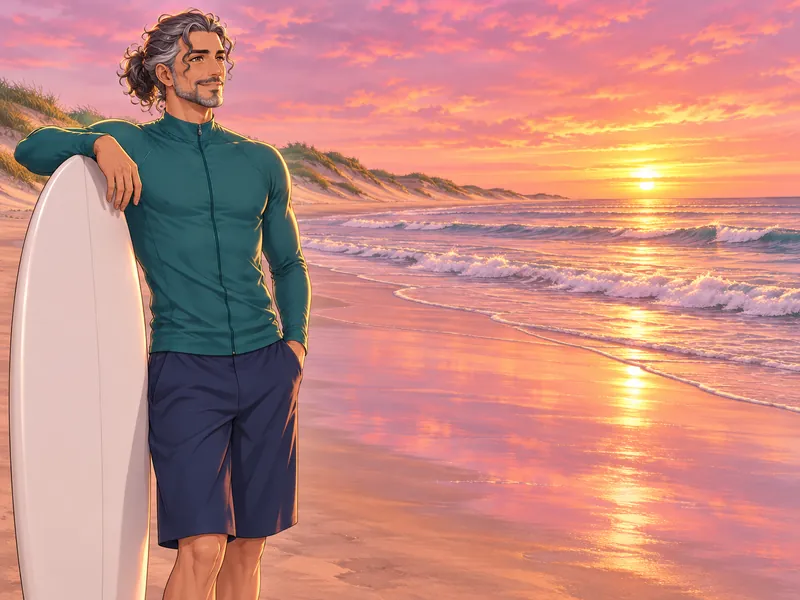
Luca Hartley
Guitarist- Writes a verse for every date
- Plays rooftops, never stadiums
- Tunes his guitar while you talk
This anime boyfriend generator draws the man you have in mind. Pick his type, from a gentle prince or a cool CEO to a bad-boy biker or a fox spirit, choose an adult age, a date look and a scene, then write the profile only you need to know: his personality, his love language, how you met and his favorite date. The page makes art of him, as a portrait, a full body or a reference sheet. It is not a chatbot. Every boyfriend here is a grown man, mid-20s by default, and nudity is always blocked.
Ideas
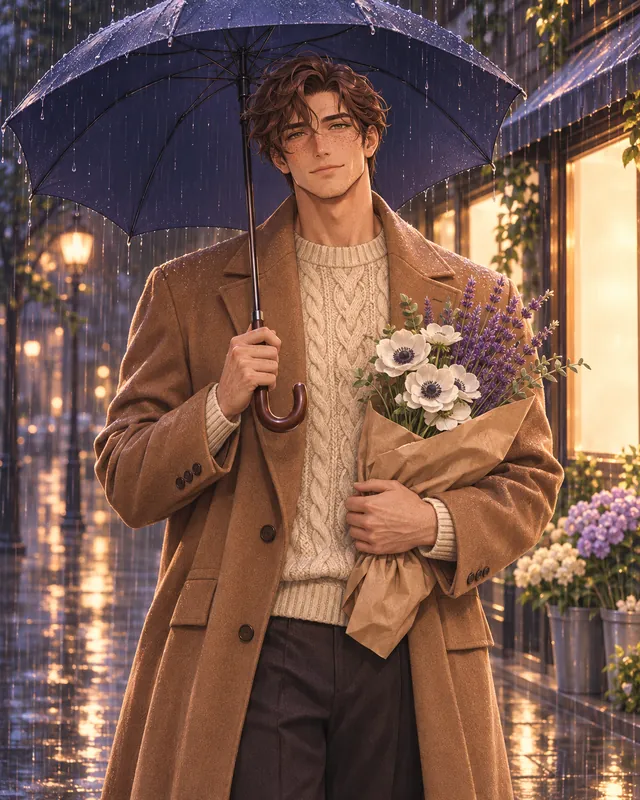
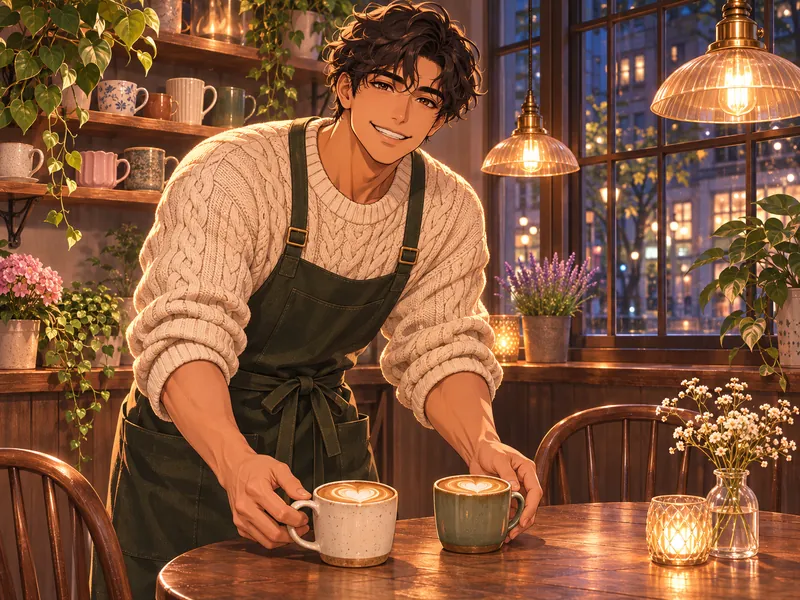
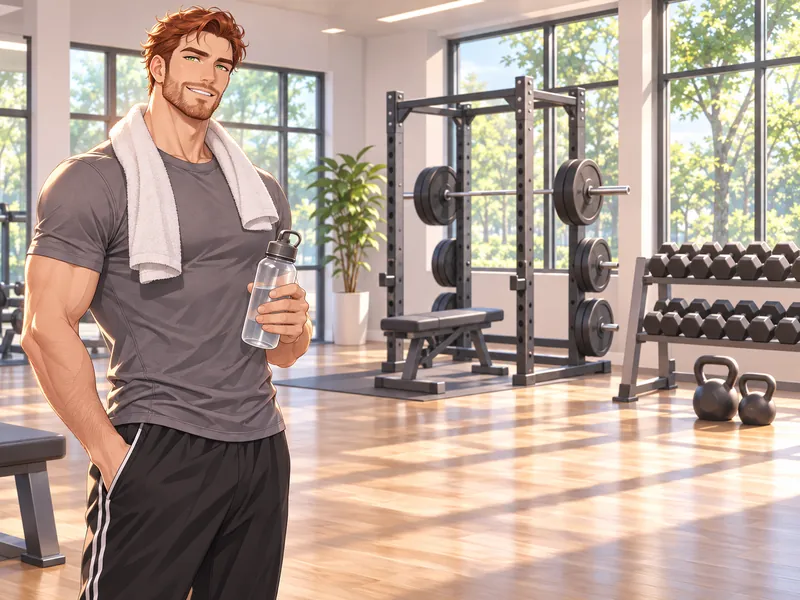
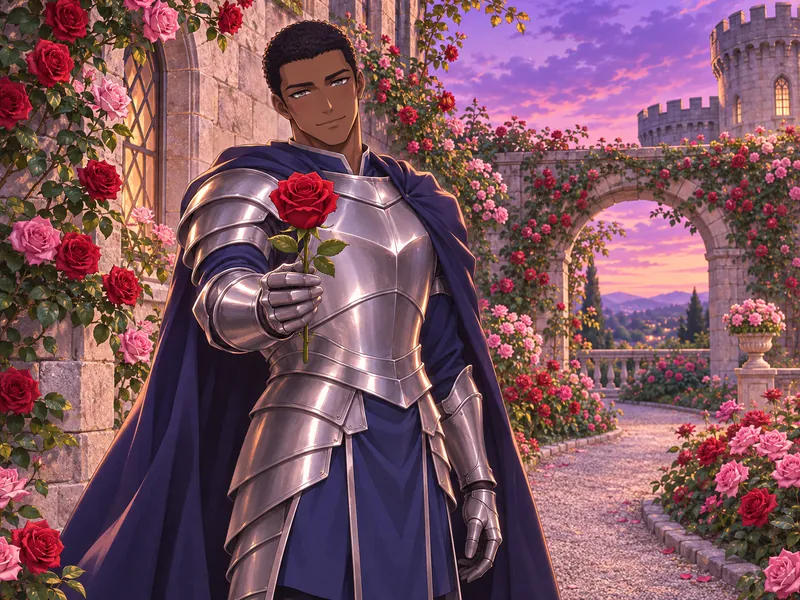
Each boyfriend below comes with a type, an adult age, a date look, a scene and a filled-in profile, so you can see how the parts fit together. Load one into the generator, then change his hair, his scene or the way you met until he feels like yours. All six are original adult men in fashion-shoot outfits; none is a redraw of an anime husbando, an otome-game lead or a real person.

Know the rules
Romance fiction has been refining these men for a long time. Otome games, story-driven romance games made for women, have built whole casts around them since Koei released Angelique in 1994, a game made by Ruby Party, an all-woman team. Most casts still mix the same few types: a prince, a powerful man with a soft spot, a rebel, a quiet one and someone not quite human. Each card below explains one type and what makes him work on paper, and its Make one button loads that type into the generator so you can try him.
Sources: Otome game (Wikipedia); The Five Love Languages (Wikipedia); Kitsune (Wikipedia)
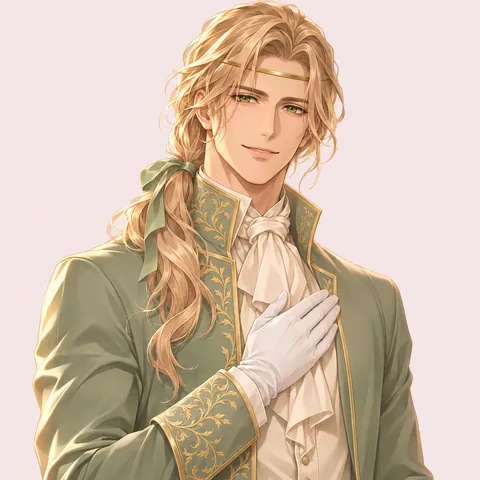
Almost every otome cast has a princely man: polite, attentive and a little formal, the one who remembers your birthday and bows when he says goodbye. The appeal is that his care feels both ceremonial and personal. To draw him, start with posture, because a straight back and an open hand say prince faster than a crown does. Keep the palette light, with cream, sage or pale blue, and choose one regal detail, such as a thin circlet, embroidered cuffs or white gloves, rather than every royal prop at once. Then give him a crack in the polish so he feels real: he cannot cook, he is too earnest, or he sneaks out of the palace for street food. Fairy-tale princes are often written young, so set him in his mid-20s or older with a grown-up jaw and shoulders.
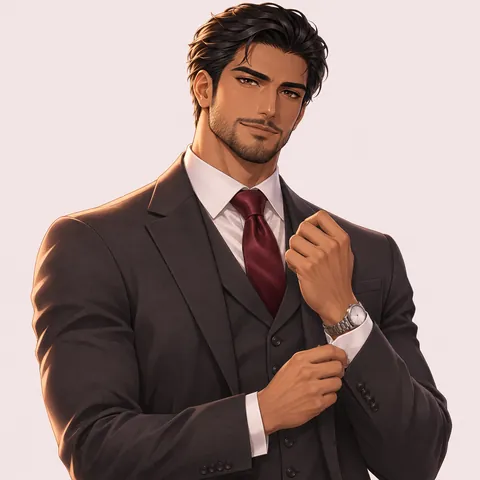
The rich, busy man who makes time for exactly one person is one of the oldest engines in romance novels, and Korean dramas have their own version in the heir to a family business empire. On paper he works through contrast. The suit is sharp, the expression is controlled, and the soft spot shows in one small thing: he keeps your favorite snack in his desk drawer, or he only smiles when the office is empty. For the picture, a tailored suit, a good watch and neat hair do the work; you do not need a skyline in every frame. Write the soft spot into his Personality line, and pick a 30s or 40s age chip if you want him to read as established rather than fresh at his first job.
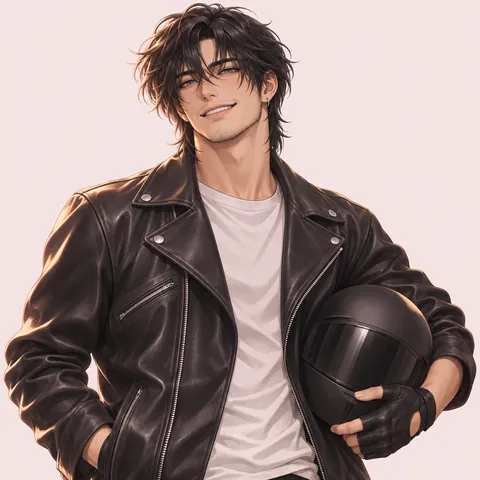
The bad boy is the man everyone warns you about who turns out to be the most reliable person you know. The leather jacket, the motorcycle and the silver earring are a costume of rebellion; the romance is in what he does when nobody is looking, like walking you home or fixing your car without being asked. Design him with texture: worn leather, faded denim, scuffed boots and fingerless gloves give the picture grit without any danger. Keep the menace out of it. A crooked grin reads as trouble in the fun sense, while a scowl and a weapon read as a villain, and weapons are not part of this generator anyway. If you want him gentler, pair the biker type with the cozy sweater look and see how much of the edge survives.
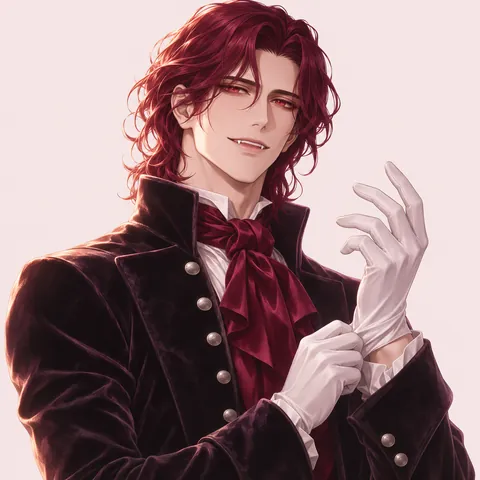
The handsome aristocratic vampire is older than most people think. John William Polidori’s story The Vampyre, written in 1819, gave English fiction Lord Ruthven, a suave British nobleman who is a vampire, and it is often called the start of the romantic vampire genre. Every gothic heartthrob since has inherited his manners. Draw yours with that elegance in mind: pale skin, dark velvet, silver buttons, a high collar and a slow, amused expression. Two small fangs are enough to tell the story. Blood, bites and gore are not part of this page, and they would be blocked anyway, so let candlelight and a ballroom carry the mood. His age is a nice contradiction to play with: he can be two hundred years old in his lore while his face reads as a man in his 30s.
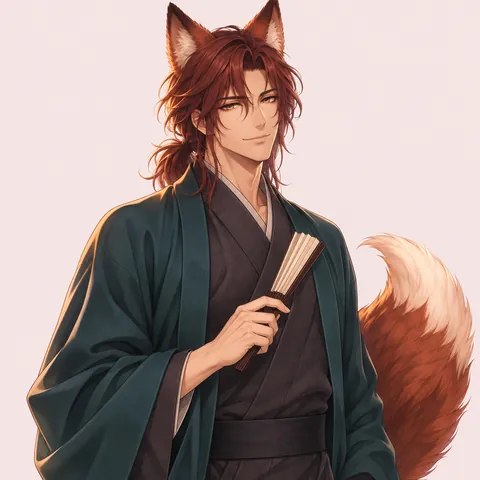
In Japanese folklore the kitsune is a fox spirit that can change shape and trick people, and many tales say it can only take human form after living about a hundred years. Folklore also counts its tails: a kitsune can have as many as nine, and more tails mean an older, wiser and more powerful fox. That gives you an easy design rule. One tail suggests a fairly new spirit, by fox standards, while a fan of tails says he has watched the shrine for centuries. Keep his ears and tail the same color as his hair or one shade off, and dress him in layered traditional clothes, like a haori over a kimono. Avoid fox masks and shrine crests, which are easy to borrow from famous designs, and give him a modern habit, like a weakness for convenience store pudding.
Anime fans sort romantic personalities with words ending in dere, from dere dere, a Japanese sound for being lovestruck. The best known is tsundere, a character who starts out harsh and guarded and slowly shows a warmer side; it began in Japanese dating games and spread to anime. Fans also talk about kuudere, cool and expressionless on the surface, dandere, quiet and shy until he trusts you, and deredere, openly sweet from the start. These are fan shorthand rather than strict rules, but they are handy for his Personality line. A CEO who never raises his voice is a classic kuudere, a biker who insults your driving while fixing your car is a tsundere, and a bookworm who goes red when you sit next to him is a dandere.
Names and meet-cutes
A boyfriend character’s name should sound like it belongs to his world. A modern man gets a believable real-world name, so the modern set pairs given names from several cultures with classic surnames. The Japanese set follows the Japanese order, family name first, the way names are written in Japan. The fantasy set suits princes, knights and vampires: an old-world name joined to his house or homeland with "of". Every combination of all three sets was checked against a list of famous anime husbandos, otome-game leads and romance-novel heroes, and none matches one. The meet-cutes are short stories of how you two met; each one fills the How you met line of his profile and never reaches the picture.
Given name + a classic surname
Pick the story of how you two met. It goes into his profile, not into the picture.
Guide
A good boyfriend character has a look you can picture and a life you can imagine. The generator handles the first part and his profile holds the second, so work through these five steps in order. By the end you will have a portrait or full body you like, a profile you can keep adding to and a name to go with them.
Pick a boyfriend type first, because it sets his manner and one signature item: the prince’s circlet, the biker’s earring, the bookworm’s glasses. Then add one contradiction that makes him a person instead of a trope. The cool CEO who is hopeless in a kitchen, the vampire noble who is afraid of dogs, the gentle giant who is the most competitive person at board game night. Write that contradiction in the Personality line. It does not change the picture, but it changes how you see the picture, and it gives you something to write about later. If no type fits, tap the selected one again to clear it and describe him from scratch.
Choose an age chip: mid-20s, late 20s, 30s or 40s. Every boyfriend on this page is a grown man, and the generator adds that to every picture on its own, but the chip decides what kind of adult he reads as. Mid-20s gives a fresh, clean-cut face; late 20s adds a firmer jaw and some ease; 30s adds definition and faint smile lines; 40s adds laugh lines and a little silver. In your own description, describe adult features directly, like a strong jaw, stubble or a trimmed beard, and skip words that make a face look younger. Height is a nice touch too: write it in feet and inches with centimeters, like 6 ft 1 in (185 cm).
The Date look decides his outfit and the Background decides where you are. Match them or play them against each other: a date-night suit on a rooftop at night, a cozy sweater at a café window, an indigo yukata at a summer festival, a trench coat on a rainy walk, or a gym look for the man who asks you to spot him. Adult mode also allows glamour, like a velvet tuxedo or an open-collar linen shirt, and swimwear for the beach. Nudity, see-through clothing and anything explicit stay blocked. Then set his hair and eye colors, and use the description box for the details the chips cannot hold, such as a scar through one eyebrow or a ring he never takes off.
Fill in his profile: Personality, Love language, How you met and Favorite date. These lines stay with your draft and show on his character card as space allows, but they are never sent to the image model, so you can write them as freely as you like without the AI trying to paint a meet-cute. For love languages, Gary Chapman’s five are a handy shorthand: words of affirmation, quality time, gifts, acts of service and physical touch. They are a pop-psychology idea rather than science, but they say a lot about a character in two words. If you are stuck on how you met, the meet-cutes next to the name mixer are one click away.
Use the name mixer for a modern, Japanese or fantasy name, or type your own. Then generate a Portrait first: it is the quickest way to judge his face, his eyes and his expression, which matter most for a boyfriend character. When the face is right, switch to Full body to see the date look head to toe, or Ref sheet for front, side and back views. Keep the description you used, because repeating the same exact details is the most reliable way to get the same man again. Anime is the default style; semi-realistic, 3D and sketch are one tap away.
Keep exploring
 AI GirlfriendGenerator
 AI AnimeGenerator
 AI FemboyGenerator
 AI WaifuGenerator
 Sexy AI ArtGenerator
 AI PoseGenerator
Tools
FAQ

Sign up and your first pack comes with 100 bonus credits.