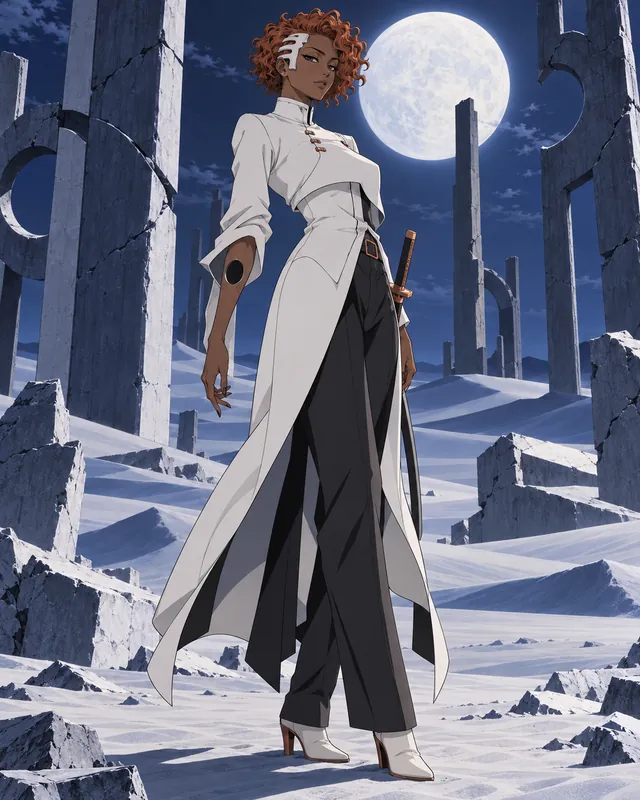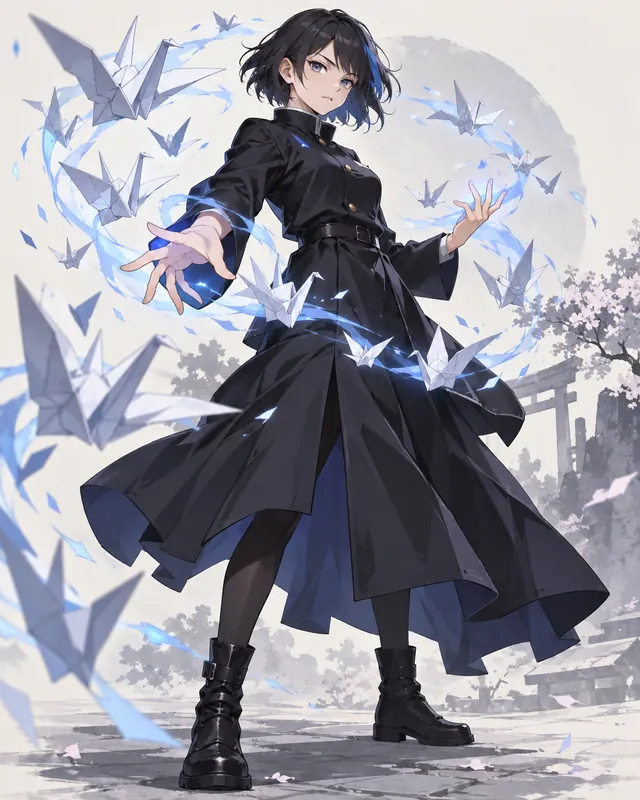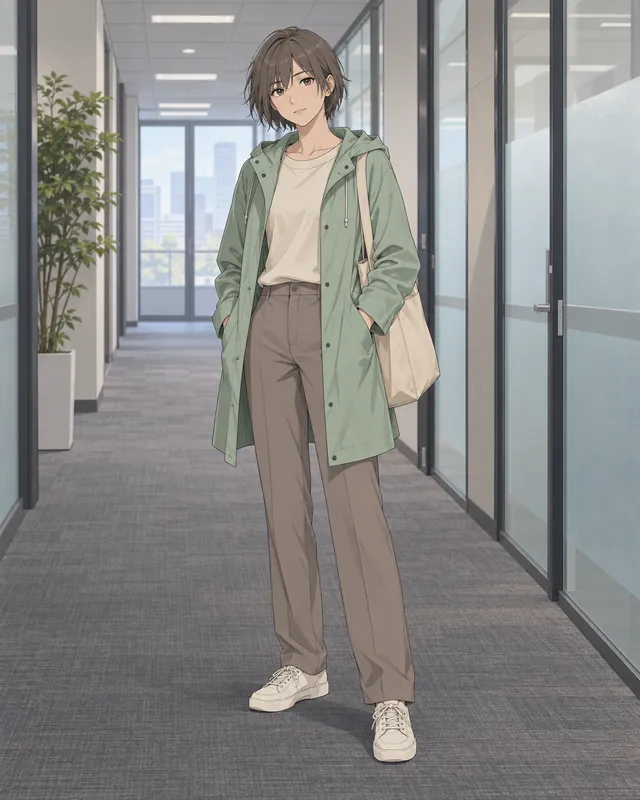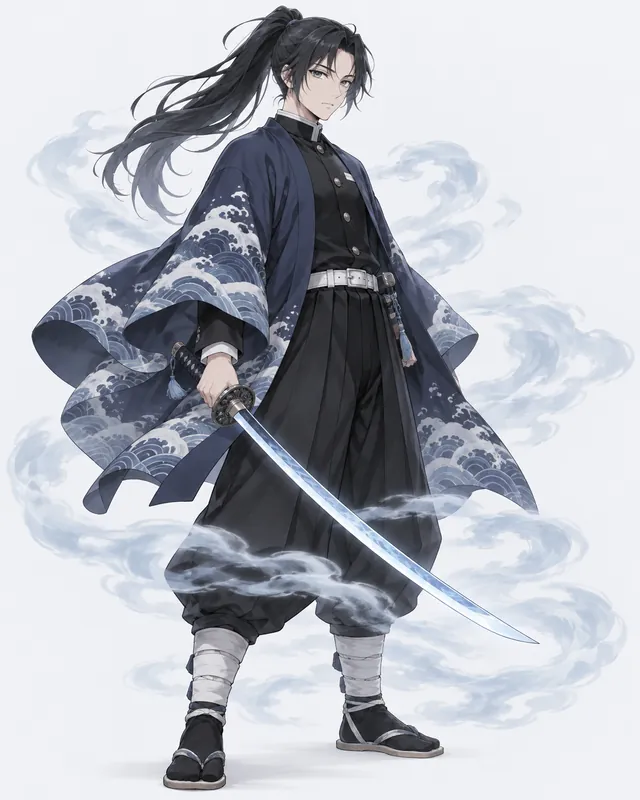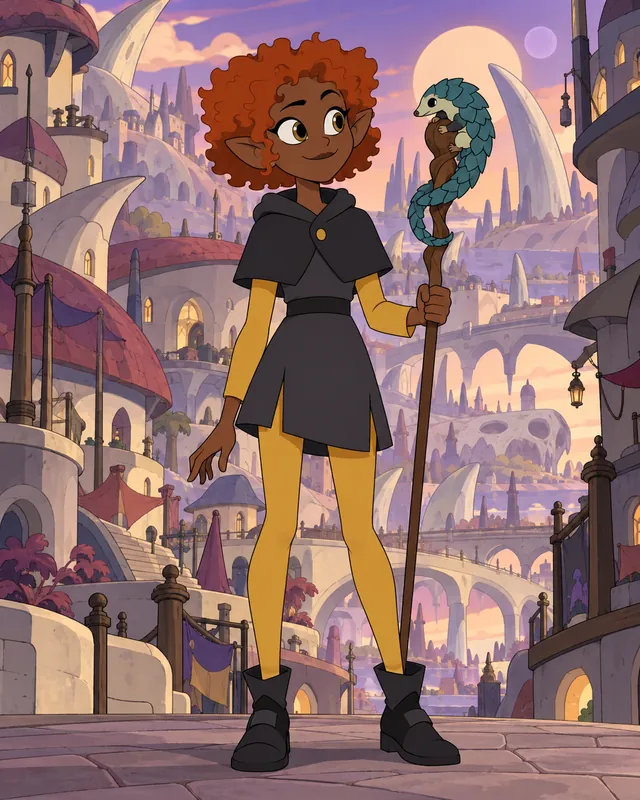
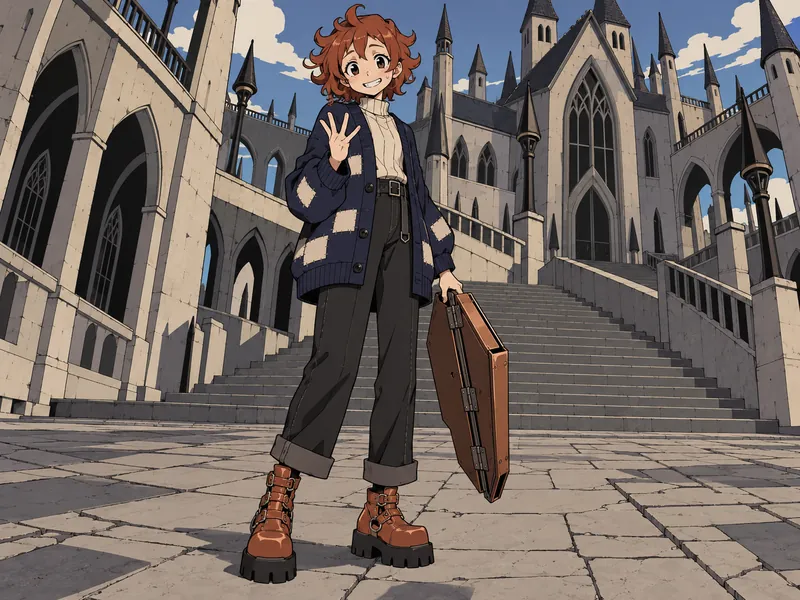
Della Rookmere
Shield meister- Rust curls, indigo cardigan
- Counts four breaths
- Rushes when watched
This Soul Eater OC creator turns your meister, demon weapon or witch into an original design. Choose a weapon form, soul wavelength and partner concept, then give your Death City student something to learn.
Ideas
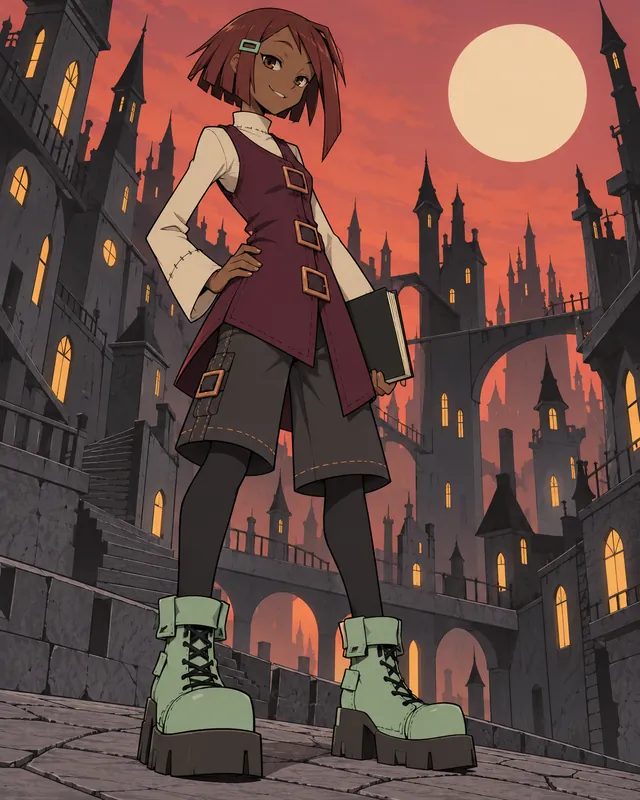
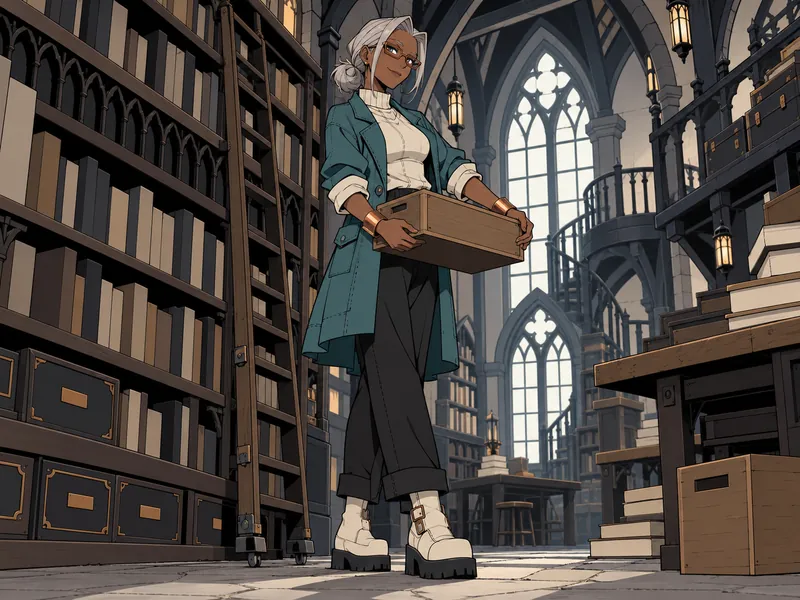
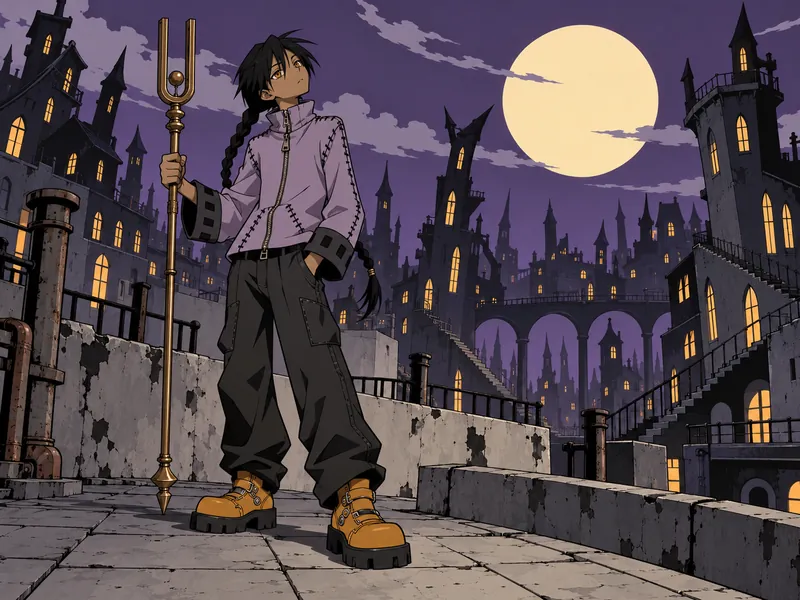
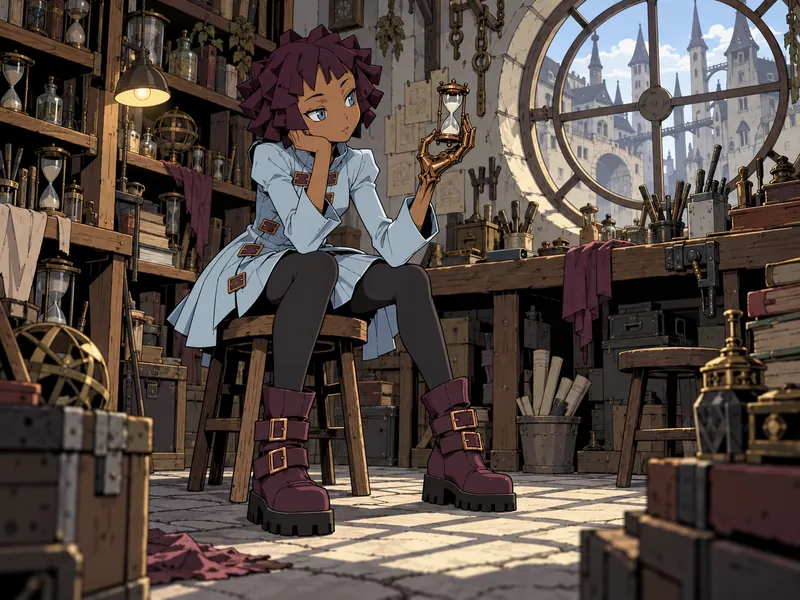
These Soul Eater weapon ideas connect an object, a human habit and a limitation. A weapon partner is a person, so the relationship needs more than a matching color. Use an idea to load a starting brief, then change the name, clothes or training goal. The witch and staff examples show how an OC can belong to the setting without carrying a weapon at all. Every pictured character is separate from the sample and role tiles.

Know the rules
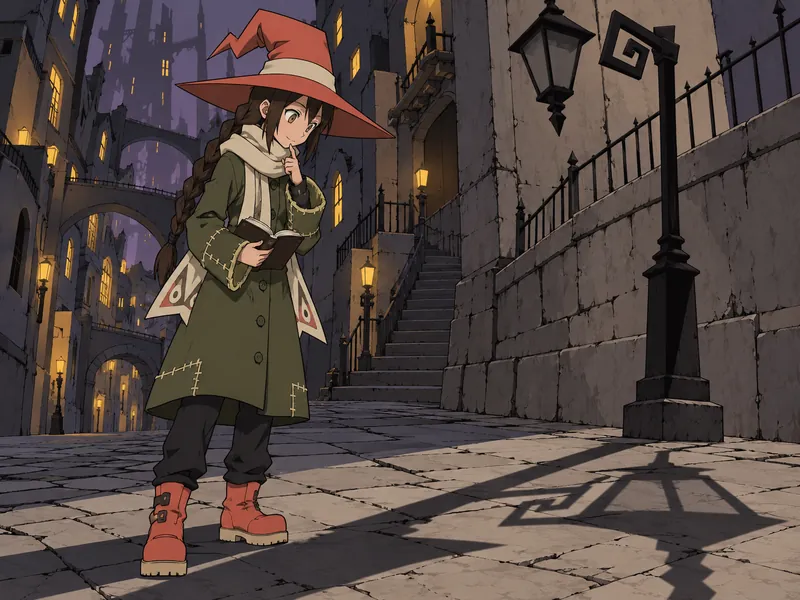
Soul Eater combines school routines with supernatural partnerships. The useful question is not simply how powerful an OC becomes, but how their temperament affects a shared task. The role variants and weapon concepts here are original writing prompts. They do not add official ranks or new categories to the series. Pick a continuity and a point in the story before assigning a student special status.
Sources: Soul Eater Wiki: DWMA; Soul Eater Wiki: Demon weapon; Soul Eater Wiki: Soul Resonance
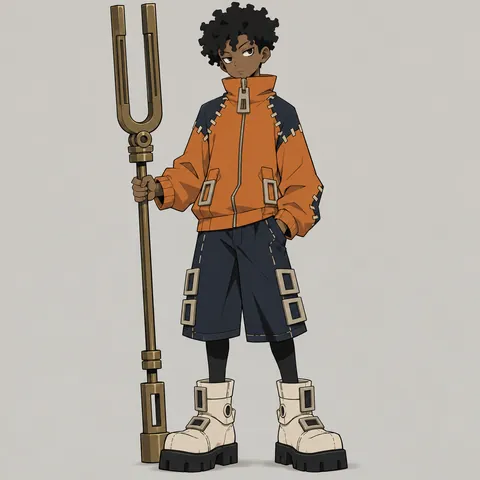
Meisters wield demon weapons, and compatibility between their soul wavelengths matters. That makes partnership a character problem as well as a visual one. One student might want a spoken countdown while the other prefers to listen for a rhythm. Neither habit makes someone automatically right. Give your meister a useful skill, such as noticing when a partner needs a pause, alongside a difficulty they cannot solve alone. A confident pose can still belong to a beginner. Avoid making every student a genius who can wield every weapon, sense every soul and master advanced techniques immediately. A single dependable habit gives the partner a reason to trust them.
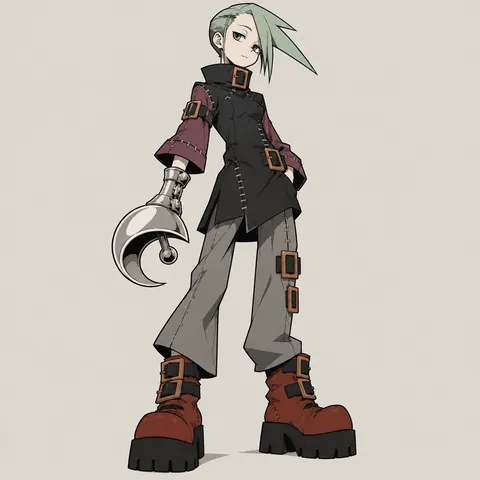
Demon weapons are humans who can take weapon forms; they are not ordinary objects given a convenient name. Begin with their everyday silhouette, then repeat one detail in the transformed shape. A rectangular coat clasp can become a shield hinge, while a curved cuff can echo a handbell shell. Our Soul Eater weapons OC concepts include a bell hammer that needs time to stop and an hourglass staff whose balance changes as sand moves. These are fan ideas, not named canon weapons. Describe a partial transformation clearly if you want both sides of the design in one portrait. Keep the body intact and the form in a display pose, without a target.
During Soul Resonance, a meister sends a wavelength into a weapon, which amplifies it and returns it in a repeated cycle. The series compares that relationship to an instrument and an amplifier. For an original pair, invent a condition that can be shown in a quiet practice scene: matching a count, recognizing a pause or recovering after an interruption. Color alone does not establish compatibility, and the wavelength colors in this maker are visual choices rather than an official personality chart. A mint soul is not automatically gentle or stronger than an amber one. Write what stops the technique as carefully as what it does, then let both partners help repair the mismatch.
The DWMA is the Death Weapon Meister Academy in Death City. Its NOT track serves the majority of students and emphasizes learning to control abilities and live with them; EAT students train to use their abilities in the field. NOT means Normally Overcome Target, while EAT is commonly expanded as Especially Advantaged Talent. Translation wording varies, but the two-track distinction is the useful part for an OC. A NOT student learning to stop an accidental transformation has a complete story already. EAT is not permission to skip friendships, homework or training. The class picker offers these two tracks plus Not enrolled for a visiting witch or adult staff member. That last choice is a status, not an invented third canon class.
Death Weapons, often called Death Scythes, are powerful demon weapons suited to being wielded by Death; the title does not require every form to be a scythe. The familiar early-series requirement involves 99 evil human souls and one witch soul, with the anime using Kishin Eggs for the first part. Later manga developments change the policy toward witches, so an OC biography needs a stated era instead of mixing incompatible rules. You do not need to illustrate that history. An adult mentor preparing a safe classroom demonstration can communicate experience through care, worn equipment and patience. For a new student, leave the status as a possible long-term question rather than an achievement already completed.
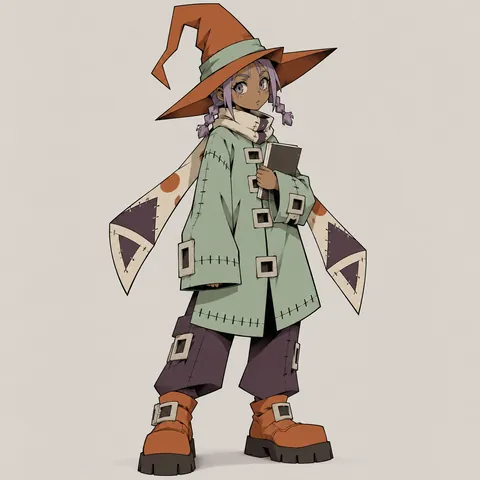
Witches use magic, and animal themes are a recurring part of their designs and abilities. The story includes conflict and changing relationships between witches and the DWMA, so do not reduce every witch to the same villain role. A moth-inspired student might notice light and shadow, but that is an original premise, not a statement that all moth witches share a fixed power. Show the theme through a scarf fold, hat angle or carefully chosen color. Avoid Medusa-inspired arrows, Blair-like cat styling and recognizable canon costumes. Keep a teenage witch visibly teenage and fully clothed. A conversation with a classmate or an uncertain invitation can provide tension without frightening imagery.
The setting has a distinctive playful gothic mood: steep steps, exaggerated architecture and Halloween-like shapes. Let those large forms support the character instead of filling every wall with symbols. The art here uses original tilted rooftops and featureless celestial disks rather than copying the faces of the canon sun and moon. Clothing stitches, chunky footwear and unexpected angles can make a small thumbnail feel at home in Soul Eater. The DWMA skull emblem, Lord Death mask and Kid hair stripes are not shortcuts for an original design. If removing an emblem makes the character unrecognizable, strengthen the coat shape or hairstyle before adding more accessories.
Names and resonance
Canon uses several naming traditions. Western given names and surnames appear alongside playful aliases and Japanese names, so a new character does not need a spooky compound or a musical pun. This mixer uses original given-name and surname pairings, with a second set for short playful nicknames. Read the result aloud, check it against the cast, then decide which name classmates use. The free local mixer fills the name field; each idea card below fills the personal-specialty field without making an image request.
Given name + original surname
Original practice concepts; choose one and adapt it to the partnership.
Guide
A strong character brief separates appearance, school life and the supernatural rule. Work through those layers in order so the final drawing has a readable subject. You can use the illustrated ideas as a starting point, but change more than a hair color if you want a new identity. Keep one saved version of the description as your reference when you try another pose.
Decide whether you are drawing the meister, the demon weapon in human form, a witch or an adult member of staff. The partner concept box describes someone who matters to the OC, but it does not ask for a second figure in the picture. Choose EAT or NOT for a student, then write one immediate concern: asking for a partner, controlling a first transformation or finding the right practice room. A specific small problem gives the expression and posture a reason. Choose Not enrolled for someone outside the student tracks. An adult archivist belongs in the world without needing a student rank.
Choose one of the original forms and read its short idea note. A heavy bell hammer suggests different movement from a folding shield, so do not attach the same speed claim to both. Repeat one simple shape between the clothes and the weapon, such as a rectangular buckle and a shield hinge. For a demon weapon portrait, state whether the character is entirely human or showing one partial transformation. For a meister, ask for a quiet display pose with the form held at their side. Avoid adding a separate humanoid partner and a transformed duplicate to the same image.
Write the successful condition in ordinary language before inventing a technique name. Both partners count four beats, listen for a pause or agree on a direction. Then introduce a small interruption and decide what they do about it. Does one person apologize, slow down or ask to start again? That response creates personality without turning the limitation into a medical label. The wavelength color is a visual accent, not proof of compatibility. Keep the effect restrained enough that the face, hands and clothing remain readable. A clear practice rule is more useful than a claim that the pair can resonate with everyone.
Choose a large garment first: a long vest, angular coat or oversized cardigan. Add one stitch pattern and a few practical buckles, then stop before the outfit becomes visual noise. Test the hair and boots in silhouette. Avoid blonde pigtails with a plaid skirt, white spiky hair with a familiar headband, three white hair stripes or a head screw. Those combinations lead straight back to the cast. Let an original Death City street provide atmosphere through roofs and windows. Keep official skull symbols and the familiar sun and moon faces out of the background as well as off the clothes.
Use the name mixer, speak the result aloud and decide whether the formal name or a nickname fits the character. Check that the partner note, class and weapon form still describe the same premise after applying an idea. Save the brief beside the finished drawing so you can preserve hair shape, garment closures and color placement in future versions. If a detail changes, compare it with that note before accepting the new image. Ask a friend whether the person looks original and whether the partnership has room to grow. A useful review points to a concrete shape or story choice you can revise.
Other fandoms
Tools
FAQ




Sign up for 10 bonus credits and make your first OC free.