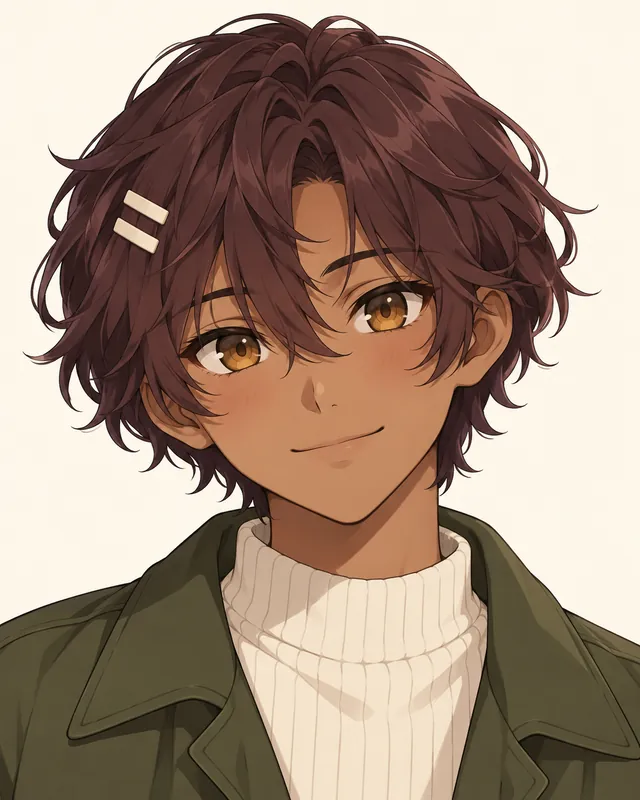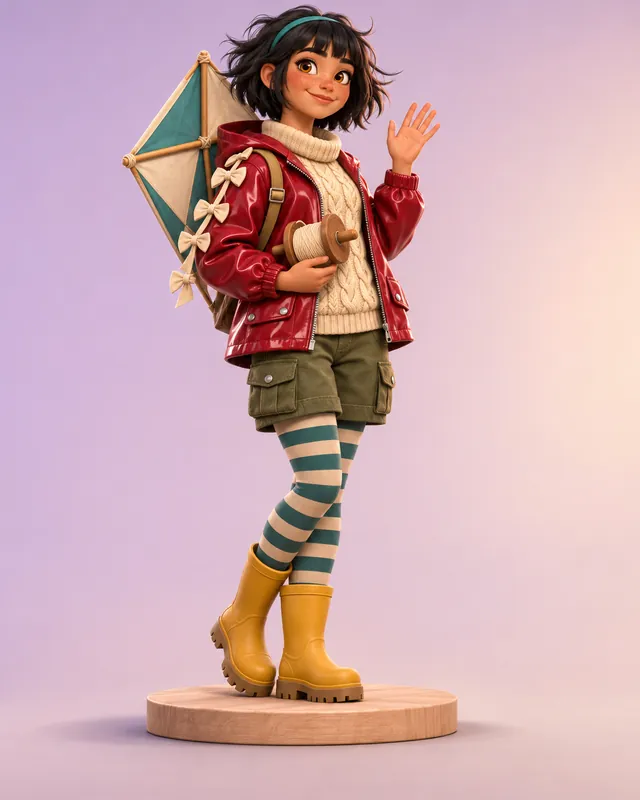
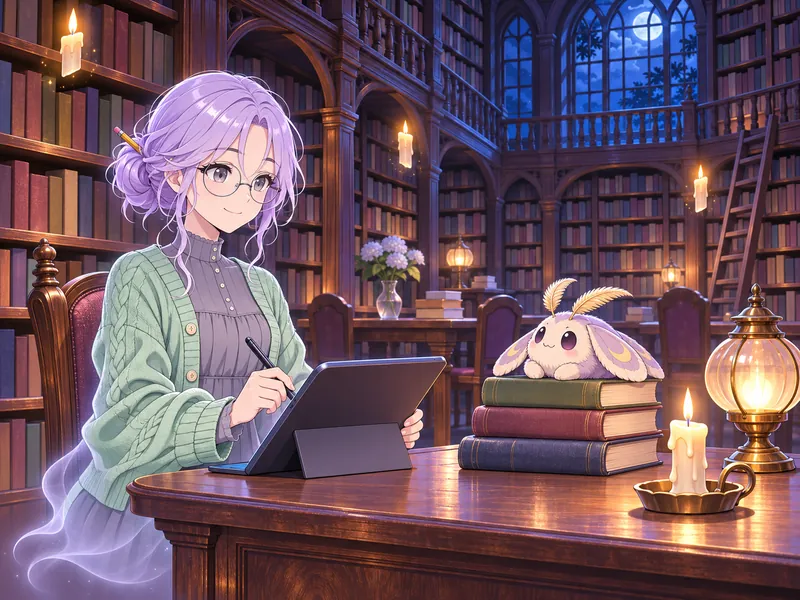
Odile Dewdrift
Ghost artist- Draws by candlelight after closing
- Shushes chat, then laughs first
- Her moth plush rates every sketch
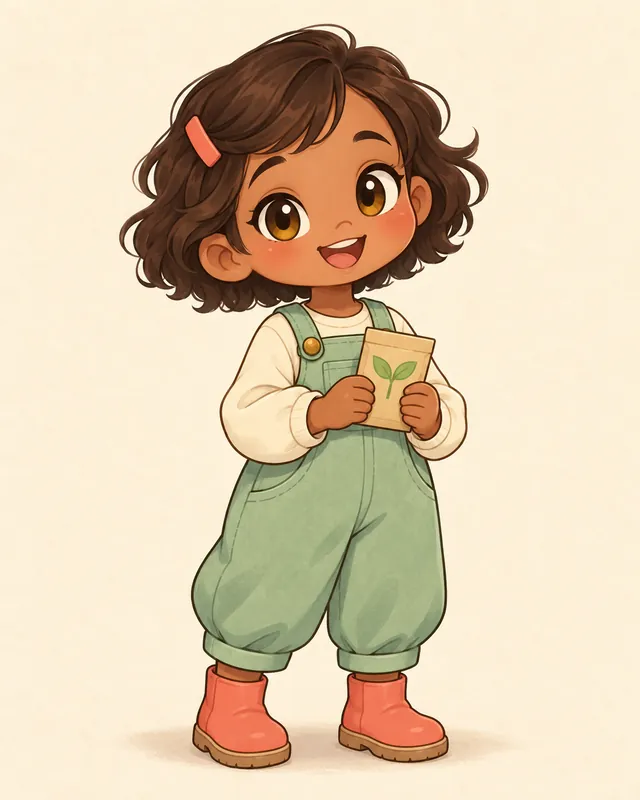
This VTuber OC creator designs the character behind your channel: a model type, a lore concept such as a fallen angel or a shrine fox, a stream genre, a mascot, a color motif and a debut catchphrase. It draws a portrait and a reference sheet you can take to an artist or a rigger. It does not build a rigged Live2D or 3D model; the guide and FAQ below explain those next steps.
Ideas
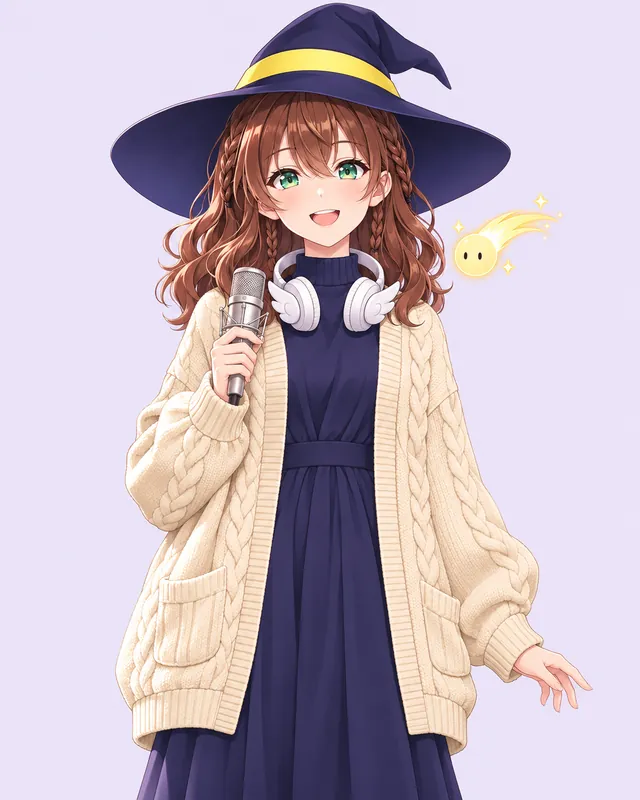
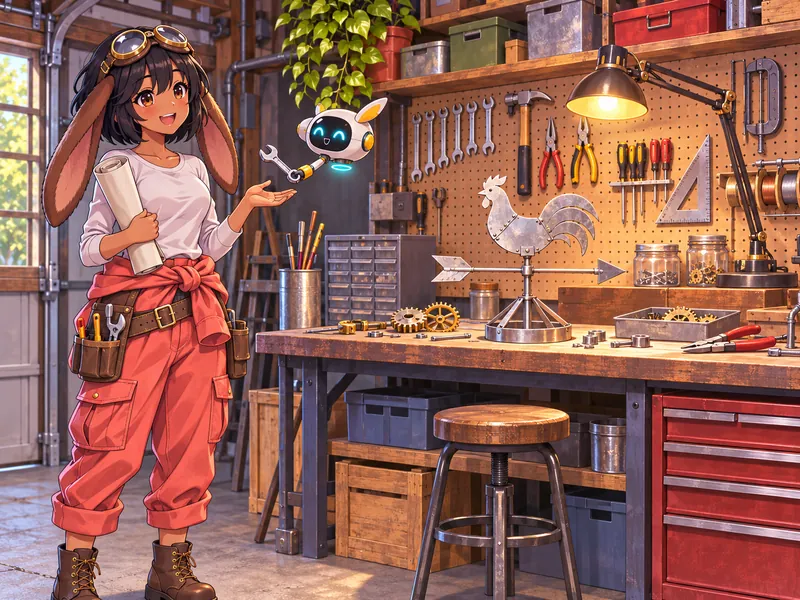
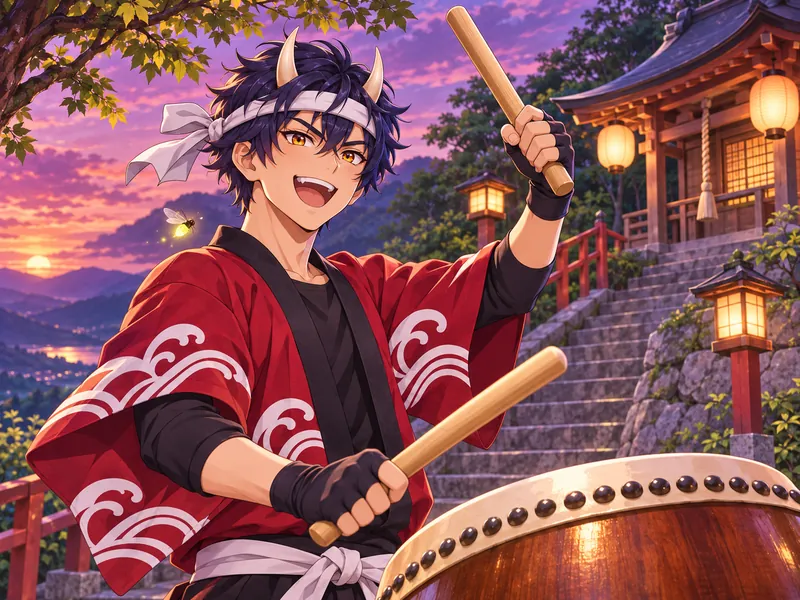
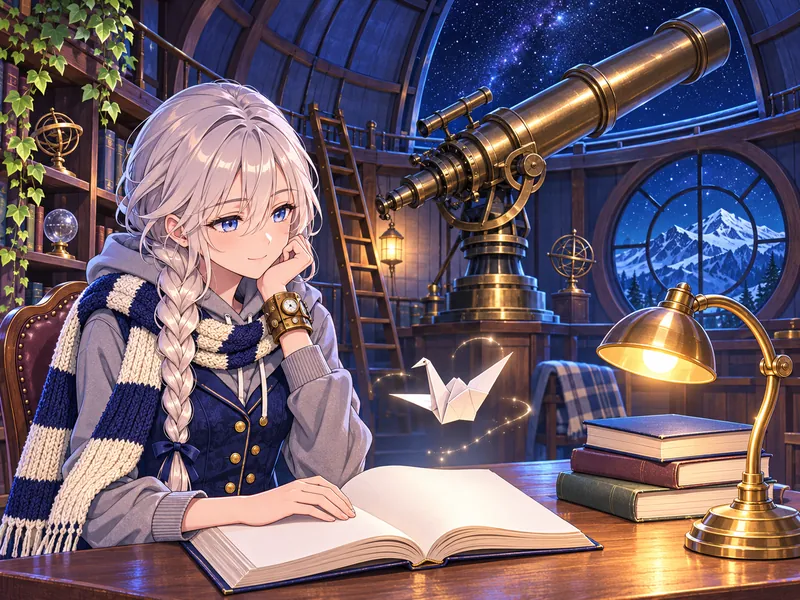
Each VTuber below pairs a lore concept with a stream they would actually run and a model type that suits it. Load a card into the generator, then change the lore, the colors or the catchphrase until the character feels like your channel. All six are original characters in modest, stream-ready outfits; none is a recolor of a real VTuber or an agency talent.

Know the rules
A VTuber is a streamer or video creator who appears as an animated avatar instead of on camera. Software reads the streamer’s face and voice and moves the avatar to match. How that avatar is built changes what you need to plan: a Live2D model is a layered drawing, a 3D model is a sculpted figure, and a PNGTuber is a set of still pictures. Each card below pairs one of these topics with a lore tile from the generator, and its Make one button loads that example so you can try it.
Sources: VTuber (Wikipedia); Live2D (Wikipedia); Live2D manual: material separation

Live2D is software that bends and warps a flat drawing so it looks like it turns and breathes. The artwork is split into separate layers, a step Live2D’s manual calls material separation: eyes, eyelids, mouth, each lock of hair, sleeves, ears and tail. A rigger then links those layers to movements, and tracking software drives them from your webcam. That is why the shrine fox on this card works so well as a Live2D design: her ears, fluffy tail and loose haori sleeves are distinct shapes that can sway on their own. Draw your model facing forward, keep hands and props away from the face, and avoid hair that covers both eyes, because the eyes have to blink. Most Live2D VTubers use a waist-up model, since that is what a stream layout shows.
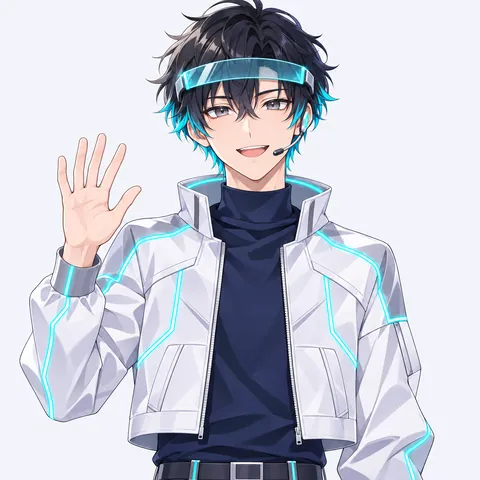
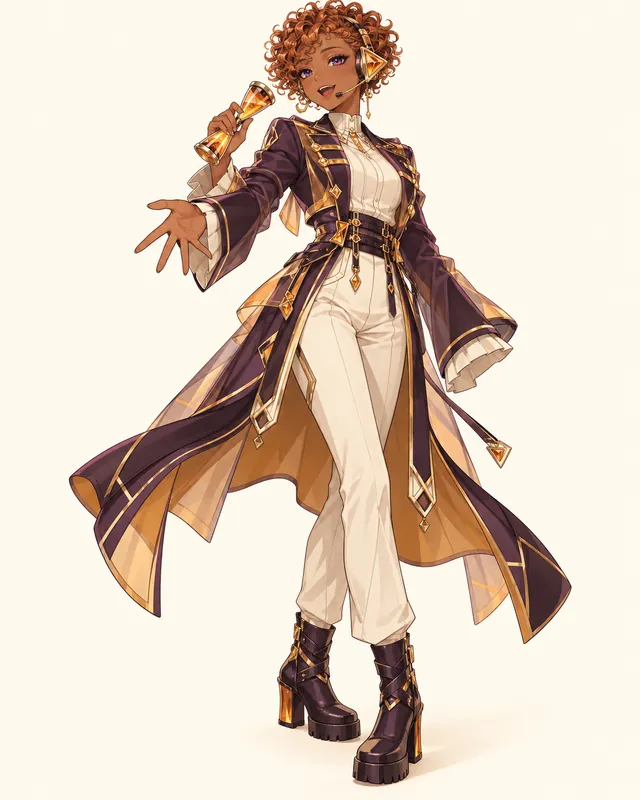
A 3D VTuber is a sculpted, rigged figure that can turn all the way around, dance and walk across a virtual stage. Many 3D avatars use VRM, an open file format for humanoid avatars built on glTF, which several free and paid apps can read. Because the camera can see every side, the design needs a back view as much as a front view, so plan it with a reference sheet. The cyber idol on this card is built for 3D on purpose: a cropped tech jacket, a visor and light strips along clean seams read clearly from any angle, while tiny printed details would blur. Choose materials you can describe, like matte fabric or glossy plastic, and keep long flowing pieces to one or two so they do not tangle when the model moves.

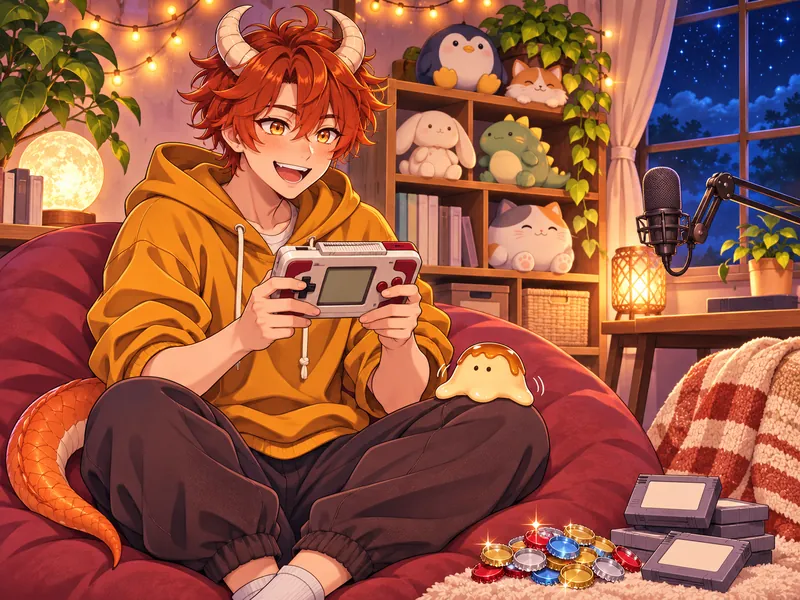
A PNGTuber skips rigging. Instead of a moving model, the avatar is a small set of still images, often one with the mouth closed and one with it open, that swap when the microphone picks up your voice. Some PNGTubers add extra frames for laughing, shocked or sleepy faces. That makes it the cheapest and fastest way to start, and it rewards designs that read at a glance, like the little demon on this card: curled horns, a spade tail, a giant hoodie and a toothy grin are all visible in a small corner of the screen. Pick one strong silhouette, give the face a big readable expression, and plan two or three versions of it. Many streamers begin as PNGTubers and commission a Live2D model once the channel grows.

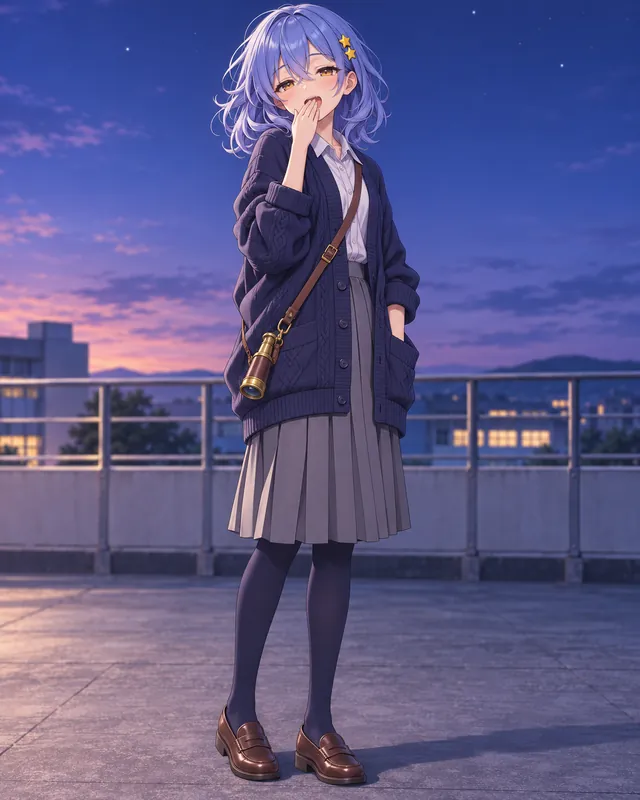
VTuber lore is the short in-character story that explains who the avatar is: a demon from another world, an idol from the future, a fox who keeps a shrine. Good lore is a premise rather than a novel. The fallen angel on this card needs only one line: she dropped out of the sky, lost the shine on her halo and streams to earn it back. That premise gives chat running jokes, a reason for her one gray wing and a goal she can mention every stream. Tie the lore to what you actually stream, so a star witch sings at night and a space café owner hosts cooking streams. Keep it light enough that you can play the character for hundreds of hours without getting tired of it.
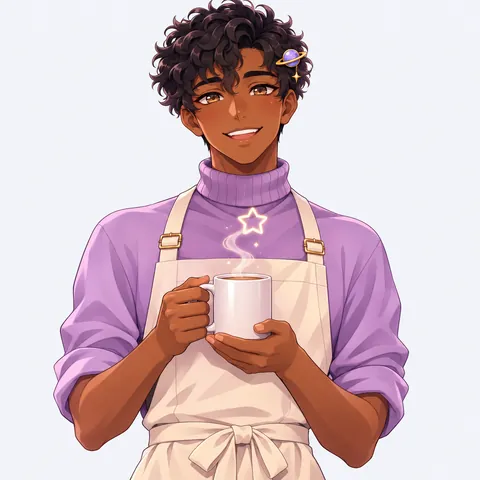
A VTuber’s first stream is called a debut. It usually reveals the model, introduces the character and their lore, shows the stream schedule and ends with a short game, song or Q&A. Plan the design with that day in mind. The space café owner on this card has a debut built into his concept: he opens the café for the first time, serves chat a menu that doubles as his schedule, and his apron, mug and planet clip all show up on a waist-up model. Write a catchphrase you can say at the start of every stream, choose the background you will stream in, and prepare a few facts that chat can repeat back to you.
This page gives you the design and its reference art, the first step of a longer pipeline. Next, an artist draws the model art: for Live2D that is one high-resolution illustration split into many layers, for 3D it is a character sheet that a modeler builds into a figure. Some streamers make that art themselves in a model-making app instead. Then a rigger connects the parts to movements and physics, so the head turns, the eyes blink and the hair bounces. Finally, face-tracking software reads your webcam or phone camera and moves the model live on stream. Bring the portrait, the reference sheet and your written notes to every step, so the artist, the rigger and you are all working from the same character.
Names and catchphrases
VTuber stage names usually mix languages and pack the lore into the name. Japanese agencies write the family name first and build it from the concept: Hololive’s Hoshimachi Suisei pairs hoshi, star, with suisei, comet, and Inugami Korone starts with inu, dog. English-language talents often take a short given name with an invented English surname, like Pomu Rainpuff, while many VTubers go by one playful word, like Ironmouse or Shylily. The three sets below follow those patterns with original words. Every combination was checked against the Virtual YouTuber Wiki’s 14,589 page titles, and none matches a listed VTuber.
cute given name + playful English surname
The line you say at the start of every stream. Pick one that fits your genre.
Guide
A VTuber OC is a character you will perform live, often for hours at a time, so the design has to suit your voice, your schedule and your streams as much as your taste. Work through these five steps in order. Each one narrows the next, and by the end you will have a portrait, a reference sheet and a short brief you can hand to an artist or a rigger.
Before you think about hair color, decide what you will do on stream most weeks: cozy games, art, singing, study sessions, cooking or just chatting. The stream genre decides your props and your energy. An art streamer needs a tablet and a calm face that holds still, a rhythm gamer needs bounce, a singer needs a microphone that fits the frame. Pick the genre chip first, then imagine a typical Tuesday stream from start to finish. If you can picture it, the rest of the design has something to hang on.
Choose a lore concept that gives the character a reason to be on stream: a fallen angel earning back her halo, a cyber idol on a world tour, a shrine fox who closes the shrine at night and plays farming games. Then add one twist that makes it yours, such as a demon who is scared of spooky games or a dragon who hoards bottle caps. Keep the lore to one or two sentences. Chat will learn it from you over many streams, and a premise with room for jokes lasts longer than a long tragic backstory.
Decide early whether you want a Live2D model, a 3D model or a PNGTuber, because each one changes the drawing. Live2D works best with a front-facing design, separate swaying parts and eyes the hair does not cover. A 3D avatar needs a back view and clean shapes that hold up from every side. A PNGTuber needs one bold silhouette and big expressions that read in a corner of the screen. If you are not sure, start with a waist-up Live2D design: it is what most viewers expect, and it can also be simplified into a PNGTuber.
Viewers see your avatar small, next to the game, so the outline matters more than fine detail. Choose a hair color, a motif color that repeats in two or three places, a signature accessory and a mascot that can sit on your shoulder or float beside you. Avoid combinations that belong to famous VTubers: a shark hood with white and blue hair, a pink heart headband with a white sailor top, a white-haired fox girl, or teal twin tails with a headset. Change two or three elements and the resemblance goes away. Keep the outfit modest and comfortable for a character you will play every week.
Use the stage name mixer for a bilingual, Japanese-style or one-word name, pick a debut catchphrase or write your own, and save both with the design. Generate a Portrait first to check the face and expression, then a Ref sheet for front, side and back views with color swatches. Read the result like an artist would: are the ears, horns and accessories consistent, and is anything covering the eyes? When you are happy, bring the images and the written description to the artist, model-making app or rigger who will build the moving model.
Other fandoms
Tools
FAQ
Sign up and your first pack comes with 100 bonus credits.