
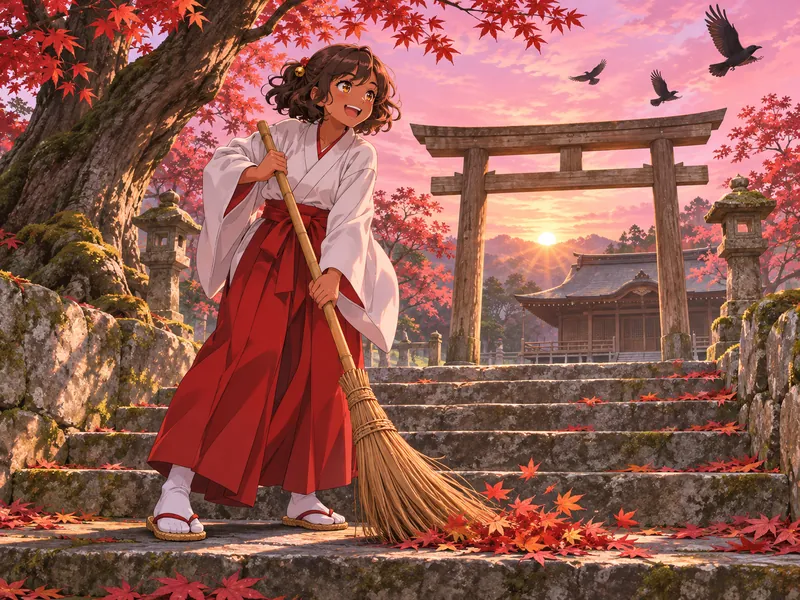
Koharu Umesato
Genki miko- Races the crows up the shrine steps
- Rings her hair bell to say good morning
- Sweeps maple leaves into neat piles
This anime girl OC creator builds one original girl from clear choices: an archetype such as tsundere, kuudere or genki, a setting and role, hair, eyes, outfit, a signature accessory and a small personality hook. Press Surprise me to use it as a random anime girl generator, then change whatever does not fit.
Ideas
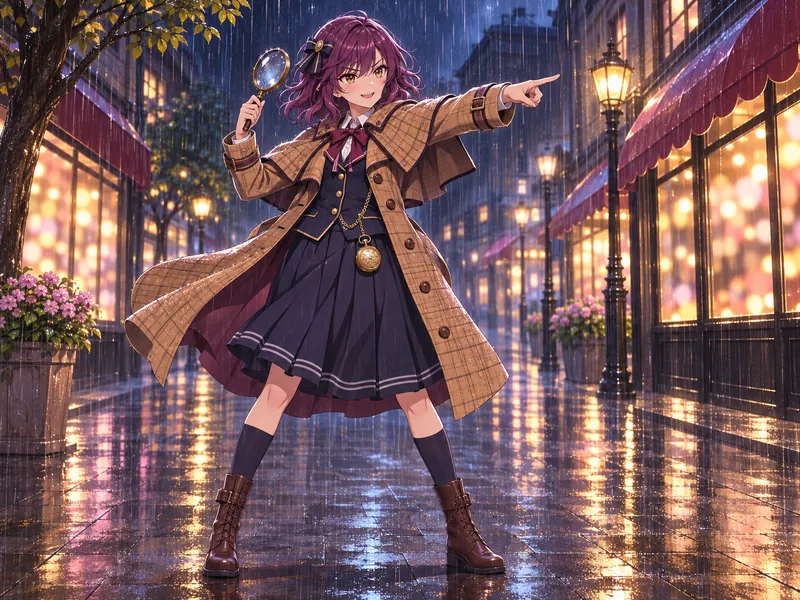
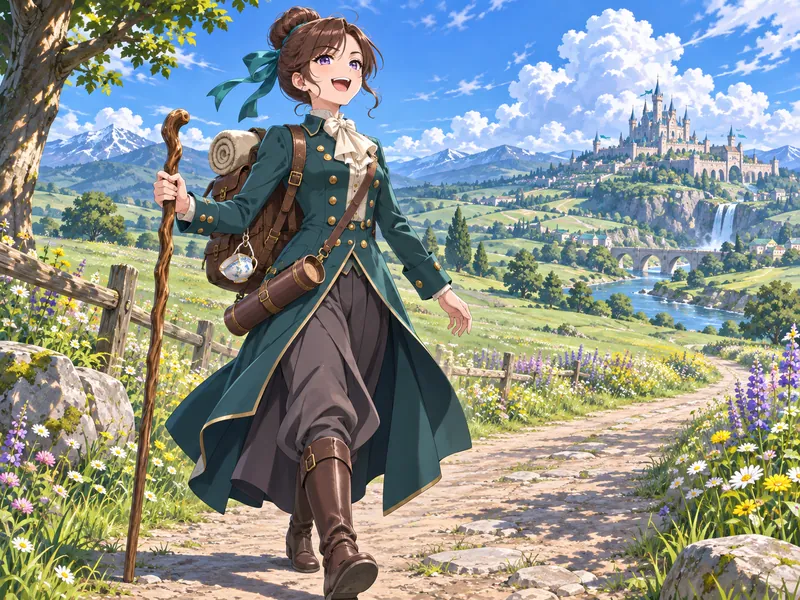
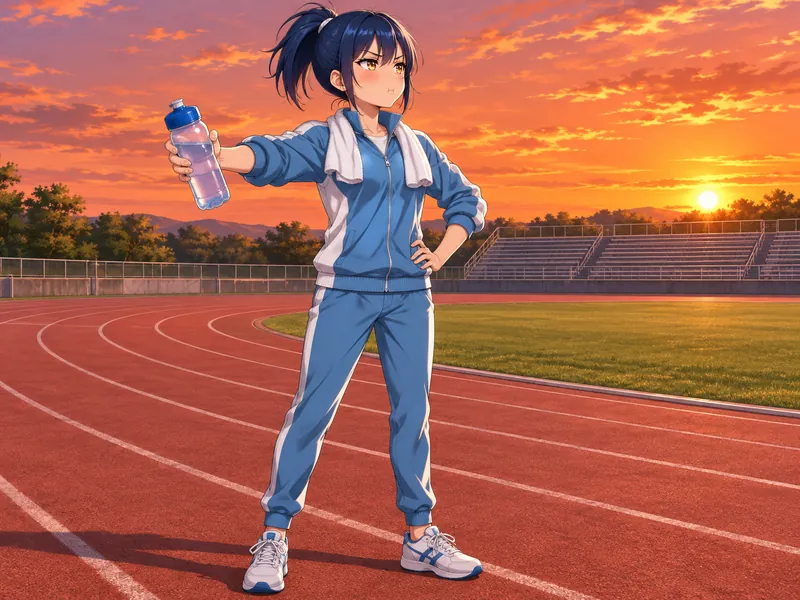
Each girl below pairs an archetype with a job and one habit that makes her feel lived in. Load a card into the generator, then change the role, the colors or the hook until she is yours. All six are original characters drawn as teens or young adults in modest everyday, work or costume clothes; none is a renamed canon heroine.
Art styles
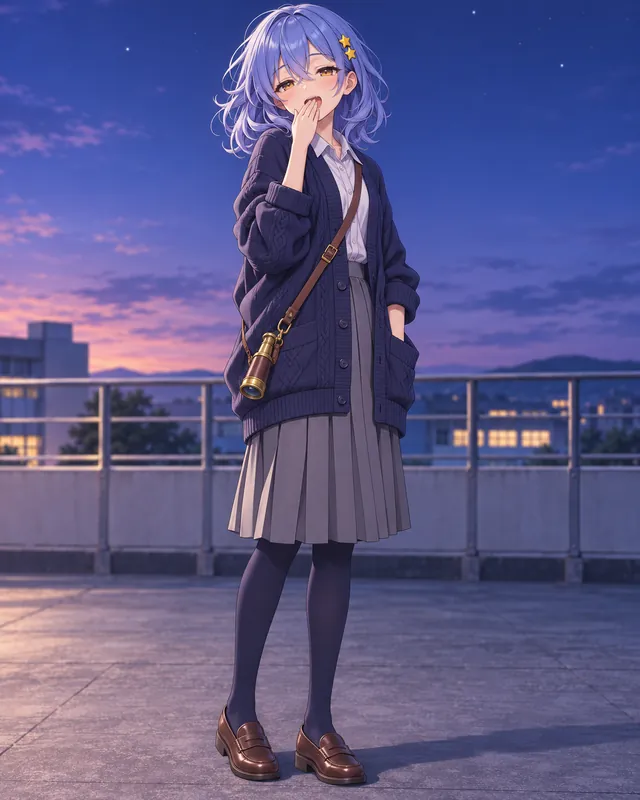
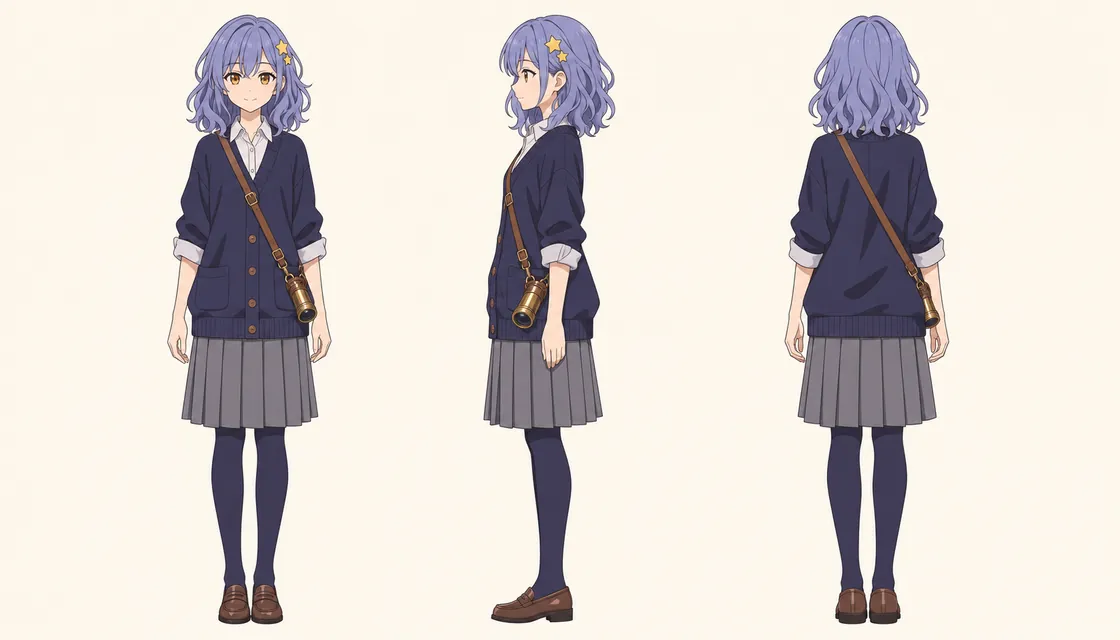
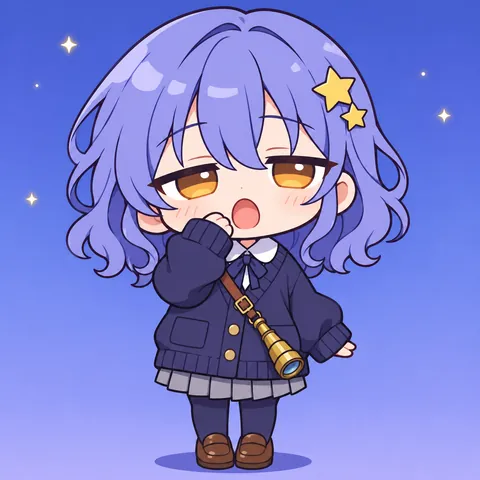
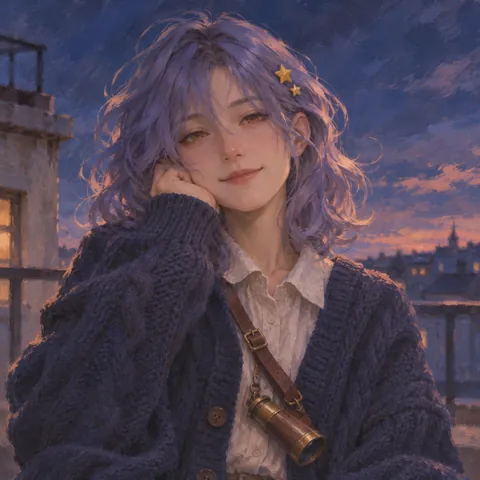
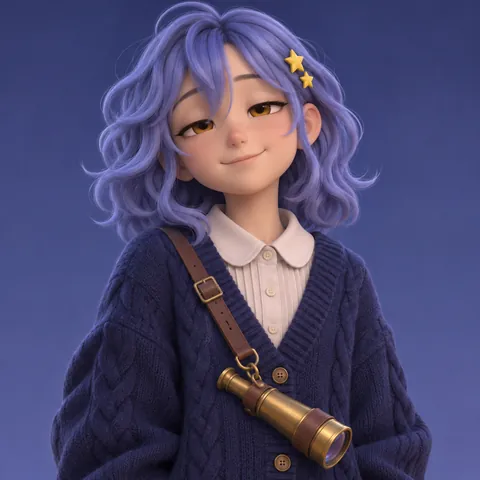
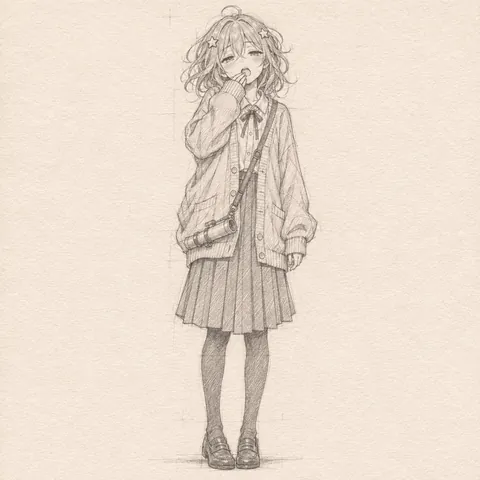
Hinano Kawasemi is the same sleepy astronomy-club girl in every sample: wavy shoulder-length periwinkle hair, two small yellow star clips, amber eyes, an oversized navy cardigan over a white blouse, a knee-length gray pleated skirt and a small brass telescope. Chibi shrinks her to about three heads tall, semi-realistic paint gives the cardigan real texture, 3D turns her into a figure you could hold, and the pencil sketch shows how the design is built. Compare them and keep the style that suits your story.
Know the rules
An archetype is a personality shorthand that anime fans recognize at a glance. Many of the names end in dere, from dere dere, a Japanese word for acting affectionate or lovestruck. On this page an archetype sets her expression and pose, while the role sets her clothes and props. Pick one as a starting point, then add a single detail that breaks the pattern, because that contrast is what people remember.
Sources: Tsundere (Wikipedia); Kemonomimi (Wikipedia); Japanese name (Wikipedia)
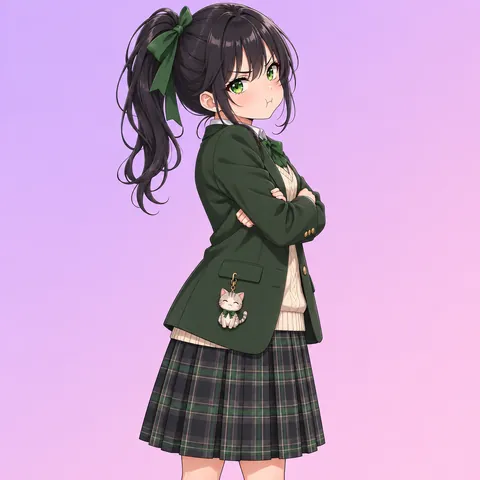
Tsundere joins tsun tsun, a word for acting aloof or standoffish, with dere dere, acting affectionate. The label grew out of Japanese bishoujo game fandom and became one of the best known anime personality types. A tsundere girl is cold or bossy toward someone she secretly cares about, then lets the warmth slip out in small ways she immediately denies. Show both halves in the design: crossed arms or a turned head, plus one soft detail such as a cute keychain she claims was a gift. Give the prickly side a reason, like pride or embarrassment, so she reads as a person rather than a punchline. Skip the most worn shortcut of a tiny girl with long twin tails and a quick temper.
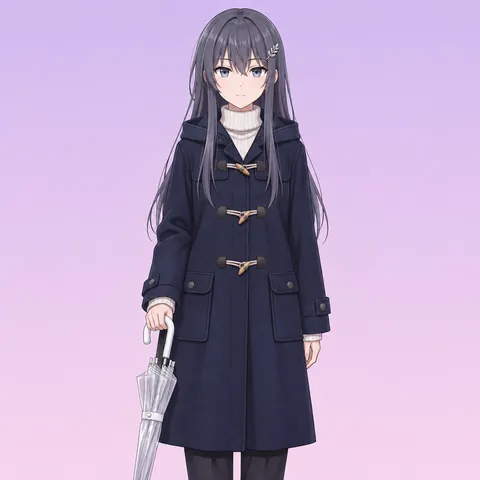
The kuu in kuudere comes from kuuru, the Japanese spelling of the English word cool. A kuudere girl stays calm, logical and difficult to read, and she shows that she cares through actions rather than words. She might fix a classmate’s bike chain without comment or quietly remember everyone’s favorite drink. Draw her with a steady gaze, relaxed hands and a tidy silhouette, then add one detail that gives her away, such as a pocket full of cat treats. Kuudere is easy to confuse with deadpan: a kuudere is reserved, while a deadpan girl is usually joking. Avoid short pale-blue hair with a white pilot suit, a pairing fans tie to one very famous character.
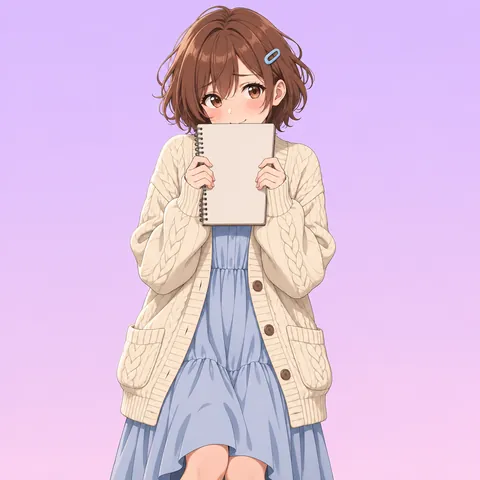
Fans usually trace dandere to danmari, meaning silence, joined with dere. A dandere girl seems shy or withdrawn until someone earns her trust, and then she turns out to be talkative, funny and warm. The appeal is that change, so give her something to hide behind, like a sketchbook, a hood or a cardigan with sleeves past her fingers, and one passion she will talk about for an hour once she relaxes. Use soft posture and small gestures in the drawing. Her shyness is a pace rather than a flaw to fix. Write the scene where she speaks first, because that moment is her whole arc in miniature.
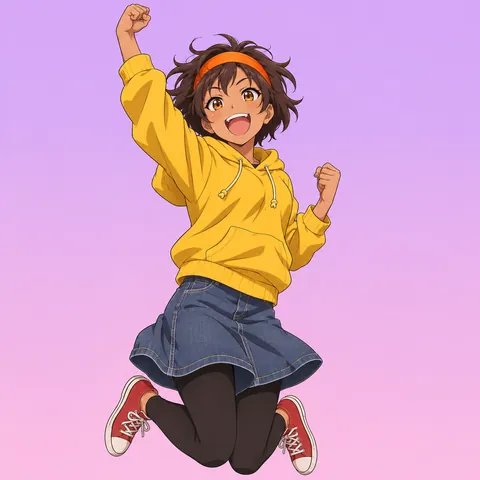
Genki is an everyday Japanese word for healthy, lively or in good spirits. A genki girl runs on enthusiasm: first to volunteer, loudest in the cheering section, never walking when she can jog. Put motion into her silhouette with a bouncing ponytail, sneakers or a jacket tied at the waist, and give her one bright accent color. Her pose should look caught mid-step rather than standing still. The most interesting genki girls have one thing that drains them, like a silent exam hall or a slow cooking class, because a quiet moment shows the person underneath the noise. Pair her with a calmer friend to make both of them read more clearly.
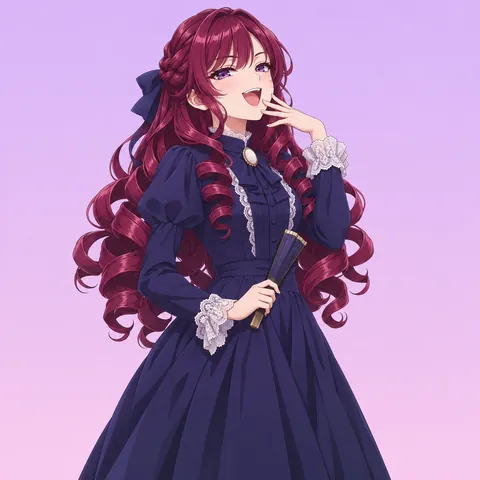
Ojou-sama is a polite Japanese term for the young daughter of a well-off family. In anime it becomes an archetype with formal speech, perfect posture and sometimes a dramatic laugh behind the back of one hand. Ringlet curls, a frilled collar and a folding fan are the usual visual shorthand, so pick one or two rather than all three. The fun is in what money cannot buy her: a rich girl who works weekends at a bathhouse, or a noble adventurer who still cannot pitch a tent. Keep her pride, but give her one skill she earned herself, so her confidence has something real underneath it.
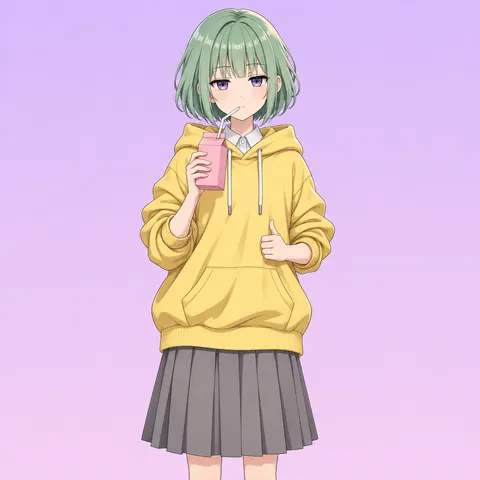
A deadpan girl says everything, good news and absurd jokes alike, with the same flat expression. Fans sometimes file her under kuudere, but her flatness is comedy: she drops a ridiculous line in a level voice and lets everyone else react. Half-lidded eyes, a neutral mouth and one small surprising gesture, like a thumbs-up or a peace sign held at waist height, carry the look. Put her in a colorful outfit or give her a very cute accessory for contrast. Her personality hook should be a dry habit, such as rating every school lunch out of ten or narrating her own bad luck like a sports commentator.
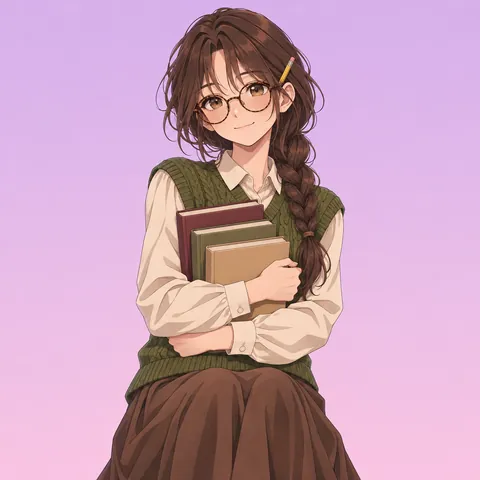
The bookish girl reads on the bus, treats her library card like a passport and knows one strange fact about every topic. Glasses and a braid are the classic shorthand; a canvas book bag, a cardigan with deep pockets or a bookmark tucked behind one ear can say the same thing with less cliché. Decide what she reads, because a fantasy fan, a mystery buff and a collector of science magazines dress and act differently. Then give her somewhere to use the knowledge, such as an astronomy club, a bookshop counter or a detective case, so she does more in her story than stand beside a shelf.
Names and hooks
School-life anime girls usually have a Japanese given name and family name. Family names often come from places and landscape words, and girls’ given names often end in the syllables ko, mi, ka or na. Names ending in ko became much less common after the mid-1980s, so this mixer leans on modern names like Fumika and Koharu, given name first as in most English releases. Fantasy series often use a Western-style given name with an invented surname, so the second set covers adventurers, witches and other worlds.
Japanese given name + family name
One small habit that makes her feel real.
Guide
This anime girl maker turns a handful of choices into a finished drawing, but the choices still matter. Work through these five steps in order, and check each new decision against the ones before it. A girl whose expression, job, outfit and habit all point the same way is easier to draw again and easier to write.
Start with personality, because it decides how she stands and what her face does. A tsundere crosses her arms and looks away, a genki girl is caught mid-bounce, a deadpan girl stares straight ahead with half-lidded eyes. Read the archetype cards above if the terms are new, then pick the one closest to how she would react to a surprise. Avoid stacking types: a girl who is tsundere, kuudere and chuunibyou at once reads as nobody in particular. If no label fits, clear the archetype and describe her expression in plain words in the details box.
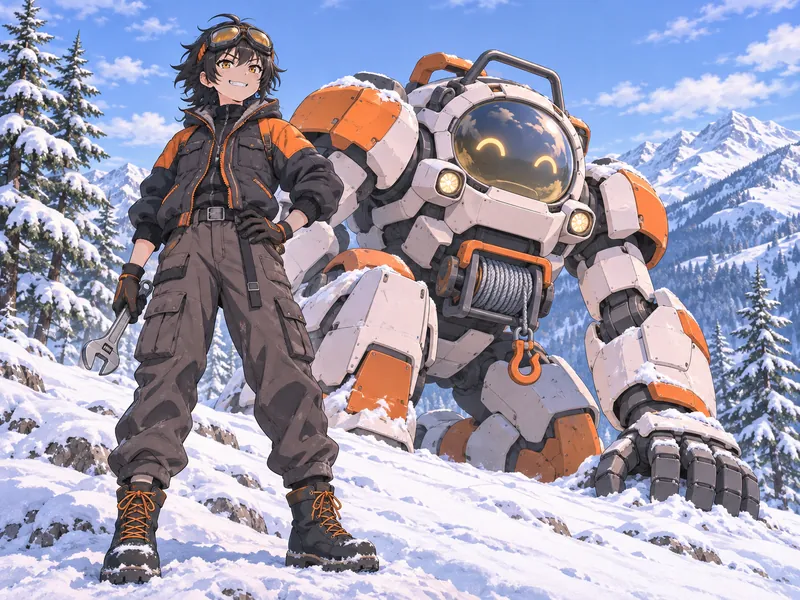
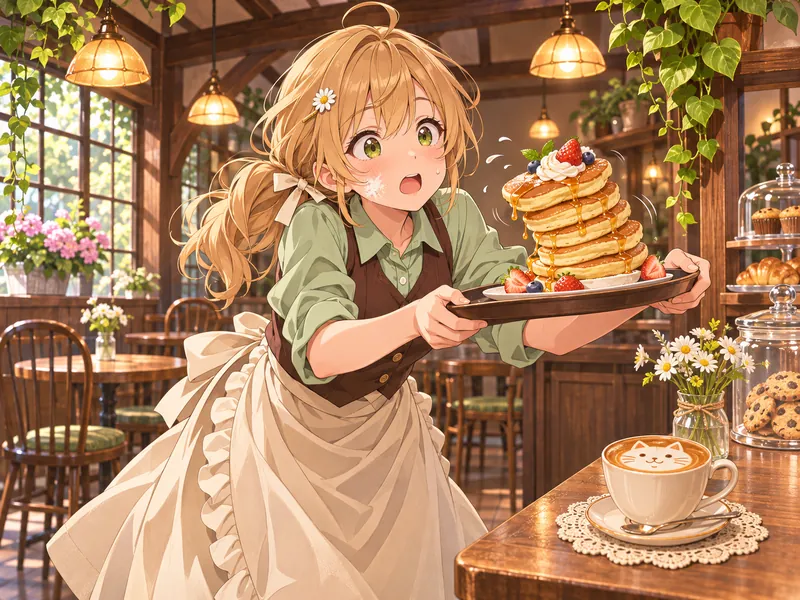
A role gives her props, a place and people to talk to. A shrine maiden has a broom and early mornings, a mecha pilot has a hangar and a crew, a café worker has regulars and a rush hour. Pick the setting and role, then a background that matches it, or keep the plain background if you want a clean character portrait. Mixing is fine: a shrine maiden in a hoodie on her day off can be more memorable than one in full robes. Write one sentence about what she does on an ordinary Tuesday, and the rest of her story gets easier.
Anime girls are often recognized by outline alone, so choose a hairstyle and an outfit that read at thumbnail size, then a single signature accessory such as star clips, a fox mask or a pocket watch. One accessory is enough; three compete for attention. Keep everything modest and practical for her role: knee-length skirts, sleeves where she needs them, shoes she could actually run in. If you want cat ears, wings or a halo, add one fantasy trait and let the rest of the design stay simple, so the trait does the work.
Choose a hair color, an eye color and one outfit color that repeats somewhere else on her, like a scarf that matches her eyes. Some combinations belong to famous characters and will make yours read as fan art: teal twin tails with a headset, a short blue bob with a maid outfit, long red-orange hair with a red bodysuit, pink hair with small horns and a red uniform, or odango buns with a sailor-style hero costume. Change two of the three elements and the resemblance disappears. When in doubt, pick an unusual pairing such as plum hair with amber eyes.
Use the name mixer for a Japanese or fantasy-world name, then pick a personality hook or write your own: one small, specific habit beats a tragic backstory. Choose Full body to see the outfit, Portrait for an avatar, or Ref sheet for front, side and back views you can draw from later. If you are stuck at any step, press Surprise me and keep only the parts you like. Save the description with the image, so the next drawing of her keeps the same clips, colors and hook.
Other fandoms
 AnimeOC Creator
 Anime PFPOC Creator
 GachaOC Creator
 VTuberOC Creator
 VocaloidOC Creator
 Uma MusumeOC Creator
Tools
FAQ
Sign up and your first pack comes with 100 bonus credits.