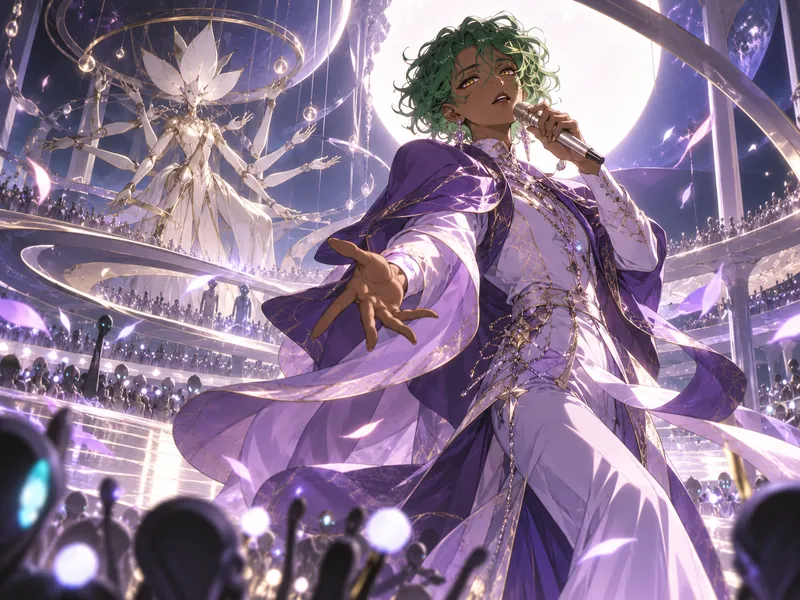
Veyu
Waltz singer- Jade curls and a violet cape suit
- A waltz that leaves room to breathe
- Shares rehearsal notes with a rival
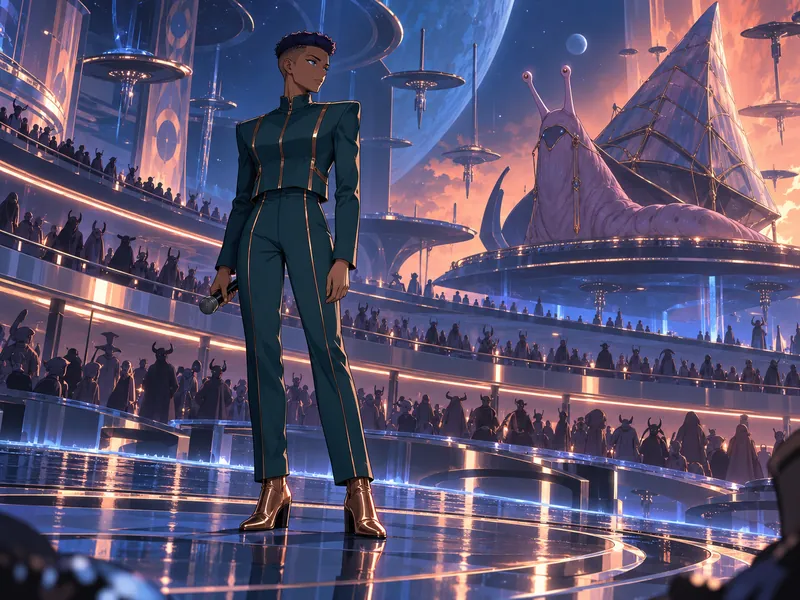
Build an ALNST OC around the moment before their first note. This Alien Stage OC Creator pairs a human singer with a voice, an original alien guardian and a stage concept. Choose a tailored costume, sketch a friendship or rivalry, and turn the performance into character art. The examples use a gentle fan alternate universe focused on rehearsal and music, not the original series' darker events.
Ideas
Start with a song decision instead of an elaborate secret history. Each contestant below has a different silhouette, rehearsal problem and relationship to an original guardian. Use this idea loads a coherent starting point into the maker; change the name, voice or stage before drawing. These are fan concepts, not missing canon contestants or official future rounds. The extra Surprise me presets offer more starting combinations beyond the illustrated six.


Art styles
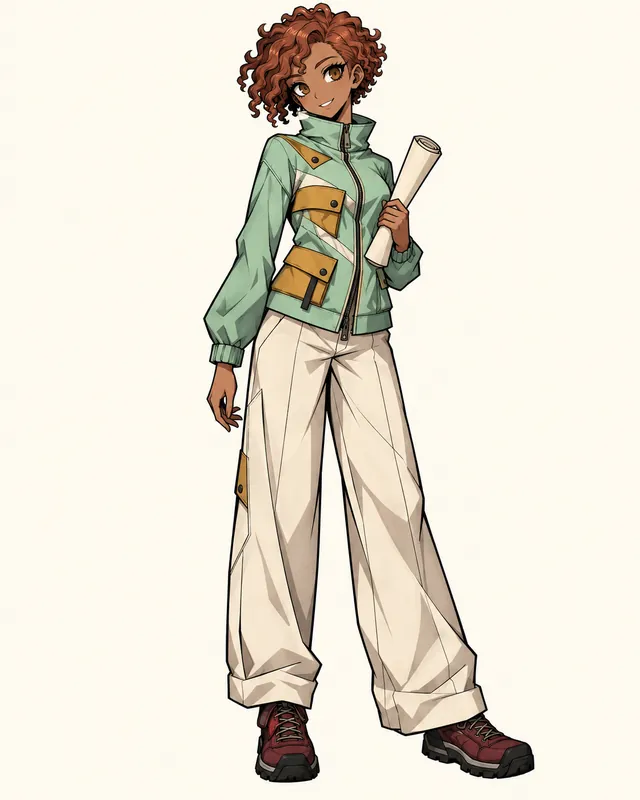
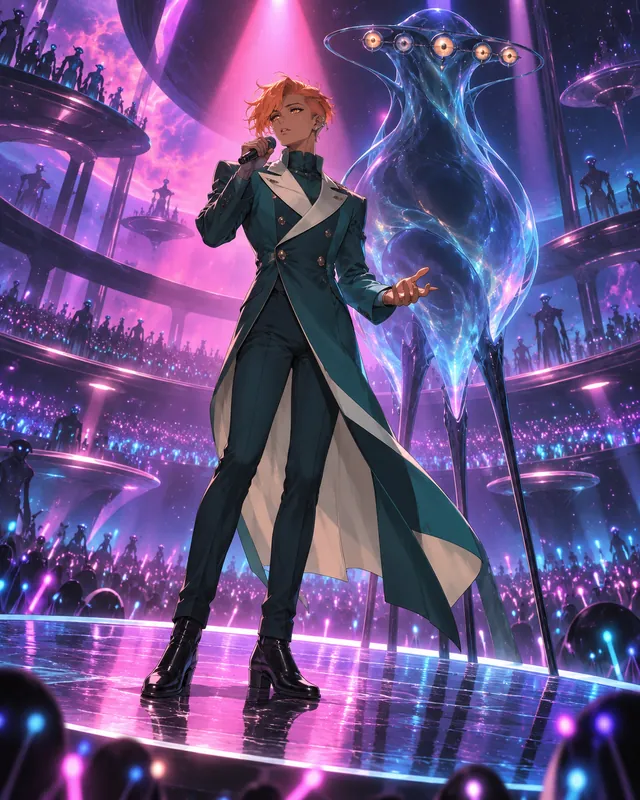
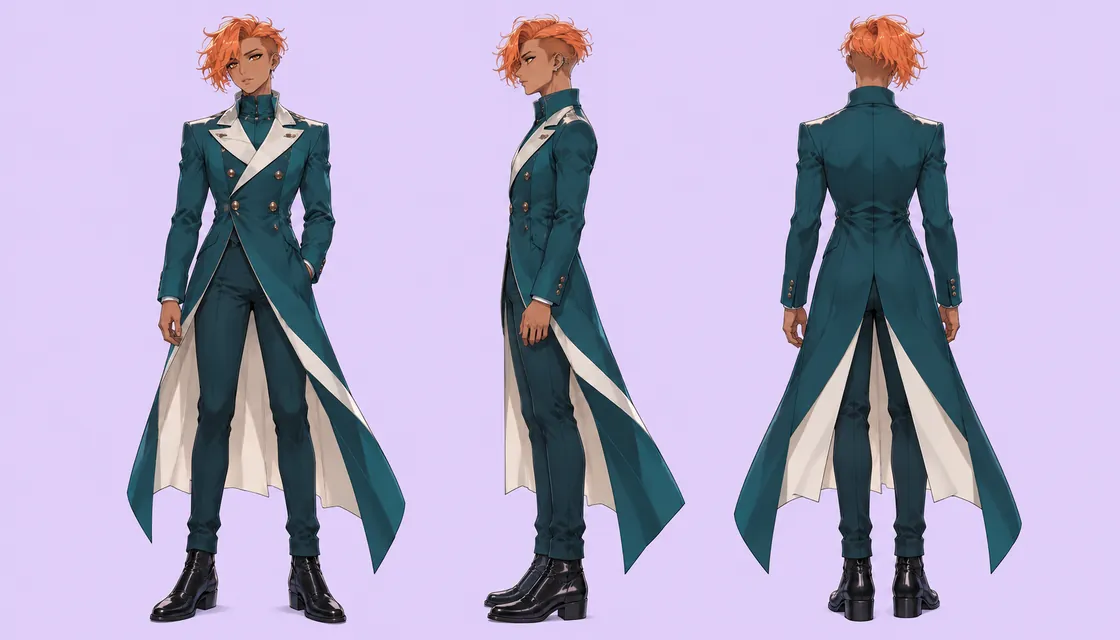
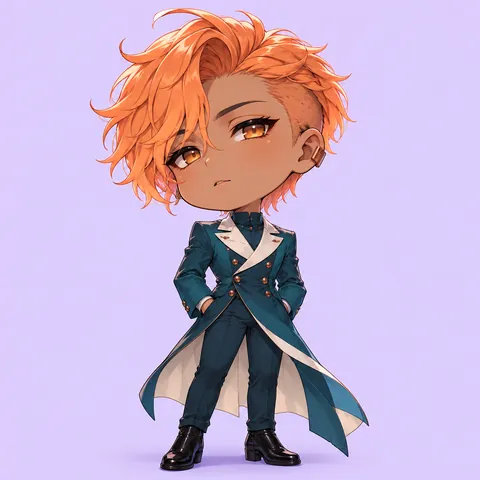
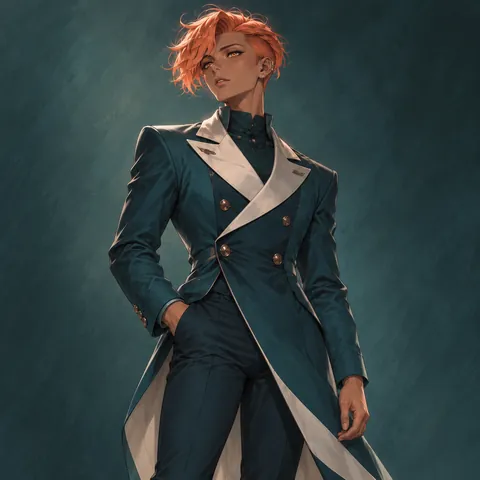
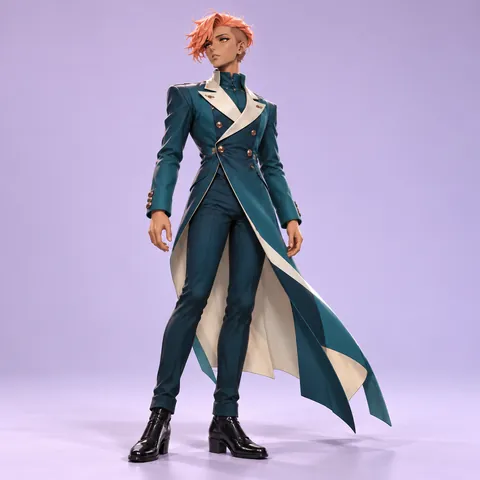
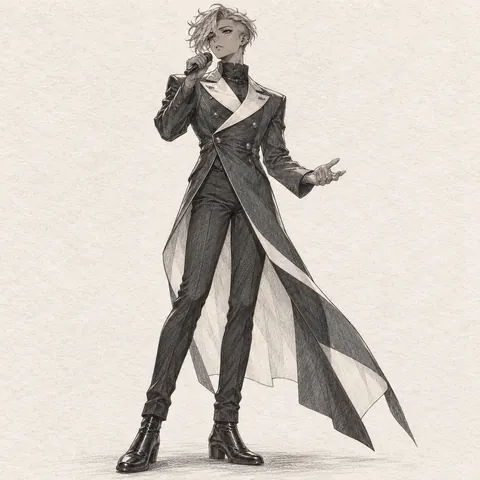
Meet Aven: warm brown skin, an apricot side sweep with a shaved right temple, amber eyes and a teal double-breasted stage jacket with ivory diagonal lapels. Aven sings warm alto synth-pop and counts the intro quietly. The style samples preserve that identity while changing proportions or materials. Use the reference sheet as an Alien Stage OC base for your own drawing notes; compare the hair, cuff, jacket seams and boots before accepting a new interpretation.
Know the rules
Alien Stage centers on humans raised under alien control and entered into a singing competition for alien viewers. Guardians are part of that unequal world, not simply friendly managers. This page deliberately uses a softer rehearsal-focused fan AU for its examples. Keep that distinction in your profile: you can borrow the stage setting without reproducing the original story's harmful events. The costume categories below are design suggestions, not official ranks or required uniforms.
Sources: Alien Stage premise and rounds; Character roster; MIZISUA and guardians
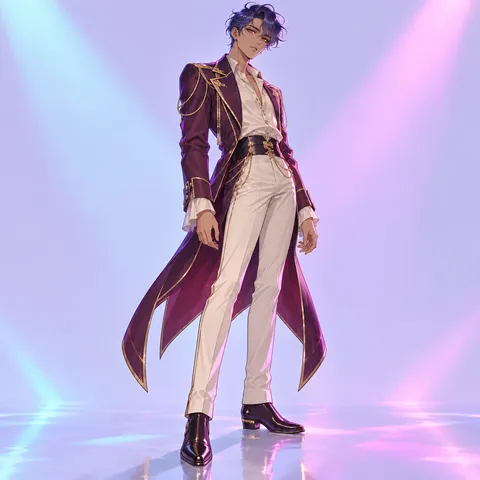
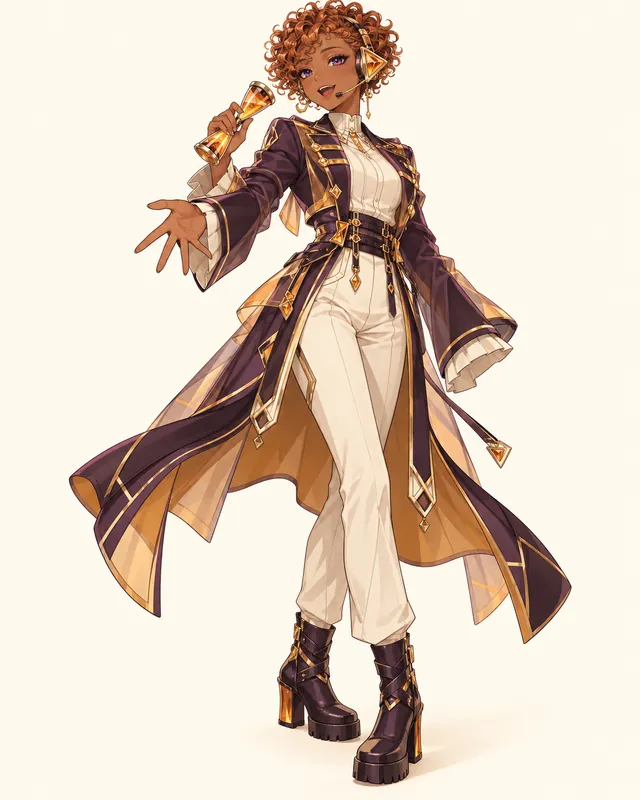
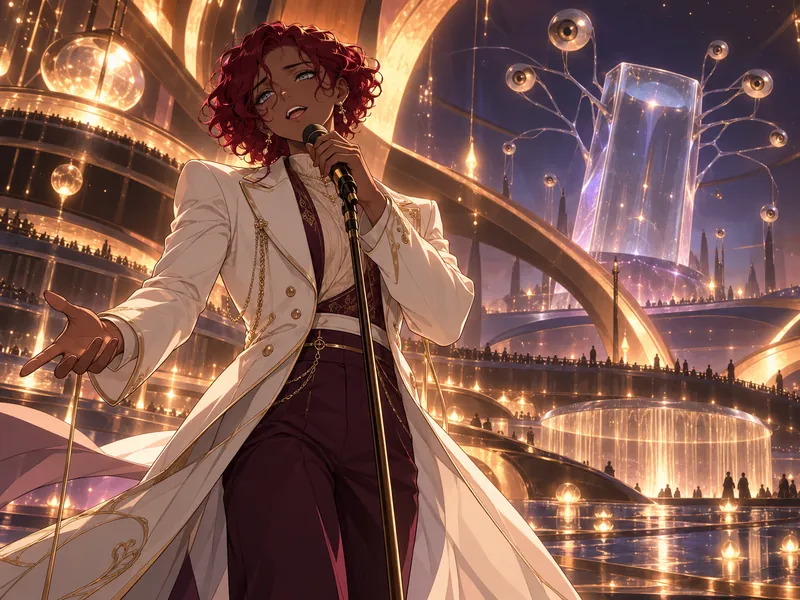
A long split hem creates a readable shape when a singer turns, while a fitted upper half keeps the face and microphone visible. Choose one strong contrast at the lapels and repeat it at a cuff or boot seam. A tailcoat does not mean the contestant is royal or automatically favored. Tie the cut to a performance choice: a still opening verse followed by a broad turn in the chorus. The illustrated plum coat belongs to a separate original costume model, not to Aven or any of the six idea singers.
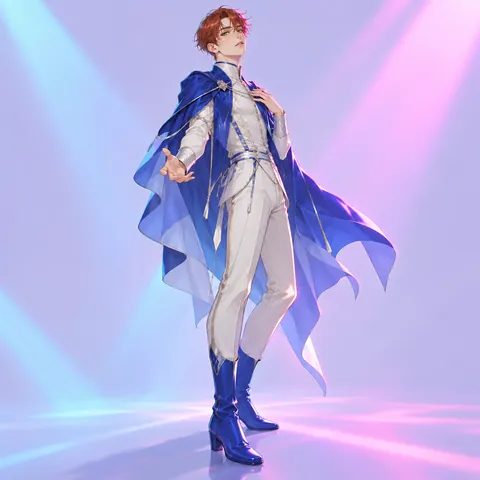
A shoulder cape frames the head without hiding the hands. Put a fully covered suit beneath it and specify where the closure sits so a reference sheet can show a consistent back view. Keep the cape free of official symbols. The story question is when the singer chooses to move: saving one turn for an important phrase can feel more deliberate than constant motion. An alien guardian might prefer a larger spectacle, giving the contestant a small, understandable disagreement to work through during rehearsal.
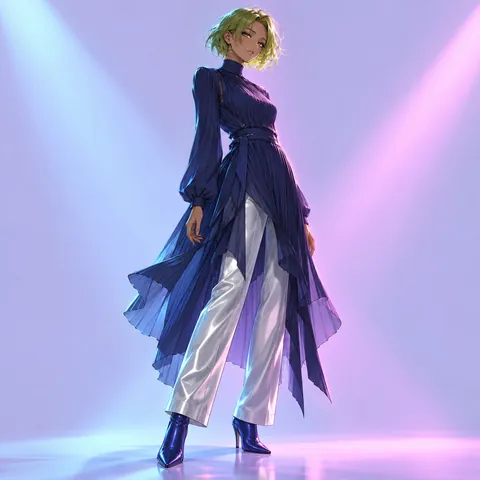
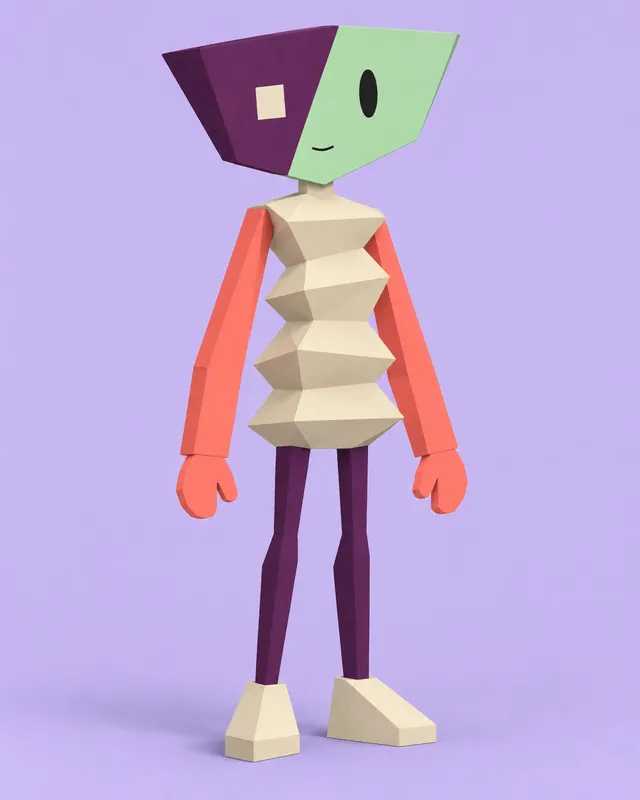
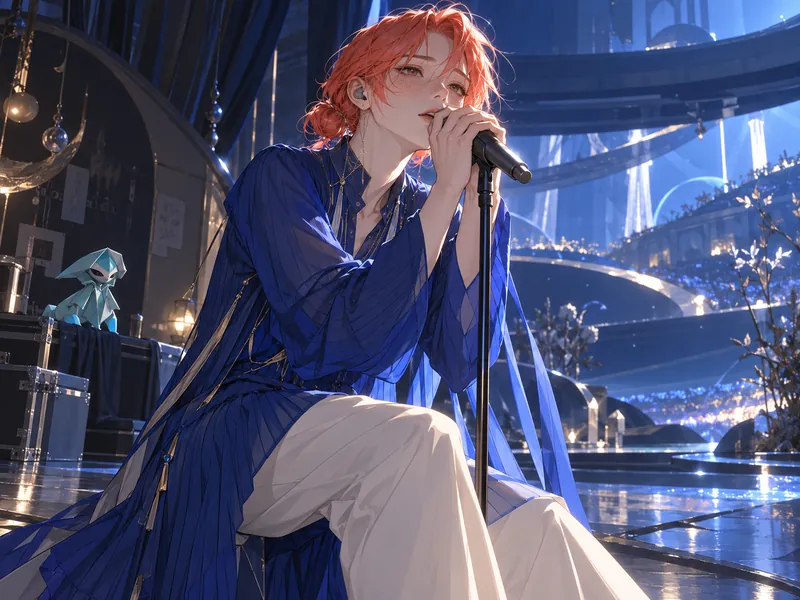
Pleats repeat the visual idea of a beat. A high-neck tunic over trousers can create a striking idol silhouette without copying a familiar white dress from the cast. Decide whether the folds stay narrow through the torso or open near the hem. Use one accent color so the folds remain readable in a thumbnail. For the profile, connect this neat structure to a habit such as marking every entrance in a rehearsal notebook. Then give the singer one area where they are less orderly, such as rewriting a song title every week.
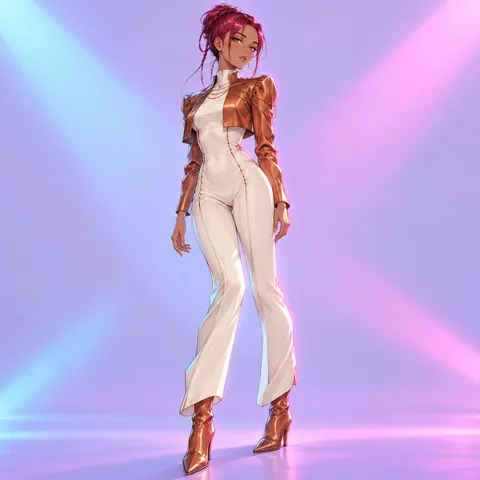
A short bolero over a complete high-neck jumpsuit gives the costume two clear layers. The lower layer covers the torso and legs; the jacket adds shape at the shoulders and sleeves. Choose contrasting materials rather than adding many accessories. Copper satin over matte ivory, for example, gives the lighting something to catch. Describe the base outfit explicitly so the image keeps its coverage across styles. In a contestant story, this can be a practical costume that allows an animated hand gesture while preserving a tidy silhouette.

A satin blazer reflects colored stage lighting, but the face should still be the strongest point of interest. Keep the shirt, trousers and boots simpler than the jacket. Choose a hairstyle that does not duplicate a canon performer's outline and avoid copying distinctive accessories from music-video shots. A satin outfit can belong to a reserved singer just as easily as an outgoing one. Write a rehearsal scene where the person notices another contestant's hesitation, then decides whether to offer help before their own soundcheck.
The alien guardian picker contains invented looks rather than portraits of existing guardians. Describe the relationship separately from the body shape: expectations, communication habits and a disagreement about the song are useful starting points. A round label records where your fan performance sits; it does not make the OC a canonical participant or predict a result. Keep contestant numbers in the notes-only field. That field is excluded from the image prompt, so the art does not need a painted number, copied stage logo or fake broadcast interface. Save the written profile alongside the image.
Contestant names
The recognizable canon pattern is a short personal name, often one or two syllables, rather than a long fantasy title. Mizi, Sua, Till, Ivan, Hyuna and Luka show the pattern; they are references, not suggestions in this mixer. Other humans and guardians use different forms, so this is a contestant naming aid rather than a rule for every alien. Roll a complete original given name, say it aloud with the song title, and check your favorite against the roster before publishing. No canon name from the supplied roster appears in these suggestions.
Complete short given names; no forced surname or random syllable pileup
These original song ideas fill the song field. They are writing prompts, not existing lyrics.
Guide
Use the same small set of decisions in the written profile and the drawing. A convincing contestant needs a recognizable sound, a costume that supports movement, a relationship that creates a scene and a reason for choosing this particular song. The following five passes keep those decisions connected. You can select and copy the template text below into a notes document; it is a usable planning form, not a claim to generate official statistics.
Alien Stage profile template: Name: [short given name]; Pronouns: [your choice]; Age: [adult or teen, with age-appropriate styling]; Voice: [range and vocal texture]; Song: [original title and what it means]; Genre: [musical approach]; Stage: [lighting and one movement]; Costume: [cut, layers and two colors]; Guardian: [original species, appearance and expectations]; Trait: [visible rehearsal habit]; Friend or rival: [name and one shared moment]; Contestant number or round: [written notes only]; Story setting: [canon-inspired or your named fan AU]. Copy this whole block and replace the bracketed parts. Leave uncertain details blank until they help the story. No score, popularity ranking or official unit code is implied by this form.
Choose a range and a texture, then decide what changes between the verse and chorus. A warm alto might begin with an almost spoken line before opening into a fuller refrain. A bright upper voice might use a deliberately restrained ending. The voice picker describes a performance idea; it is not a professional vocal assessment. Write how the singer prepares and what they find difficult. A limitation such as rushing an entrance is more useful than simply calling them the best singer, because it creates a rehearsal scene another character can participate in.
Choose an original alien appearance and write one expectation the guardian has about the performance. Perhaps they want brighter lights while the contestant wants the audience to hear a soft introduction. Keep the series' unequal human-alien context clear, and label a supportive version as your own alternate universe rather than universal canon. You do not need to reproduce harmful scenes to create tension. A disagreement over timing, presentation or rehearsal space can reveal the relationship. Give the human singer a preference and a voice in the scene, rather than treating the guardian's taste as the whole character.
Choose the largest costume shape first, then a hair silhouette and two main colors. Test whether the design still reads against the lighting: a mint blazer may need a dark shirt to stay visible under green beams. Describe a plain microphone and avoid official logos or copied broadcast graphics. Keep the number or round in the written field instead of asking the artwork to paint it. Request a reference sheet when you need the front, side and back to agree. This makes the output a practical Alien Stage OC template for drawing studies, with enough structure to guide later revisions.
An Alien Stage OC base should help you remember the person, not replace their profile. Compare the result against the name, hair shape, outfit layers and guardian notes you saved. Check both hands, the microphone grip and the seams between jacket and trousers. Look for accidental resemblance to the main cast, unexplained accessories or lettering that should not be there. Keep a promising pose even if you need to revise one costume detail. If you share the image, identify the character as your own fan concept and the story as your chosen AU. Save the profile text alongside the image so future drawings have a stable reference.
Other fandoms
Tools
FAQ



Sign up for 10 bonus credits and make your first OC free.