OC Creator logoOC Creator
YOUR CAST, QUESTIONABLE CONVERSATIONS

Incorrect Quote Generator

Give your characters a conversation they absolutely never had. Pick a mood, deal an original scene, then tap the speaker chips to discover who makes the funniest straight face. This free incorrect quote gen runs in your browser, with editable lines, saved favorites and shareable cards. No sign-up is needed.

  • 400 original dialogues
  • Ten mood packs
  • Free and local, no sign-up

The unofficial conversation desk

FREE + LOCAL

A tiny scene, a surprising cast. Nothing is posted anywhere.

Your cast (1 to 6 characters)
Mood pack

Tap names to recast. Click a line to edit. Lock the parts you love before dealing another conversation.

IQ

Cast notes / Chaotic

Original dialogue. Entirely unofficial.

At a club room

Nobody touch the red button.

Which red button?

Excellent. The camouflage worked.

occreator.org / incorrect quote / 3 characters

Draw this OC

Tap a speaker chip to give the line to someone else.

Favorites (0/20)

Saved only on this browser. Copy important cards before clearing browser data.

CAST STUDIES

Six casts. Six very different conversations.

These illustrated scenes use original characters and original dialogue. Each one shows a different relationship rather than a different coat of paint on the same joke. Load a scene, replace the names, and test whether swapping the speakers changes its meaning.

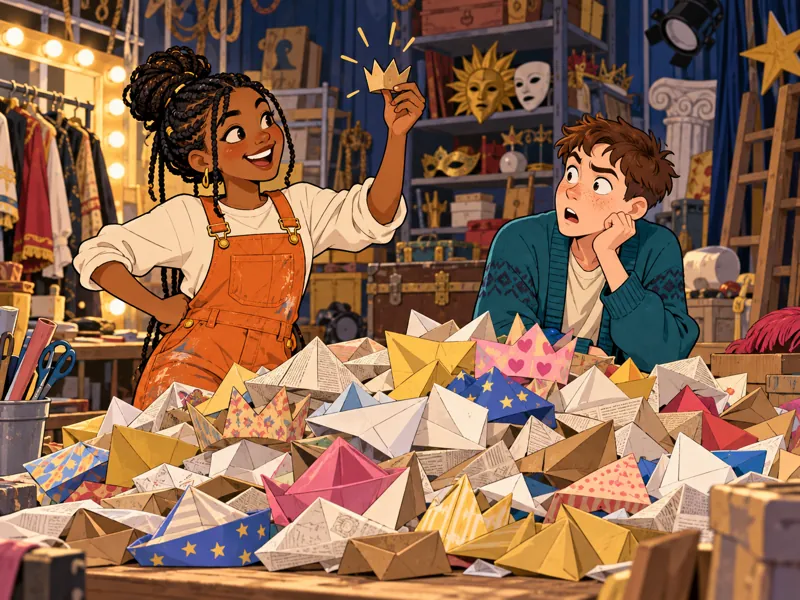
The paper-hat committee

Chaotic

The paper-hat committee

Miri: The paper hats elected a ruler.

Tobin: Please stop putting crowns on the stationery.

Miri treats a prop-room cleanup like an election campaign. Tobin would like to find the tape before the cardboard monarchy expands. The illustration puts the small crown beside an unreasonable number of hats so the joke reads without a caption. Give the practical line to your most dramatic OC and see whether the scene becomes more surprising. Keep the hats as a visual anchor if you turn this exchange into a two-panel comic.
A slightly sideways gift

Wholesome

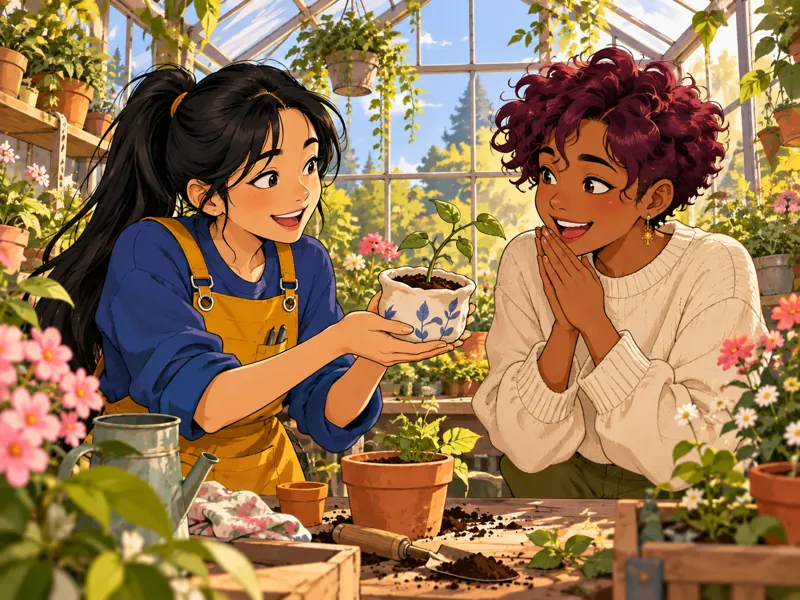
A slightly sideways gift

Nessa: Your clay pot leans a little.

Perrin: So does the seedling. They can practice together.

Nessa has made a planter that would not win a pottery contest. Perrin sees a home for the seedling instead of a flaw to correct. This is a useful pattern for a caring friendship: one character notices an imperfection, while the other offers a kinder interpretation. Swap the speakers if your usually nervous character deserves a moment of confidence. The plant supplies an easy drawing subject without making the conversation depend on a complicated backstory.

The bookmark excuse

Romantic

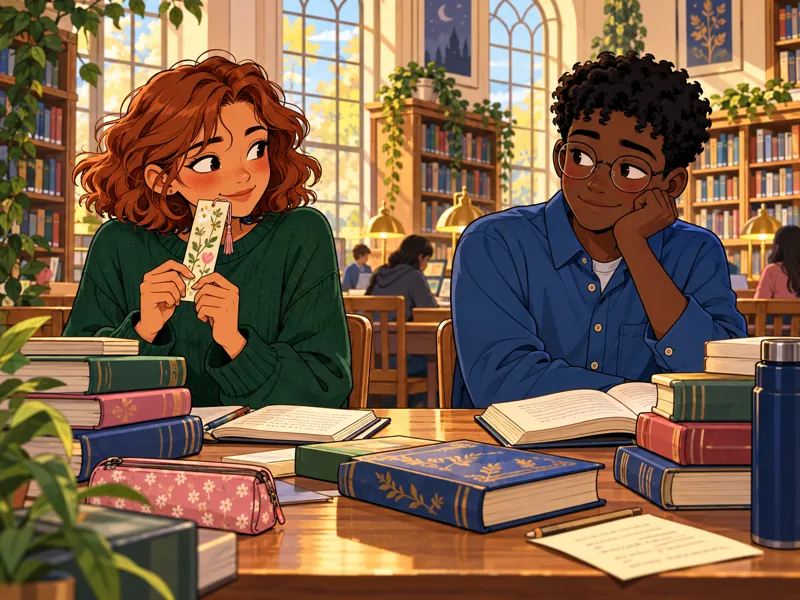
The bookmark excuse

Iria: This bookmark reminded me of you.

Calder: Because I keep losing my place when you smile?

Iria thought a handmade bookmark was a safe, ordinary gift. Calder accidentally answers with the honest version of his thoughts. The scene stays at the level of a sweet crush: a small present, a little embarrassment, and enough space for either character to change the subject. For a slower relationship, edit the answer into an unfinished sentence. For a confident character, keep the line and move the flustered reaction into the illustration.

The uneven birthday cake

Found family

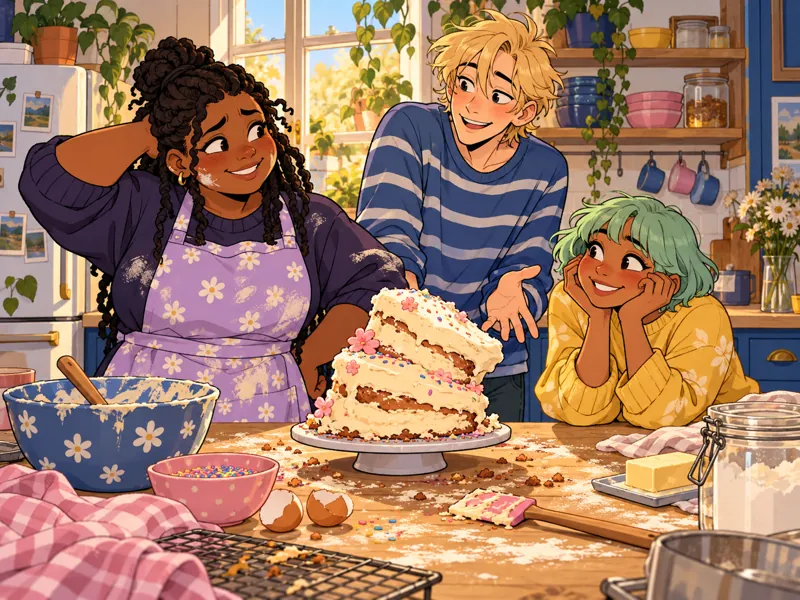
The uneven birthday cake

Orla: Who added my birthday to the calendar?

Bren: The same committee that cannot keep a cake level.

Savi: We measured the frosting with enthusiasm.

Orla is still getting used to a household that remembers small things. Bren gives a practical answer while Savi proudly defends the leaning cake. A third speaker makes the warmth feel shared rather than delivered as a speech. Notice that nobody has to explain why Orla needs reassurance. You can give the scene more history in your own story, but the short exchange works because the birthday and the imperfect cake make the care visible.

The pebble scoreboard

Rivals

The pebble scoreboard

Dessa: My paper bridge held seven pebbles.

Quin: Mine held eight and my disappointment in your counting.

Dessa and Quin have turned a science project into a very polite contest. Their rivalry has a specific object, a clear measurement, and a tiny disagreement that cannot seriously hurt either character. That keeps the teasing playful. Try giving the boast to the quieter rival; the result may reveal an unexpected competitive streak. If you want a warmer ending, add your own line where they use both bridges to solve the same problem.

The map has a passenger

Adventure party

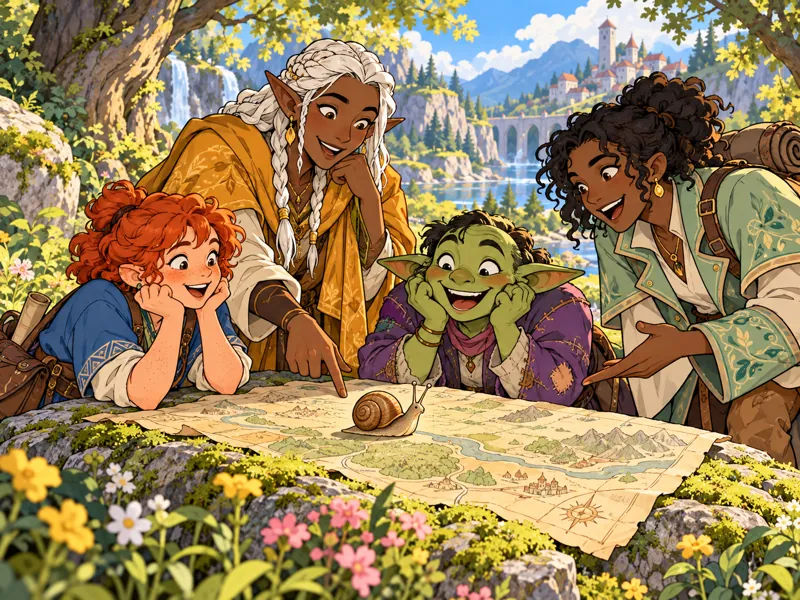
The map has a passenger

Fenn: There is a snail on the route.

Auren: It is making better progress than our planning meeting.

Kip: Should we ask it to lead?

Mallow: Only if it agrees to stop at the bakery.

Four travelers crowd around a map while its smallest visitor quietly becomes the most convincing guide. Each line has a different job: notice, compare, propose, and add a condition. This is a useful structure for a larger cast because every character gets a reason to speak. Recast the last line to find your party member who always prioritizes supplies. The forest setting also makes a clear starting point for the Draw this OC bridge.

Mood packs

Choose the kind of trouble they get into

Mood changes the relationship behind the exchange, not just a label above it. Start with the feeling your scene should leave behind. You can still edit a word or swap a speaker afterward. All ten packs keep the stakes suitable for teens.

Chaotic

Use Chaotic when your cast turns a simple job into a committee meeting about something ridiculous. The humor comes from an impractical proposal and a grounded response, not from cruelty or danger. A clipboard, a chair, or a paper crown can become the focus of the whole scene. Cast the planner and the skeptic first, then switch them. If both versions work, you have found a useful contrast in your characters. Keep the response short so the reader reaches the reversal before the joke starts explaining itself.

  • Overconfident plans
  • Small disasters
  • Big reactions

Wholesome

Wholesome scenes let a character accept an imperfect gift, remember a preference, or make room for someone. These exchanges work best when the kindness has an ordinary physical detail: a green pencil, a repaired scarf, or a stool that wobbles. Give the reassuring line to someone who rarely talks about feelings. The gap between their usual behavior and this little act can say more than a long speech. This pack also works for friendships, mentors, teammates, and characters who are learning to trust each other.

  • Small kindnesses
  • Handmade gifts
  • Gentle replies

Romantic

Romantic means a shared umbrella, a saved seat, or a compliment that arrives a little too honestly. It stays sweet and flustered, with no innuendo. The strongest pairing is not always the bold character and the shy character. Try two people who are both careful, or two confident people who suddenly forget what they meant to say. Keep the scene comfortable for the characters involved. You decide whether the exchange becomes part of their story or remains a playful alternate version of their relationship.

  • Sweet crushes
  • Flustered honesty
  • No innuendo

Found family

Found family exchanges make belonging concrete. A spare key, a place for a mug, or an awkward birthday cake tells the reader that someone is expected to stay. The humor can soften the moment without dismissing it. Give one character the uncertain question and another the ordinary answer that makes acceptance feel natural. With a larger cast, let a third person add a practical detail. Avoid making everyone deliver the same reassurance; different kinds of care give the group its own rhythm.

  • Room at the table
  • Everyday care
  • Belonging

Siblings

Siblings argue over blankets, borrow sweaters, and preserve embarrassing drawings as if they belong in an archive. Their dialogue assumes a history together, but the joke should remain readable to someone who has never met them. Choose a small disagreement with room for both characters to answer back. Recast the first line to reverse who usually starts trouble. If the scene feels too sharp, edit the response into a practical compromise. Familiar teasing works when the reader can still see that both characters belong in the conversation.

  • Shared history
  • Petty negotiations
  • Familiar teasing

Rivals

Rivals need something to compete over. A puzzle time, a paper bridge, or the neatness of a diagram gives their banter a specific target. The templates keep the rivalry playful rather than threatening. Try letting the apparent loser deliver the final line; they may care more about having a good answer than winning the contest. A tie can also reveal how much the characters enjoy challenging each other. Keep their skills distinct so they do not sound like the same person arguing with a mirror.

  • Friendly contests
  • Precise boasts
  • Mutual respect

Gentle angst

Gentle angst makes room for disappointment, a missed moment, or uncertainty about returning to an old place. It avoids self-harm and real-world tragedies. The second speaker does not have to solve everything. Offering company, time, or a chair near the window can be enough. Leave a little silence around these lines when turning them into a comic. A restrained expression or an untouched envelope may carry the feeling better than a dramatic pose. Use the pack when you want tenderness without forcing a cheerful conclusion.

  • Quiet uncertainty
  • Patient company
  • Soft endings

Adventure party

Adventure party scenes focus on the work between the grand adventures: packing, reading a map, choosing a path, and deciding who gets to call the next rest stop. That makes them useful for roleplaying groups and fantasy ensembles. Give each speaker a practical priority such as speed, comfort, curiosity, or snacks. A four-person exchange becomes clearer when each line advances a different concern. You can draw the whole group around one prop instead of trying to explain an entire quest in a single image.

  • Maps and supplies
  • Group decisions
  • Travel mishaps

School

School scenes use projects, notebooks, rehearsals, and library clubs as shared ground. The humor comes from different approaches to the same assignment. One character plans too much, another draws in the margins, and someone has to carry the model through the doorway. Keep the characters age-appropriate and the stakes small. The templates do not rely on humiliating a classmate or mocking a learning difficulty. For a club comic, choose one recognizable prop and let the characters disagree about what counts as being prepared.

  • Club projects
  • Study habits
  • Low-stakes rivalry

Fantasy

Fantasy treats magic as something the characters have to live with every day. An enchanted door may want a compliment; a tidy cloak may object to a picnic. The joke works because the magical detail has an ordinary inconvenience attached to it. Give the practical response to a character who is used to wonders, and the complaint to someone who expected magic to make life simpler. Keep the rules of your own world in mind. Edit any spell or creature detail that would not fit your setting.

  • Polite enchantments
  • Familiar problems
  • Everyday magic

Guide

Build a conversation that sounds like your cast

You do not need a complete biography to start. A short scene can reveal who makes plans, who notices problems, and who quietly keeps everyone comfortable. Use these six steps to move from a random card to something you would actually want to keep.

  1. 1

    1. Name the people in the room

    Enter one to six names and select they, she, or he for each character. Start with two if you want a clean setup and response. A single character gets a short monologue with a turn, while groups get separately written dialogues where every speaker helps set up the ending. Short, distinct names make a small card easier to read. The names are labels, not instructions to imitate a person. Use your OCs or fictional characters, and avoid presenting a generated line as something a real person actually said.

  2. 2

    2. Pick a relationship, then a mood

    Think about what the characters want from each other before choosing a pack. A rival wants acknowledgment; a new housemate wants to belong; a friend may just want someone to appreciate a crooked clay pot. Choose the mood that fits that tension and generate a card. If the result does not fit, reroll without changing your cast. The setting is a stage direction for the scene, not a claim about any fandom. You can treat an unexpected location as an alternate-universe prompt.

  3. 3

    3. Recast the line that surprises you

    Tap a speaker chip to cycle through your cast. This is the fastest way to test a different dynamic without losing a good exchange. Try giving the sensible response to the character who normally causes trouble. Shuffle cast changes all unlocked speaker assignments together. Pronoun slots in generated lines follow the current cast settings. If you manually replace a line with plain text, it becomes your wording, so check any pronouns you typed yourself after changing the cast.

  4. 4

    4. Keep the good part and rewrite the rest

    Lock a line when its wording and speaker feel right. A locked line stays put during a new roll or cast shuffle. Unlock it before editing or recasting it again. The small reroll button changes one line, which is useful for experimenting but can break the original setup and response; read the whole card afterward. Click directly into an unlocked line to edit it. A specific prop or a phrase your OC would use often makes a random exchange feel much more personal.

  5. 5

    5. Deal five and choose a keeper

    Each mood has 40 distinct dialogues: 8 solo, 14 duo, 10 trio, and 8 ensemble scenes. Generate and Deal 5 share a shuffle bag for each mood and cast size. Every dialogue in that bag appears once before it refills, and the refill avoids the last four results. Reloading the page starts a new session. The five-card mode gives you alternatives without replacing the card you are already editing. Read the batch for relationship ideas, then choose one to bring it into the editor. Save favorites when you find a version you like. Favorites stay on this browser and are limited to twenty cards, with the newest kept first. They are a convenience rather than a permanent archive. Copy your best scenes into your own notes before clearing browser data or switching devices.

  6. 6

    6. Share a card or sketch the scene

    Copy text preserves speaker labels and the setting for a document or chat. PNG card exports the conversation as a readable image without the editing controls. Draw this OC sends the cast, mood, setting, and dialogue inspiration to the homepage image generator as a draft. It does not generate or purchase an image automatically. Review that draft, add visual descriptions of your characters, and choose your own image settings. The local text tool remains free; the separate image service follows its displayed credit and preview policy.

FAQ

Questions from the conversation desk

Juniper Vale, an original original anime characterKaito Arashi, an original anime characterSorrel the Fennec, an original Sonic the Hedgehog characterStarlit Quill, an original My Little Pony: Friendship is Magic characterRei Kagami, an original My Hero Academia characterFlarepaw, an original Warrior Cats characterTinsel the Raccoon, an original Five Nights at Freddy's character

Your next OC is one sentence away

Sign up for 10 bonus credits and make your first OC free.