
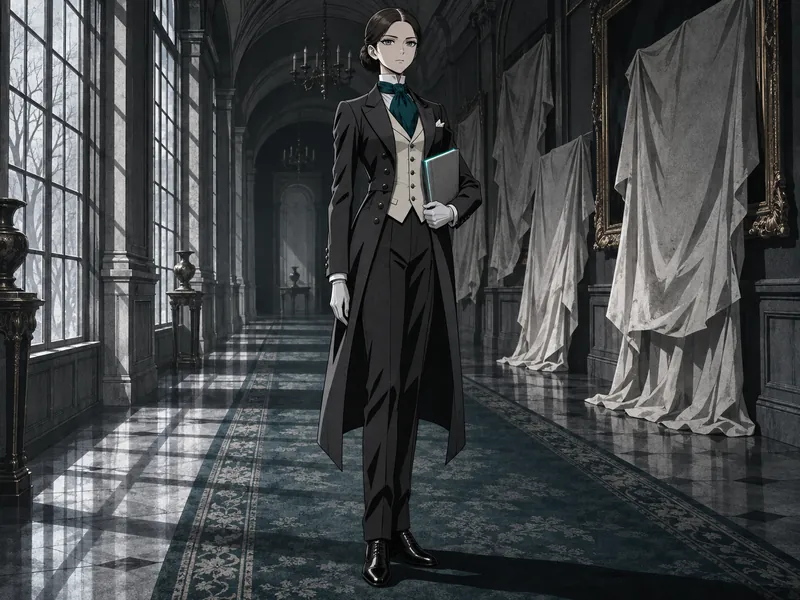
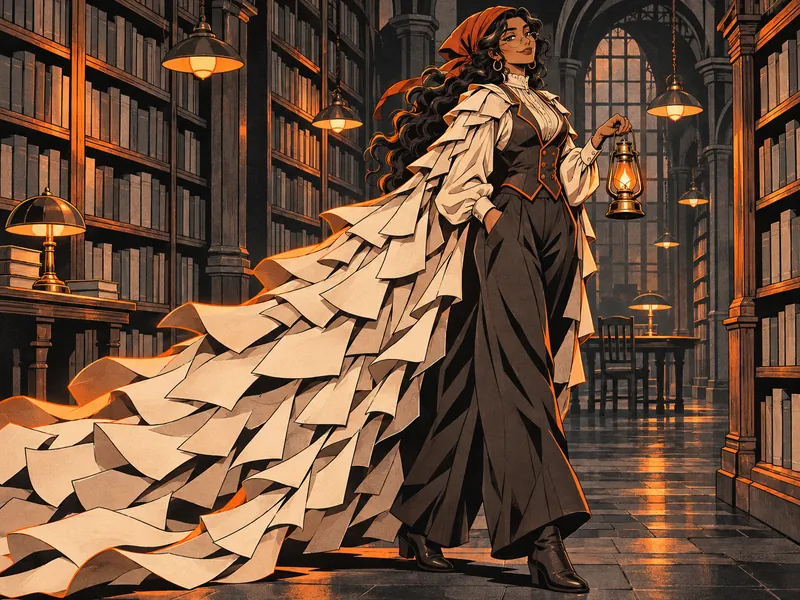
Wren Ashdown
Butler Sinner- Rooted in Jane Eyre.
- Says no politely, every time.
- Raised in a charity orphanage.
This free Limbus Company OC creator builds a Sinner the way the canon does: start from a classic book, then give the character an Identity, an E.G.O, a sin affinity and a way of fighting. Pick a public-domain novel or play the twelve canon Sinners have not used, and draw the result as a portrait, a full-body splash or a reference sheet.
Ideas
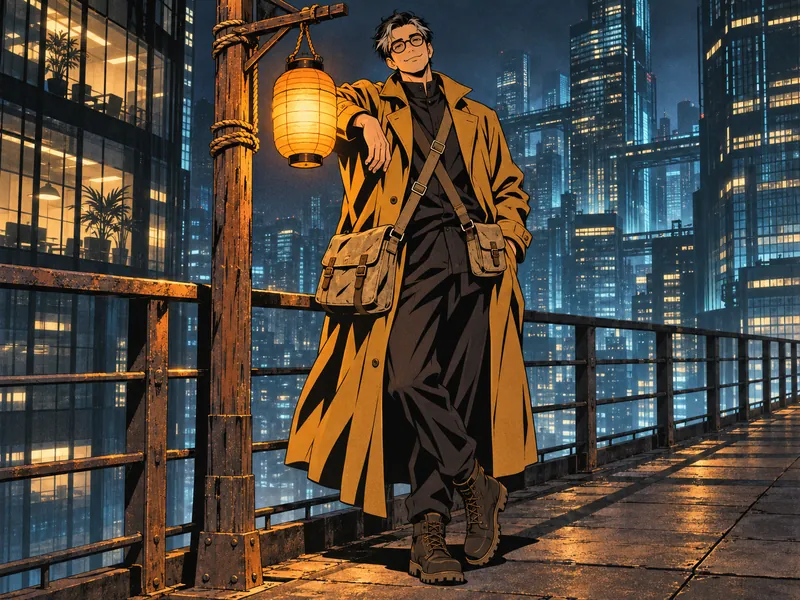
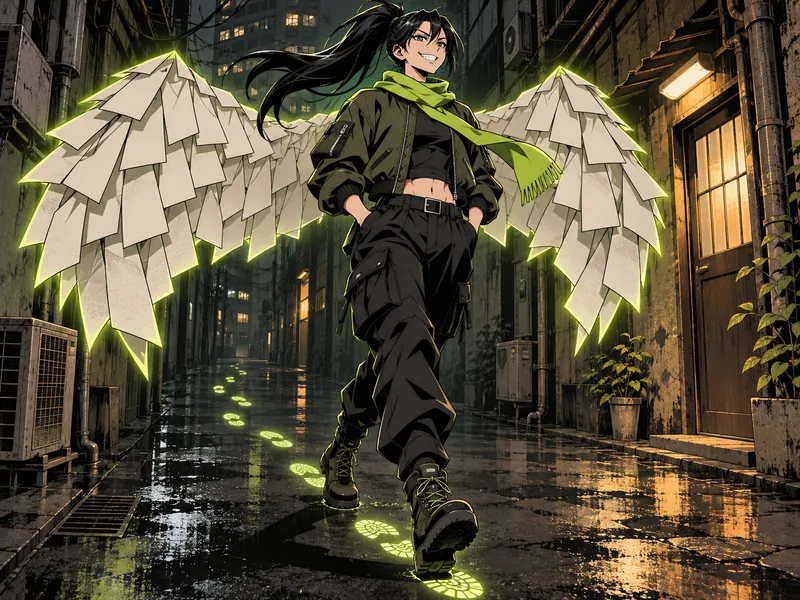
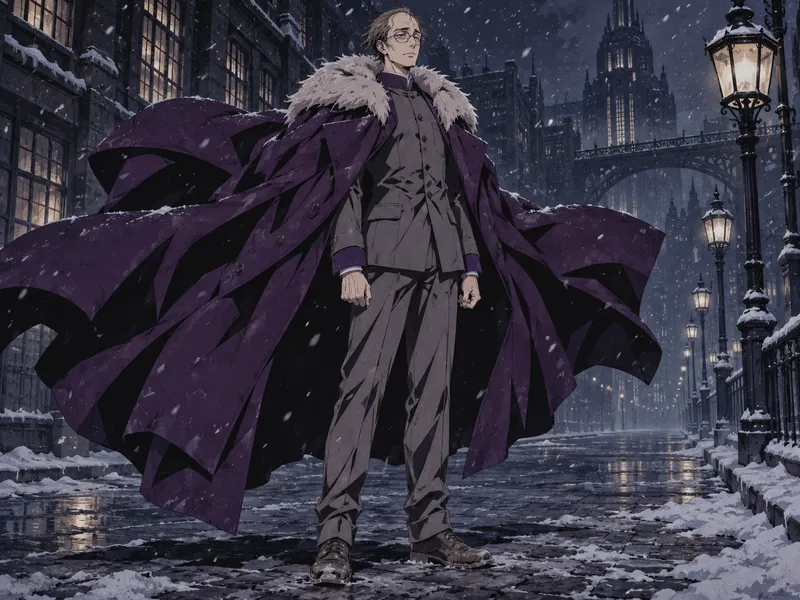
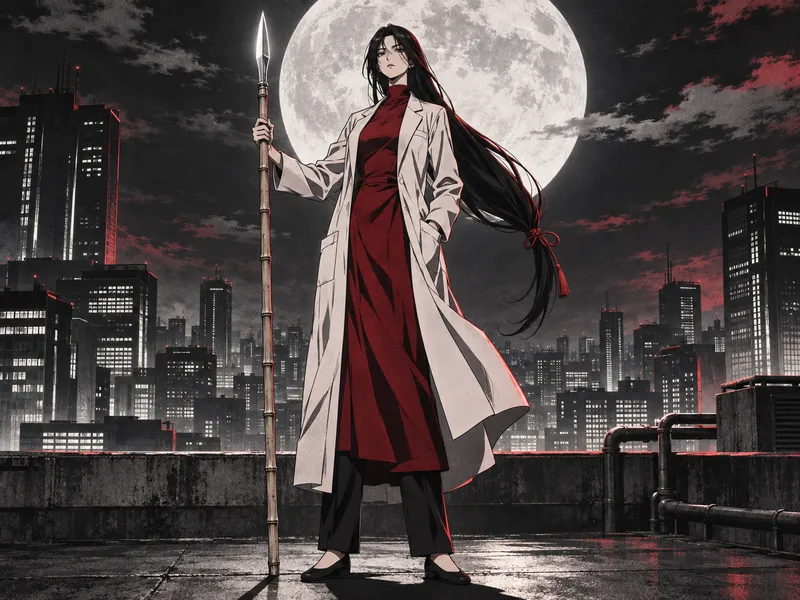
Each of these Limbus Company OCs starts from a public-domain book, takes one flaw from it and carries that flaw into the City. None of them borrows a canon Sinner, a canon Identity or a canon E.G.O; they show the method, not a cast to copy. Notice how the sin affinity names the flaw, the Identity names the job, and the E.G.O grows out of one object in the source. Use a card as written, then swap the book, the faction or the regret until the Sinner belongs to your own story.
Art styles
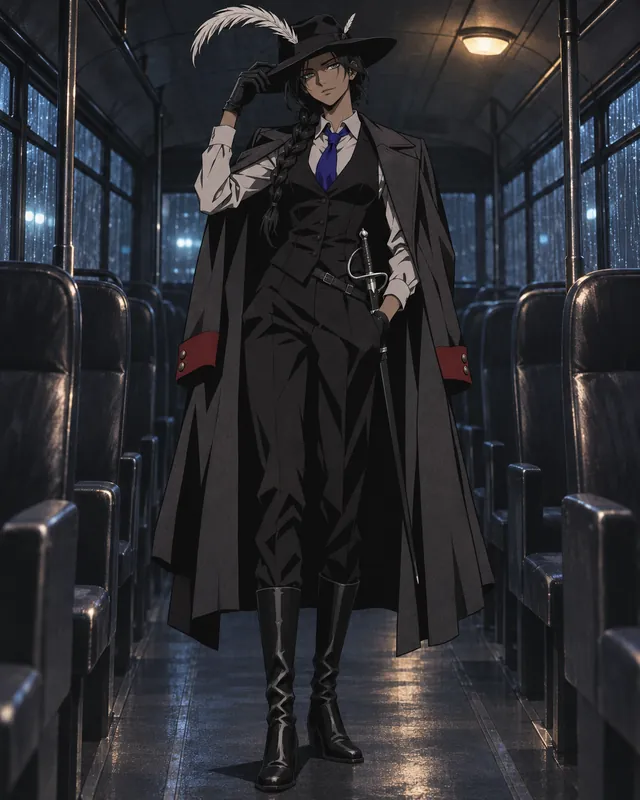
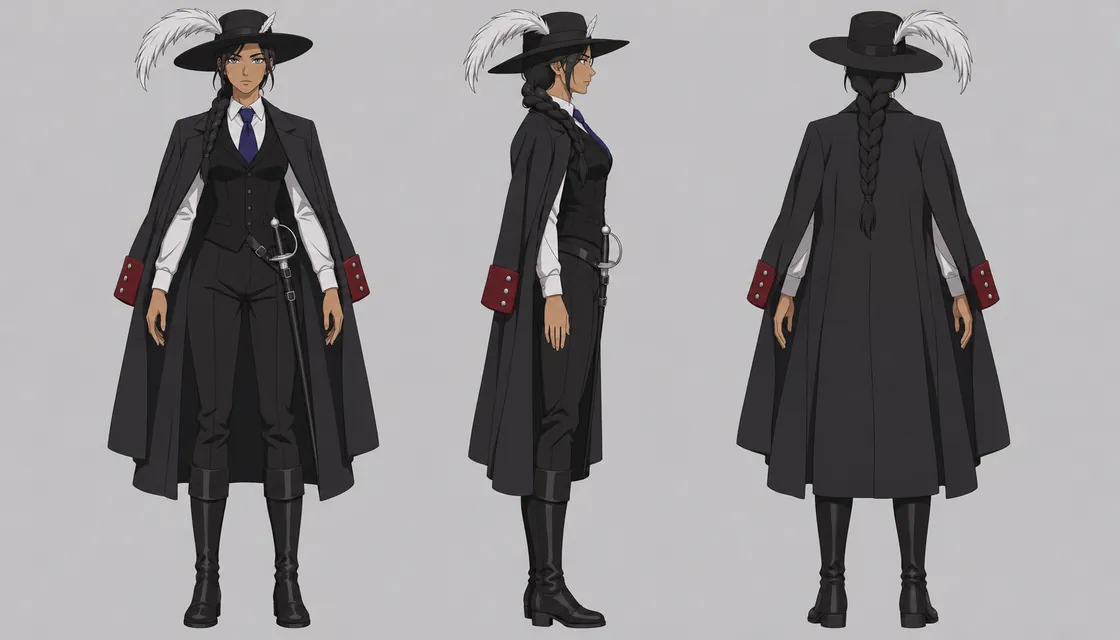
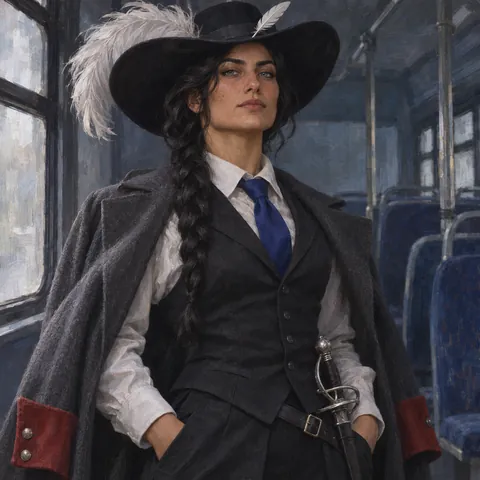
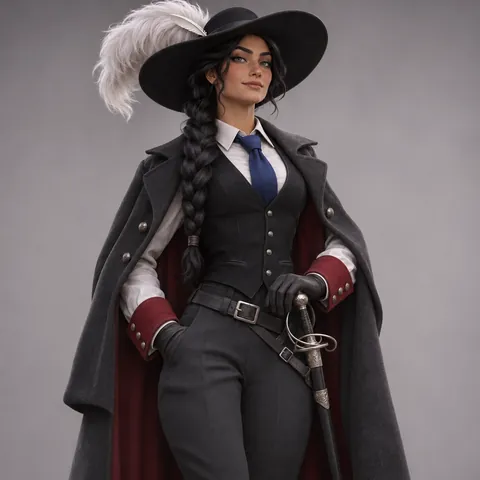
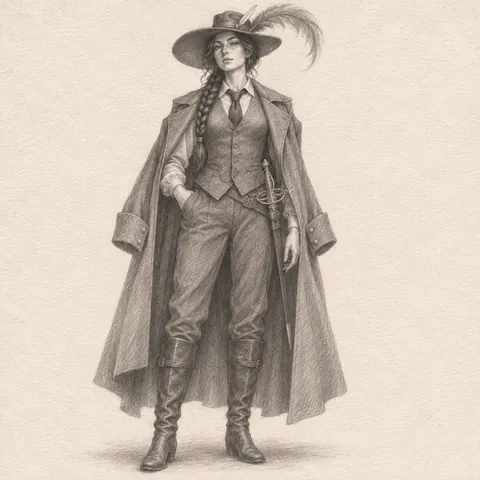
Lucienne is the sample OC in every image here: a Sinner rooted in Cyrano de Bergerac. She keeps the same olive skin, long black braid, gray-blue eyes, black wide-brimmed hat with one white plume, white shirt with a deep blue tie, black vest, long charcoal coat with red cuffs and a rapier sheathed at her hip. Anime is closest to the canon splash art; chibi shrinks her into a tiny duelist, semi-realistic paint brings out the coat leather, 3D gives the plume volume and graphite shows how the outfit is built.

Know the rules
Limbus Company is a 2023 game by the South Korean studio Project Moon. Twelve Sinners ride the bus Mephistopheles with their manager Dante, collecting Golden Boughs from the ruins of Lobotomy Corporation. The world is grim, but its rules are clear, and they make good design prompts. This page keeps the mood moody rather than scary: no blood, no injuries, weapons at rest.
Sources: Wikipedia: Limbus Company; Limbus Company Wiki: Battles; Limbus Company Wiki: E.G.O
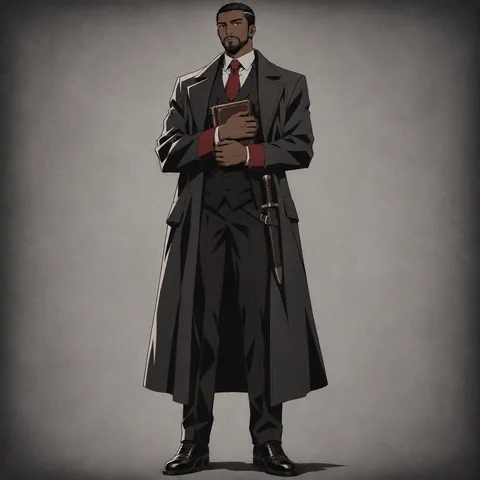
Each canon Sinner comes from one work of literature: Yi Sang from the writer's own The Wings, Faust from Goethe, Don Quixote from Cervantes, Ryōshū from Hell Screen, Meursault from The Stranger, Hong Lu from Dream of the Red Chamber, Heathcliff from Wuthering Heights, Ishmael from Moby-Dick, Rodion from Crime and Punishment, Sinclair from Demian, Outis from The Odyssey and Gregor from The Metamorphosis. Dante, the manager, comes from the Divine Comedy. Most of their names come from the book too: a first name, a surname, a title or an alias. For your OC, pick a work none of them use, ideally one in the public domain, and choose the single theme from it that your Sinner cannot escape.
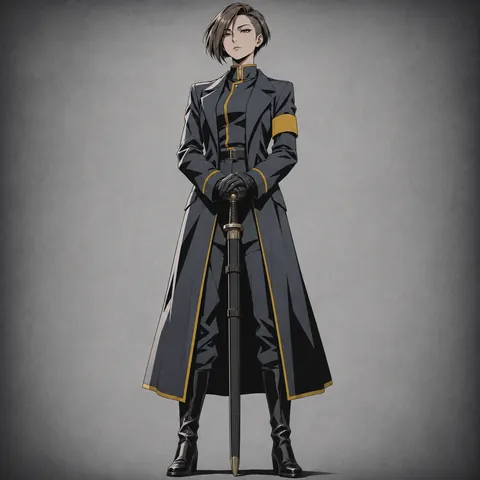
An Identity overlays a Sinner with a version of themselves from another Mirror World: the life they would have lived as a Fixer, a Syndicate member or a Wing employee. It changes their outfit, skills, resistances and affinities, while the core person stays recognizable. Canon Identity titles follow one pattern, faction plus rank or role plus name, as in Zwei Assoc. South Section 4 Faust, W Corp. L3 Cleanup Agent Yi Sang or Edgar Family Butler Ishmael. For an OC, design the default Sinner first, then one Identity that shows a road not taken. The Identity picker here sets that outfit; the faction picker names who they work for.
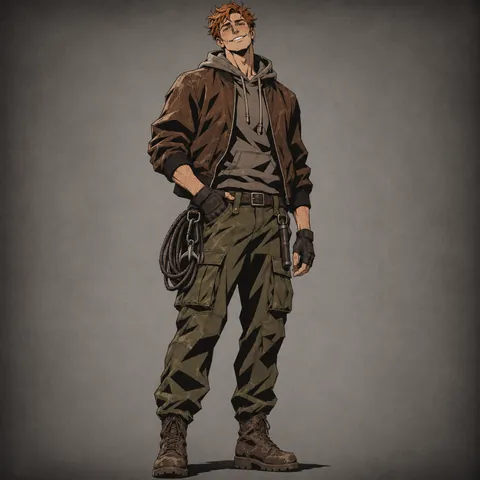
Fixers are the City's contract workers, graded from 9, the cheapest, up to 1; a few famous Grade 1 Fixers earn a color title, like the guide Vergilius, the Red Gaze. Most Fixers work in small Offices. Twelve Associations hold the larger fields of work: Zwei protects, Shi takes covert jobs, Cinq handles duels, Liu fights outnumbered, Seven investigates, Dieci researches and runs an orphanage, Devyat delivers and Öufi oversees trades. Each branch splits into Sections from 6 up to 1, the lower number being more elite, with a Director over each. Their names are the numbers one to twelve in different languages: Zwei is German for two, Cinq is French for five and Devyat is Russian for nine.

The City has 26 Wings, the giant corporations that govern its 26 Nests. Each Wing owns a Singularity, a technology that bends the rules of physics: W Corp. sells near-instant WARP travel, K Corp. heals injuries quickly, R Corp. runs a private military, T Corp. speeds and slows time, and U Corp. sails the Great Lake. Working for a Wing makes someone a "feather", which means safety in exchange for strict results. Lobotomy Corporation, L Corp., collapsed in the White Nights and Dark Days, and its ruined branches are where the Golden Boughs wait. A Wing Identity suits a Sinner who once traded freedom for a steady life.

Outside the Nests lie the Backstreets, and every district there keeps its own taboos. Groups of residents organize into Syndicates of every size, from small neighborhood gangs to the infamous Five Fingers, who claim the Backstreets of the whole City. The company handbook even warns that nobody can help between 3:13 and 4:34 AM, the Night in the Backstreets. A Syndicate Identity gives your Sinner a code to keep and a family to answer to. Invent your own Syndicate rather than joining a canon one, and give it one rule that outsiders find strange.
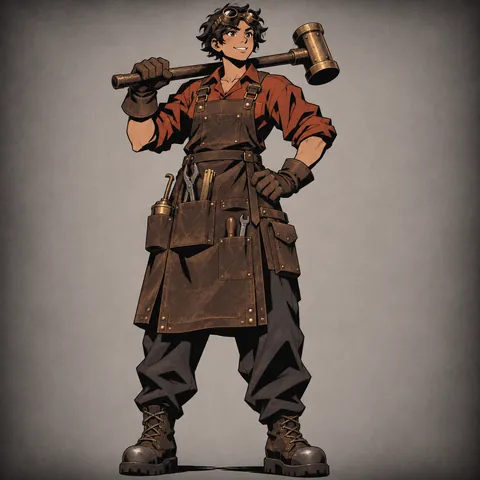
E.G.O, short for Extermination of Geometrical Organ, is gear shaped by a mind. The Sinners use E.G.O extracted from Abnormalities, graded ZAYIN, TETH, HE, WAW and ALEPH; each Sinner has a unique ZAYIN E.G.O and can carry one of each grade, and using it costs Sanity. A person can also manifest an E.G.O of their own, called Effloresced E.G.O, by refusing to give in to despair. Design yours from one object in your source book: a pair of candlesticks, a plumed hat, an overcoat. Give it a short name, a form and a grade, and write it in the E.G.O field.
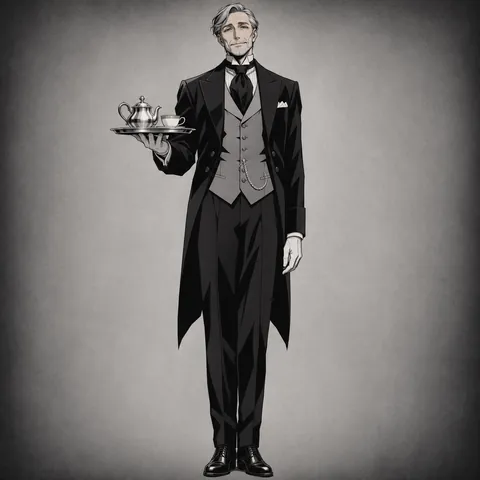
Every attack in the game carries one of seven sin affinities, each with its own color: Wrath is red, Lust orange, Sloth yellow, Gluttony green, Gloom teal, Pride blue and Envy purple. Chaining skills of the same sin builds Resonance. Attacks also deal Slash, Pierce or Blunt damage, and defense skills Guard, Evade or Counter. Status effects such as Burn, Tremor, Rupture, Sinking, Poise and Charge flavor a fighting style; the game also has Bleed, which this page leaves out to keep the art clean. Pick the sin that matches your Sinner’s central flaw. The picker sends only its color to the drawing.
Names and E.G.O
Canon Sinners go by one name taken from their book: a first name (Rodion, Gregor, Ishmael), a surname (Meursault, Sinclair), a title character (Faust, Don Quixote), an alias (Outis is Greek for "nobody") or the author himself (Yi Sang). The mixer follows the naming habits of each source culture: given name first in English and French, family name first in Korean, Chinese and Japanese. For Russian sources, try a first name and a patronymic, the way novels address people. Identity titles follow the canon pattern of faction, rank or role, then the name, so the last two sets build that prefix for you. Every name here is a starting point, checked against the canon cast.
Given name, then family name; most Sinners go by just one of the two.
Each grows from one object in a classic. Rename it, then pick the grade that fits your Sinner.
Guide
A good Limbus OC reads like a book that walked into the City and got a job. Work from the source outward: the book gives the flaw, the flaw gives the sin, the job gives the Identity and one object becomes the E.G.O. Save the text you write next to the art so later drawings keep the same details.
Skip the works the Sinners and Dante already come from, and pick a novel, play, epic or tale that is in the public domain, such as Hamlet, Les Misérables, The Tale of Genji or The Tale of Hong Gildong. Work from the original text rather than a modern film or translation, which may have its own copyright. Read a summary at least, then write one sentence on the protagonist’s central problem: Cyrano cannot say what he feels, the clerk in The Overcoat cannot keep the one thing he loves. That sentence is your Sinner’s past. You do not have to copy the plot, only the problem that still shapes them.
Look at the sentence you wrote and ask which of the seven sins it points to. Pride fits someone who would rather lose than admit a need, Envy fits someone who measures every coat against their own, Sloth can be patience as easily as laziness. The sin sets the accent color on the art, so it also gives you a palette. Then write the regret your Sinner would never say aloud. Keep it personal and quiet: a promise broken, a letter unsent, a door they did not open. It reads stronger than a tragedy listed in full.
Pick the LCB Sinner Identity for the default company uniform, or choose the life they would have had in another Mirror World: a Fixer in an Association section, a Wing clerk, a Syndicate enforcer, a butler, a chef. Then choose who they work for. Canon factions such as the Seven Association or W Corp. are fine to borrow as employers; invent your own Office, Syndicate or Workshop when you want a fresh uniform. Use the Identity title mixer below to build the full title in the canon order, then add your Sinner’s name after it.
Find one object in your source book that matters to the protagonist: a pair of candlesticks, a plumed hat, a lantern, a coat. Turn it into gear: a weapon, a cape, armor or all three, and pick a form from the E.G.O picker. Give it a short name in the canon spirit, often a phrase or an image rather than a power description, and a grade from ZAYIN to ALEPH. Write the name and look in the E.G.O field. If you only want the everyday Identity outfit in the drawing, leave the form on Not shown and keep the E.G.O for your notes.
Choose a damage type or a status effect that fits how they think: a careful duelist builds Poise, a stubborn guard holds Guard, a restless dreamer Evades. Then describe one small scene in the details box: Lucienne writing someone else’s letter on the bus, a clerk refusing to give up his coat in the snow. Generate a full-body splash for the outfit, a portrait for an icon or a reference sheet for future art. Check the hands, the weapon and the accent color, keep the weapon at rest, and save the description with the image.
Other fandoms
 SCPOC Creator
 CyberpunkOC Creator
 Chainsaw ManOC Creator
 PersonaOC Creator
 Zenless Zone ZeroOC Creator
 Black ButlerOC Creator
Tools
FAQ






Sign up and your first pack comes with 100 bonus credits.