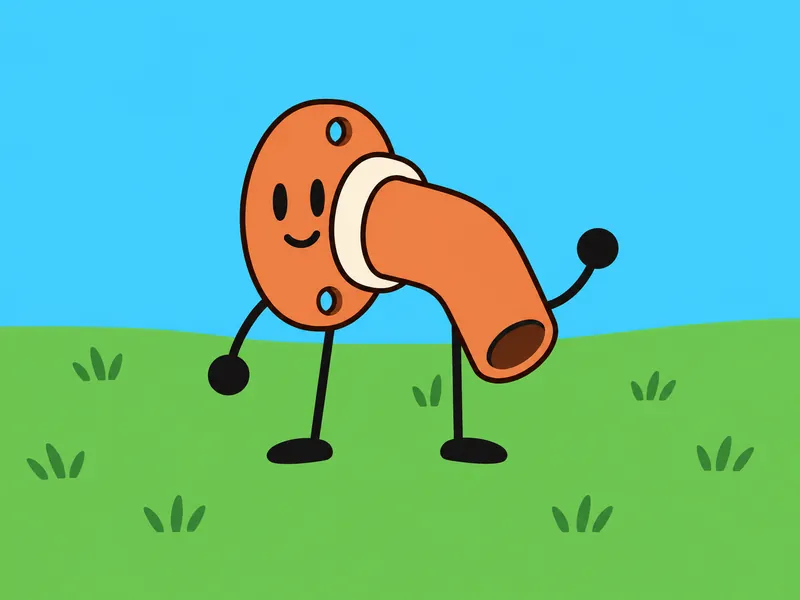
Pie Bird
Encourager- Lets the team vent
- Ceramic body, cream rim
- Gets flustered under pressure
Make your own BFDI contestant from an overlooked object and a personality that gets the team talking. This BFDI OC creator builds the object first: its silhouette, stick limbs, face placement and one useful job. Try Surprise me, load one of six BFDI OC ideas, or mix an object name below. Your choices become a still illustration or reference sheet for your own fan story.

Ideas
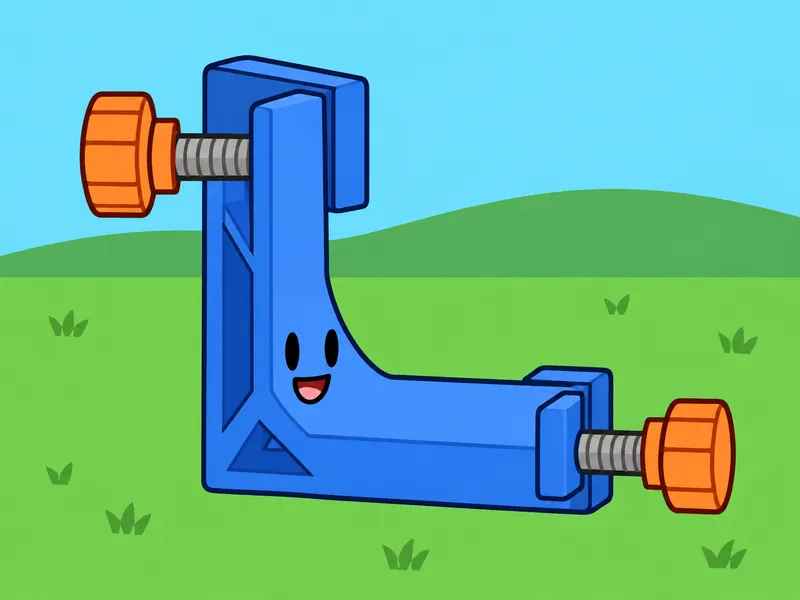
Each card starts with a different overlooked object, then gives it a strength and a snag. Use this idea fills the generator with the pictured body, limbs and colors. These are original fan designs, not contestant recolors. Change the personality first if you want to keep a silhouette but tell a different story; change the whole object if its everyday function no longer fits.



Know the rules
Battle for Dream Island is jacknjellify’s object competition series, created by Cary and Michael Huang. A convincing fan contestant starts with the same readable visual grammar, then makes a different choice of object and personality. The rules below separate recognizable series conventions from optional design advice; none of the sample objects is presented as an official contestant or a guaranteed accepted recommendation.
Sources: BFDI Wiki: series and seasons; BFDI Wiki: character roster; Battle for Dream Island overview
Most BFDI characters are recognizable objects with faces and optional limbs. Start with a real function: measuring a seam, supporting a repair or holding a corner square. Draw the object as a silhouette before adding eyes. If the result needs a paragraph to explain what it is, simplify the shape. Avoid a familiar contestant with a new color or hat, and check recommended characters as well as contestants. The recommended roster is much larger than the main cast, so an obscure object deserves a search too. Keep your own sketch and story distinct even when another fan has independently chosen the same everyday object.

Four thin limbs are a common option, but BFDI also includes characters with fewer limbs or none. Decide how your object moves and handles a task before writing an impressive talent. Darning Mushroom can run and brace something with the broad wooden cap, but cannot quietly pick up a tiny screw. That limitation gives another teammate a useful moment. A limbless object can roll, slide, be carried or stay in place according to the story you write. Do not add hidden human arms just to solve every problem. Keep the selected limb count the same in the front view, side view and action picture.
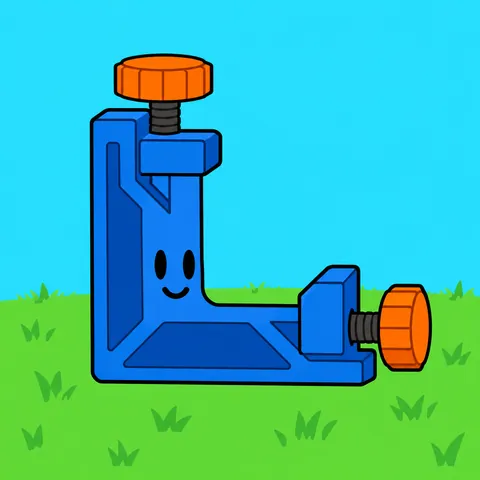
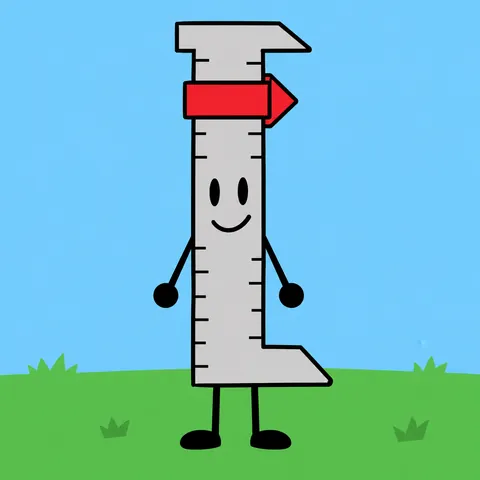
The familiar face language uses simple eyes, brows and mouth shapes rather than a human head pasted onto the object. Leave an uncluttered patch of body for the expression. On Seam Gauge the face sits below the sliding tab, so the tab can move without crossing both eyes. On Corner Clamp the face belongs near the broad joint, not on a floating knob. Try a happy, worried and annoyed expression in the same location. Reusing the show’s visual grammar does not require downloading or redistributing its exact asset files. Original simple expressions are enough to make a new object feel at home.
Use one body color, one accent and the dark line color as your starting palette. Wood can be tan with a darker handle; ceramic can be terracotta with a cream rim; metal can be silver without reflective highlights everywhere. Fine grain, scratches and glossy gradients disappear in a team thumbnail and make the object harder to redraw. A small material cue is usually enough. The native BFDI look is flat vector animation with bold outlines, not a photographed household object or a human wearing an object costume. Other style choices can be experiments, but keep the native version as the reference for your fan cast.
An object’s function offers a starting joke, but repeating that joke in every scene makes the character feel mechanical. Pie Bird lets people vent, then has trouble staying calm when the timer runs out. Seam Gauge likes precision but can learn when a rough answer is enough. Give the OC one preference unrelated to the object as well, such as loving quiet team meetings or refusing to guess a teammate’s intentions. The useful combination is a strength that helps in one challenge and complicates the next. Write what the character does after a mistake; that choice often tells you more than a list of adjectives.
BFDI, BFDIA, IDFB, BFB and TPOT refer to different parts of the series, with different hosts, teams and story circumstances. BFB uses Four and X; TPOT centers its competition on Two. The wiki also lists the later BFDIE season, so a five-season total is no longer a safe description. TPOT is listed as ongoing in the checked season guide. For an OC, choose a fan challenge set during a named era instead of claiming the character occupied an official contestant slot. If you borrow a team such as FreeSmart or Death P.A.C.T. Again in a story, distinguish that fan scenario from the published roster.
A team works when its members need different things from one another. A planner may need a scout to test an idea, while a builder needs an encourager to ask for help before frustration takes over. Original team names and challenge goals keep your cast separate from the show’s teams and hosts. Avoid making a new speaker box, number host or all-powerful contestant just to explain why the OC always wins. Write a small scene where another object solves something your OC cannot. The character becomes more interesting when the team changes their approach, rather than simply applauding their special ability.
Names and habits
BFDI names usually tell you what the character is. This mixer keeps that direct object naming instead of inventing fantasy surnames. The bank contains 112 uncommon objects, and each result is the object name itself: Lucet, Spurtle or Niddy Noddy, for example. There are no decorative adjective prefixes. These are researched starting points, not a claim that an object is absent from every fan project. Pick a name to put it on the sheet, then choose a challenge habit to give the object a reason to interact with its teammates. The name mixer and habit choices run locally, free with no sign-up.
112 uncommon objects, named for what they are
Each habit gives the team a strength and a complication.
Guide
Use these five passes to move from an object you noticed at home to a character another fan can understand. A BFDI character creator is most useful when the choices describe one coherent design. Keep a short written specification beside the art so a new pose does not quietly change the object, face location or limb count.
Write down the object’s real name and what people do with it. Search the contestant and recommended-character lists, including alternate names for the object. A pie bird is also called a pie vent, so searching only the first term is not enough for careful research. Compare the silhouette with nearby designs too. If the object looks like a familiar character at thumbnail size, choose another function or body shape instead of relying on a different color. The six cards here are starting points for original fan work, and a final community check is useful before presenting a design as uniquely yours.
Select four limbs, armless or no limbs, then imagine the character crossing a gap or handing something to a teammate. If your answer requires an extra arm to appear, revise the scene or the limb selection. Keep limbs thin and simple enough that the object body remains the main shape. Use a front-facing expression first; a dramatic angle can hide whether the face is attached in a sensible place. A character who needs help is not a failed design. That practical need can become the first reason another teammate starts a conversation.
Choose a body color that communicates the material, then reserve the accent for one physical part such as a slider, collar or knob. Look at the swatches beside the sample art before loading an idea. Avoid turning every small surface into a different color. If you want texture, describe a single simple mark rather than a realistic finish. Write where the accent belongs so it stays in the same place across images. For a native-looking BFDI character maker result, the black face and outline should still be the clearest details on the body.
Choose a team role and finish this sentence: the team relies on this character for something, but it becomes difficult when something changes. Corner Clamp keeps a frame square but dislikes letting go before everyone agrees. That is a scene you can write, not a power level. Keep the limitation visible in behavior rather than solving it with secret magic. You can make BFDI fan challenges around a disagreement, a time limit or a strange rule without copying an episode. Give the OC a chance to learn from another teammate and keep the ending open.
Choose still art for a first look or a reference sheet when you need several views. Check the finished image against your written body, limbs, colors and face placement. AI art can invent a seam or extra limb, so correct your description and generate a revised image if necessary. Save the version you want to use as the visual reference, and keep the personality notes separately. This BFDI character generator helps you plan artwork; it does not create a playable season, assemble official animation assets or guarantee that an image is ready to rig without editing.
Other fandoms
Tools
FAQ







Sign up for 10 bonus credits and make your first OC free.