OC Creator logoOC Creator
Free local tool · Your next roster starts here

Random Video Game Character Generator

Build an original playable hero, rival, boss or helpful NPC for a game that does not exist yet. Pick a genre cartridge, roll a complete concept, then lock the details worth keeping. Every character arrives with equipment, a signature move, an ultimate, a stat spread and a small game premise. Free and local, with no sign-up.

  • 15 genre cartridges
  • Lock parts and save favorites
  • Free PNG card export

Original character select

Insert genre. Meet your character.

Insert a genre cartridge. Each one brings its own equipment, moves and game world.

Card frame
Player concept / PlatformerReady

Playable mascot

Pogo the Otter

“Next roof, here I come!”

Roster role

Playable mascot

Class and equipment

Spring courier · kite boots

Moveset

Signature: Spring Vault: vault over a wind gate. Ultimate: Skybridge Parade: open a chain of sky bridges.

Game concept

Platformer in floating rooftops. Deliver weather parcels before the roofs drift apart.

Look and personality

Wears a mustard flight suit and oversized spring boots; counts every bounce before a leap.

Jump height73/100
Air control92/100
Stamina60/100
Discovery59/100

Relative concept ratings, not engine-ready balance. Platformer / Playable mascot: traversal defines the main route.

Original game concept · Free local character sheet

Rolling, favorites and PNG cards are free with no sign-up. Draw this OC opens the separate image generator with your description ready; it does not start generation.

Choose a cartridge. Your first character is ready.

Keep the good parts

Lock a part to protect it, or reroll just that part. Class stays paired with its equipment.

Name
Roster role
Class and equipment
Moveset
Game concept
Look and personality
Catchphrase
Stat spread

Six original roster ideas

Six characters, six different games

These original illustrated examples show what changes when mechanics lead the design. Each fixed example has its own role, silhouette, equipment and place in a game world.

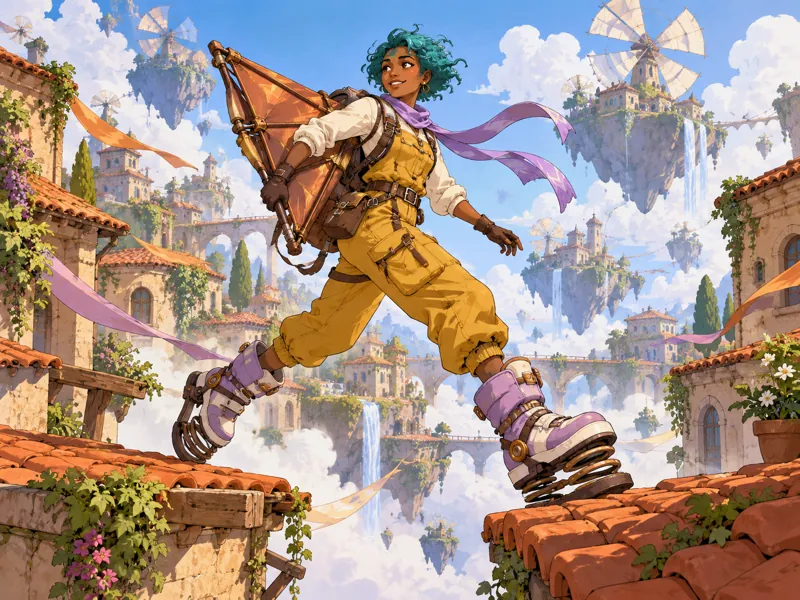
Tamsin Copperstep: An adult courier with dark skin, teal curls, mustard flight overalls, lavender spring boots and a folded copper kite

Platformer

Tamsin Copperstep

Tamsin carries weather parcels between drifting rooftop neighborhoods. A short spring vault clears wind gates; the ultimate opens a temporary chain of sky bridges. Air control matters more than raw strength, so the silhouette puts the boots and kite first. Give this playable hero a delivery rival who knows safer routes but refuses to take shortcuts. The game begins with a missing rain parcel and ends with the courier learning which roofs need it most. The illustration is one fixed example, not a portrait automatically generated for every roll.
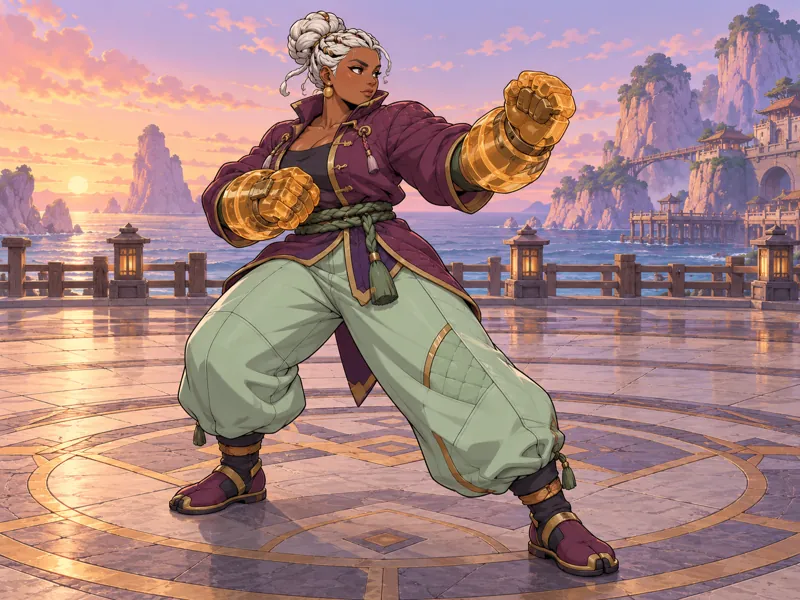
Vessa Amberwheel: An adult fighter with copper-brown skin, a white braided bun, a plum padded jacket, mint trousers and translucent amber training gauntlets

Fighting game

Vessa Amberwheel

Vessa specializes in guarded counters on a seaside exhibition circuit. The low stance invites a predictable approach, then a rising feint changes the distance. A full meter creates a harmless ring-out gust rather than a violent finishing scene. High guard and deliberate footwork support the idea better than maximum values everywhere. The oversized gauntlets are readable even at character-select size, while the loose trousers keep the stance visible. A rival could punish impatient counters, giving the matchup a clear lesson. Use this example to test whether costume, equipment and mechanics tell the same story.

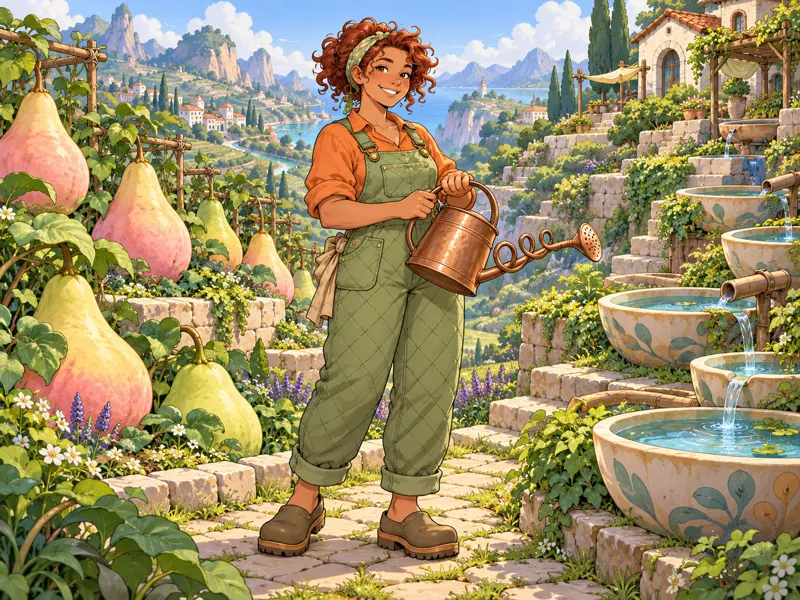
Orlen Petalwrench: An adult gardener with tan skin, auburn curls, sage quilted overalls, orange sleeves and a copper spiral-spout watering can

Cozy farming sim

Orlen Petalwrench

Orlen tends the hillside rain gardens and remembers which neighbor borrowed each seed tray. Watering a whole row is the signature action; the ultimate is a village harvest picnic that rewards preparation and friendship. Care and crafting lead the stat spread, with energy setting the length of a busy day. There is no need to turn this villager into a combat specialist. Their little flaw is overplanning the festival until a friend reminds them to enjoy it. A rain-catching terrace gives the game a concrete place and a community project worth returning to.

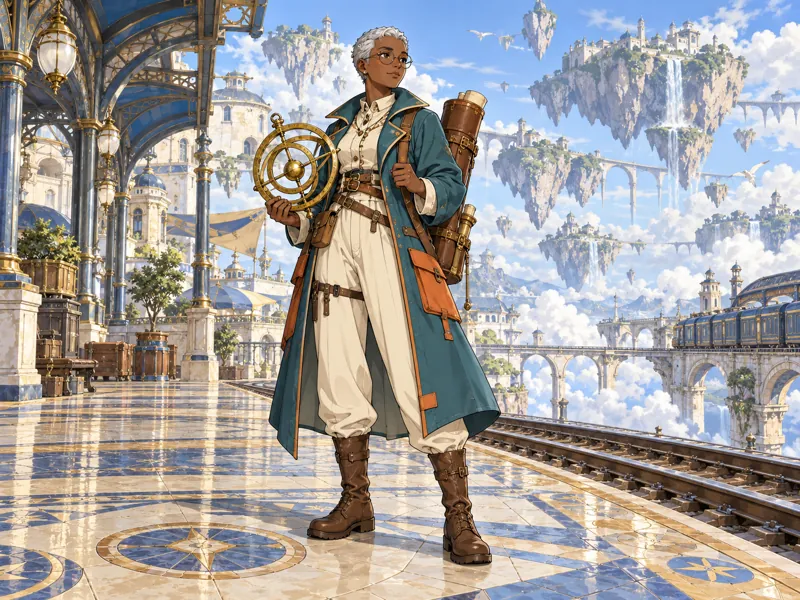
Neris Brassmeadow: An adult navigator with deep brown skin, short silver hair, round spectacles, a teal coat with copper pockets and a brass astrolabe

JRPG

Neris Brassmeadow

Neris joins a scattered rail crew as its patient navigator. The signature banks a turn for an ally, while the ultimate rearranges the party initiative line. That makes this companion useful through timing and support rather than a larger weapon. The brass astrolabe echoes the circular station machinery without borrowing a familiar franchise symbol. Their first chapter takes place on a ceramic railway platform beneath migrating islands. For a complete party, pair Neris with a fast scout and a guarded front-row member, then decide which difficult journey makes those three trust each other.

Corda Ribbonwell: An adult performer with medium brown skin, short magenta textured hair, a cobalt jacket, citron trousers and soft-ended tuning mallets

Rhythm game

Corda Ribbonwell

Corda restores the rhythm of a glass-pipe garden by hearing the spaces between beats. A syncopated echo pattern is the signature, and a full combo brings every stage instrument into harmony. Timing and expression explain the character better than attack and defense would. The mallets and wide dancing stance remain clear when the image is small, while the jacket gives the arms room to move. A missed note should change the performance gently rather than erase the personality of the character. Write a quiet practice scene before the finale to show why this performer cares about the town.

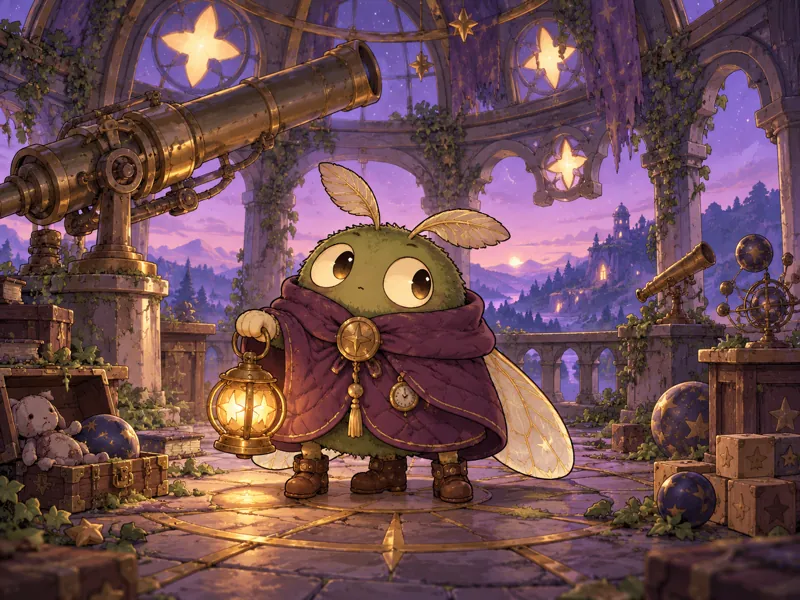
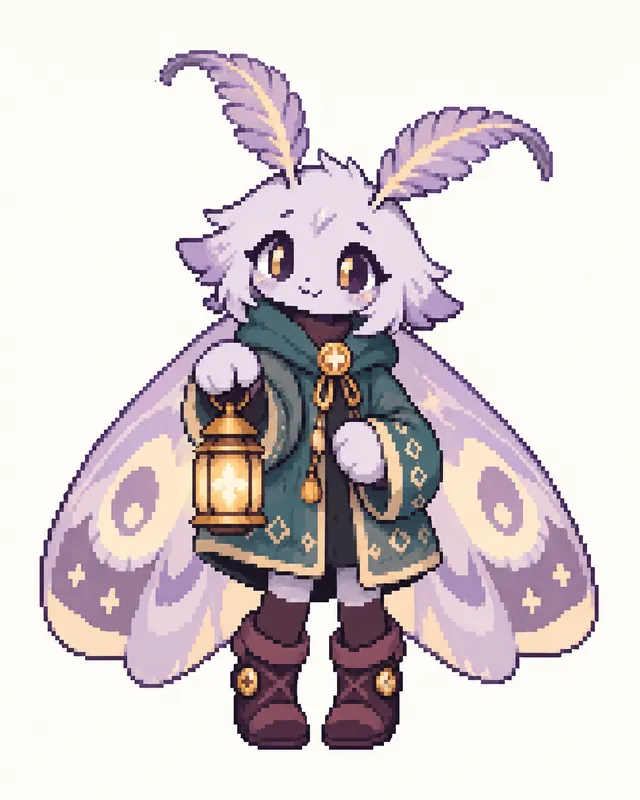
Merrit Mosslever: A round moss-green mothlike clockwork caretaker with four short booted legs, mitten hands, sleepy cream eyes, folded oval wings, a plum quilted cape and a warm lantern

Cute-creepy survival

Merrit Mosslever

Merrit searches an abandoned toy observatory for the missing morning bell. The signature uses a soft chime to distract a creaking doorway, and the ultimate lights every lamp in the current room. Light and resource management matter, but the mood stays friendly and curious. The four short legs, padded cape and rounded lantern give this mascot a distinctive silhouette. Shadows can surprise the player without showing harm. A safe room full of repaired cushions makes a useful contrast to the quiet corridors, and the final reward is helping every lost toy find its shelf.

Game genres

Choose the kind of game they belong to

A genre changes the questions you ask about a character. These cartridges provide distinct mechanics and vocabulary, not just different labels on the same result.

Platformer

Start with a movement verb that can be understood in one second: spring, glide, swing or skate. Then give the character a limitation that makes a level interesting. A courier who glides beautifully but needs room to unfold a kite asks for broad gaps and cramped indoor detours. The generator pairs traversal equipment with a readable class, then supplies a signature and a bigger movement moment. Jump height and air control describe this genre more clearly than a generic power score. Sketch the character beside a single obstacle before designing an entire world.

  • Movement first
  • Readable equipment
  • Traversal routes

JRPG

Build a party member with a reason to occupy one slot in the team. A navigator who changes turn order should feel different from a sentinel who protects the front row. The generator uses focus, guard, tempo and support to keep those distinctions visible. Its ultimate is a larger tactical contribution, not simply a louder version of the signature. Decide what the character does on a quiet train ride as well as in a challenge room. A convincing party member has a useful mechanic, a personal habit and someone whose priorities clash with their own.

  • Party role
  • Turn order
  • Support chains

Action RPG

Connect the character to a short sequence of actions: read a cue, dodge, place a ward, recover. The equipment and signature should help that sequence feel natural. A light staff may redirect a energy pulse, while a buckler supports a patient counter. The generated setting provides obstacle chambers and weather machinery rather than a borrowed quest. Treat the stat bars as a discussion starter for responsiveness and staying power. If every action is quick and safe, add a deliberate recovery window so the player has a reason to think before pressing the next button.

  • Active timing
  • Equipment identity
  • Recovery windows

Fighting game

A fighter needs spacing, a stance and a clear answer to pressure. The authored moves describe feints, guards, cancels and training pulses so the result reads as a fighter immediately. The ultimate spends a full meter on a larger arena effect, and the role distinguishes a playable contender from a rival or exhibition boss. Keep the costume silhouette readable at both ends of the stage. Try explaining the matchup in one sentence: this defender waits for an overextended approach, but struggles against patient footwork. That sentence is more useful than making every stat a perfect score.

  • Stance changes
  • Special moves
  • Meter decisions

Metroidvania

Give the character a tool that changes how the map can be read. A hook lantern can reach ceiling latches; a pressure bell makes a previously inaccessible route possible. The generator provides movement abilities, sealed-room settings and mapping-oriented stats. Think about the first place the player notices a blocked passage, then the satisfying return after finding the right tool. A companion or shopkeeper can teach that route without needing a full playable move list. Their signature becomes a demonstration or service, and their ultimate represents the largest contribution they make to exploration.

  • Movement gates
  • Return routes
  • Map discovery

Roguelike

A run-based character needs an interesting resource decision that can change from attempt to attempt. Tokens, temporary charms, room rewards and stored charges supply that decision here. The generator combines a class with a signature and an ultimate so two rolls can support different approaches even when the setting stays familiar. Decide what is lost at the end of a run and what the character learns permanently. A useful limitation might be choosing between a safe reward and a stronger but awkward charm. Keep the permanent personality steady while the temporary build changes around it.

  • Temporary builds
  • Reward choices
  • Repeatable runs

Cozy farming sim

A villager belongs to a community before they belong to a stat chart. Start with the service they provide, the tool they carry and the small project that matters to their neighbors. The generated actions cover planting, cooking, repairing and celebrating. Care, craft, energy and friendship replace combat labels, while an ultimate means a major community milestone such as a harvest picnic. Add an everyday routine that makes the village feel lived in. Perhaps the gardener checks the rain bowls each morning and leaves a spare seed tray by the shared greenhouse every afternoon.

  • Community roles
  • Seasonal projects
  • Gentle progress

Rhythm game

Design around what the player hears and how the character moves in response. A tuning mallet, a ribbon ring or a chime wheel should have a visible relationship to the beat. The generator offers held notes, off-count catches, lane changes and call-and-response phrases, with timing and expression as useful ratings. Give the ultimate a musical payoff that can be seen as well as heard. A stage that gradually joins the performance makes progress legible without a large pile of interface elements. The character catchphrase can set the mood, but should not interrupt every measure.

  • Beat patterns
  • Performance silhouette
  • Musical payoff

Racing

The vehicle is part of the character design, but the driver still needs a recognizable attitude and role. A relay captain may value team recovery while a rival rewards precise cornering. Handling, boost, grip and endurance describe the concept without pretending to simulate real vehicle physics. The moves focus on drafting, drifting, traction and route choices. Place the signature on a specific stretch of track so its advantage is understandable. A wind sled excels on an open coastal route but needs care in a sheltered switchback, which creates a more useful design problem than limitless speed.

  • Route choices
  • Handling balance
  • Relay teamwork

Visual novel

A visual novel character changes the story through attention, conversation and decisions. Their tool might be an annotation notebook or a handheld recorder rather than a weapon. The generator supplies careful questions, remembered details and peaceful resolutions, then measures insight, trust, patience and resolve. Read the ultimate as an important route milestone, not a combat attack. A quiet archivist can still have a powerful effect by connecting two testimonies nobody else noticed. Give the player a reason to revisit an earlier conversation after learning more, while keeping each branch respectful of the people involved.

  • Conversation branches
  • Clue connections
  • Relationship choices

Cute-creepy survival

Use uncertainty, gentle sounds and limited light to create atmosphere without graphic content. A toy caretaker can listen for a clock cycle, conserve lantern fuel or find a route back to a safe room. The generator keeps the settings playful and the actions nonviolent. Nerve, stealth, light and resource describe the pressures of exploration. Build a comforting place to return to before adding a surprising hallway. A good mascot can look a little unusual while still feeling approachable, and the goal can be helping lost toys rather than defeating a threatening person.

  • Safe rooms
  • Light management
  • Friendly mystery

Hero shooter

Give each team member a contribution that other players can recognize. A barrier engineer creates cover; a beacon runner marks a route; a support specialist restores shields. The generator uses an original objective-arena premise with unmanned practice drones and objective play. Mobility, shield, utility and recovery make the intended team role visible. An ultimate should create an opportunity for teammates rather than solve every problem alone. Think about the sound cue, silhouette and placement rule that tell allies what has changed. Keep any later fandom interpretation separate from this original game concept.

  • Team utility
  • Objective play
  • Readable cooldowns

Puzzle

A puzzle character is most useful when the tool and the rule are easy to explain. A mirror arranger redirects light, a circuit gardener connects paths, and a pattern listener remembers tones. The generated signature describes one operation, while the ultimate provides a larger but limited change to the board. Logic, patience, memory and flexibility describe different approaches to solving. Before adding more abilities, build one room that teaches the main rule and another that combines it with a constraint. The character personality can affect how they explain a hint without replacing the discovery made by the player.

  • Clear rules
  • Board changes
  • Discovery

Soulslike

Keep the defining ideas of deliberate timing, resource management and learning readable cues while using a teen-safe ancient-guardian premise. The generator places characters in quiet bell gardens and automaton halls, with telegraphed ground pulses and recovery intervals. Stamina, guard, timing and resolve make patience visible. A boss role can be a demanding training guardian whose patterns teach the next area. Avoid treating difficulty as a reason to maximize every number. Give the player a fair cue, a meaningful commitment and a clear chance to recover after understanding the pattern.

  • Deliberate timing
  • Stamina choices
  • Learnable patterns

Strategy

A strategy character changes what the team can plan, supply or discover. A bridge planner opens routes, while a weather analyst prepares towns for changing conditions. The generator uses transport restoration and community coordination as the game premise. Planning, supply, scout and morale make different forms of leadership visible. Choose a map scale before turning the concept into rules: one workshop, several settlements or an entire island chain. The same character can then be a playable commander, a helpful mentor or a rival organizer with a different approach to scarce resources.

  • Supply networks
  • Map decisions
  • Team coordination

Guide

Turn a roll into a character worth playing

Start with a coherent gameplay idea, then give it a face, a habit and a reason to matter. These six steps work for a sketchbook, a writing exercise or an early game prototype.

  1. 1

    Choose the game before the costume

    Pick a genre cartridge that matches the experience you want to design. Read the game concept on the card first, including the setting and one-line premise. This establishes what the character actually does all day. A rooftop courier, a festival gardener and a party navigator can share a cheerful personality while needing entirely different tools. If you are unsure, compare two genres and describe the main player action in a short sentence. Keep the version that suggests a scene you would enjoy drawing or a small mechanic you could prototype.

  2. 2

    Find the role in the roster

    Read the role alongside the class and equipment. A playable hero performs the full loop; a rival demonstrates an alternative; a boss tests a learned skill. Companions contribute support, shopkeepers provide services, mentors teach, and mascots make the world memorable. For nonplayable roles, interpret the signature as their recurring service or behavior and the ultimate as their biggest story contribution. Lock the name or look when you like it. The genre picker pauses while a genre-dependent part is locked, which protects the concept you decided to keep.

  3. 3

    Test the signature against a small scene

    Imagine one obstacle, conversation, race corner or planting row. Describe how the signature changes that scene and what the character must give up to use it. Then read the ultimate and ask whether it expands the same idea in a useful direction. If it feels disconnected, reroll only the moveset. The class remains paired with its equipment, so the card keeps a clear visual anchor. This is a concept generator, not a rule engine, and a few thoughtful edits after copying the result will make the design more personal.

  4. 4

    Use the stat bars as a design discussion

    Compare the four labels within the selected genre. The values are relative ratings out of one hundred, not damage calculations, frame data or a promise of balanced gameplay. The card note explains the selected genre and role: a cozy neighbor prioritizes care, a tank creates space with shields, and a club senior makes room for patient conversation. Reroll the spread if the visual profile suggests the wrong emphasis. When moving into a real prototype, replace these ratings with measurements that your own rules can test. Keep the character purpose clear before deciding exact cooldowns, movement speeds or resource costs.

  5. 5

    Save a roster and compare silhouettes

    Save favorite cards to build a small local roster of up to thirty concepts. Loading a favorite restores its genre and all visible parts, then clears the current locks so editing is straightforward. Compare characters by their main verb, equipment shape and team function, not just their names. Use the modern card for a clean reference or choose the pixel-art frame for a retro menu treatment. The frame changes the exported card decoration; it does not turn the character into a sprite sheet. Copy the text as an extra backup before clearing browser data.

  6. 6

    Move from a card to a drawing

    Use Draw this OC to open the homepage image generator with the character description, equipment, look and premise already filled in. This step prepares a draft and does not submit an image request. Review the description there, choose a style and make any changes before generating. The six illustrated examples below are fixed original designs that show how different genres can look. Their buttons prepare those exact example briefs. For a fandom project, follow a related creator link and adapt the original idea to that world without copying a recognizable cast member.

FAQ

Questions before you press start

Juniper Vale, an original original anime characterKaito Arashi, an original anime characterSorrel the Fennec, an original Sonic the Hedgehog characterStarlit Quill, an original My Little Pony: Friendship is Magic characterRei Kagami, an original My Hero Academia characterFlarepaw, an original Warrior Cats characterTinsel the Raccoon, an original Five Nights at Freddy's character

Your next OC is one sentence away

Sign up for 10 bonus credits and make your first OC free.