OC Creator logoOC Creator
Free local name workshop

Random Bleach Name Generator

Name your Soul Reaper, Zanpakuto, Arrancar, Quincy, Hollow or Fullbringer. This random Bleach name generator keeps each naming tradition distinct. Lock your favorite parts, speak the release command and watch the card progress to its final form. Free and local, with no sign-up.

  • Six naming traditions
  • Free, local, no sign-up
  • Locks, favorites and PNG cards

Build a release worth saying aloud

Free and local, no sign-up. Choose a tradition, then keep the parts that fit your story.

Naming tradition

Original spirit dossier / Soul Reaper

Sugiyama Tomoe

杉山, cedar mountain; 巴, comma-shaped crest. Family name first.

Squad 6, seat 17

Sealed

Sugiyama Tomoe

A name waiting to be spoken.
Zanpakuto / Shikai
Kaze no Hako
Command
Hirake! (Open!)
Bankai concept
Kaze no Hako no Kekkai
A limit worth writing
must close the sword sheath before moving a stored gust

Original fan concept • occreator.org • No official affiliation

The drawing page uses image credits. This name tool never calls AI.

Saved release cards (0/30)

Keep a favorite to compare it with your next roll.

Examples

Six names, six different starting points

These original examples show what a name can do for a design. Each has its own silhouette, focus and story constraint. Use the drawing bridge to carry a concept into the Bleach OC creator, then edit the details before spending image credits. A generated name is a starting point for your writing, not a claim that the character exists in canon.

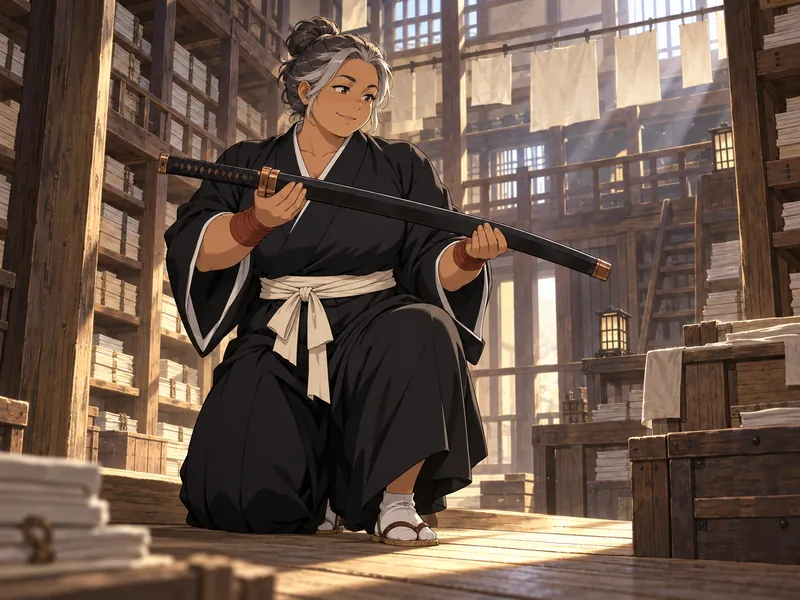
Sugiyama Tomoe, original Soul Reaper character

Soul Reaper

Sugiyama Tomoe

Sugiyama is 杉山, cedar mountain, and Tomoe is 巴, a comma-shaped crest. This older archive keeper kneels among blank paper bundles, wearing black shihakusho with rust wrist wraps. She holds a sheathed sword with a rectangular copper guard. Kaze no Hako, box of wind, stores one gust inside a bounded space; opening the sheath releases it. Her proposed Bankai expands the boundary rather than granting unlimited storms. She must close the sheath before moving a stored gust. The illustration connects her patient handling of fragile records with a technique that rewards restraint.

Hirake! (Open!) Kaze no Hako
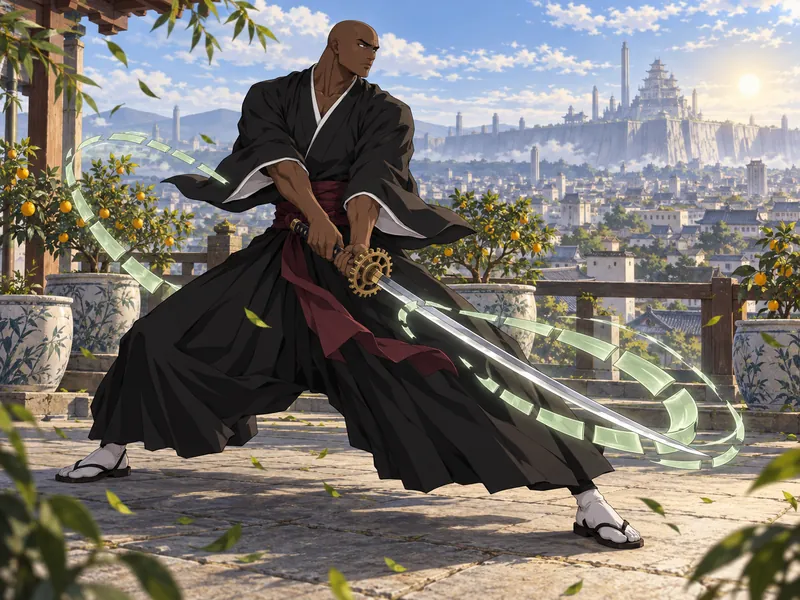
Take no Haguruma, original Zanpakuto character

Zanpakuto

Take no Haguruma

Take is 竹, bamboo, and haguruma is 歯車, gear. This original sword belongs to a bald, dark-skinned Soul Reaper with a maroon sash, practicing among rooftop citrus planters. Its toothed bronze guard and segmented jade arc repeat the same mechanical idea. Maware means turn. The Shikai redirects one measured movement, while the proposed Bankai turns a bounded garden into linked stepping positions. Each turn needs a planted stance, so loose ground interrupts the sequence. The card names the weapon rather than pretending that a Zanpakuto title is a human personal name.

Maware! (Turn!) Take no Haguruma

Vezrava Dorsavelle, original Arrancar character

Arrancar

Vezrava Dorsavelle

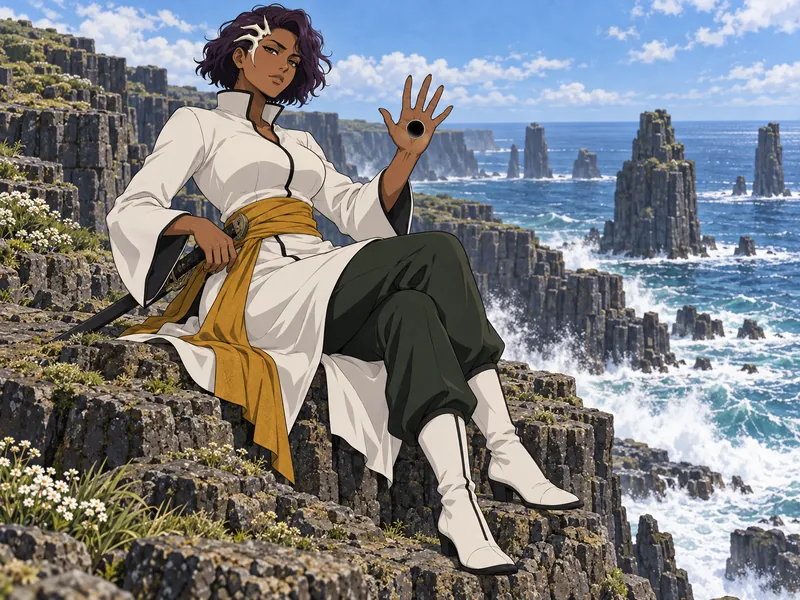
Vezrava Dorsavelle combines invented sound parts rather than an everyday Spanish first name and surname. She sits above a bright basalt coast in a white tunic, ochre sash and dark green trousers. Cropped violet waves frame a three-pronged ivory mask remnant at her right temple. A clean circular Hollow hole shows through her raised left palm. El faro tallado means the carved lighthouse, with masculine tallado agreeing with faro. Her command is ¡Brilla!, shine. Released ivory arches hold one defensive line, but moving breaks their alignment. The mask fragment and hole establish the Arrancar identity before the release is explained.

¡Brilla! El faro tallado

Gregor Falkenberg, original Quincy character

Quincy

Gregor Falkenberg

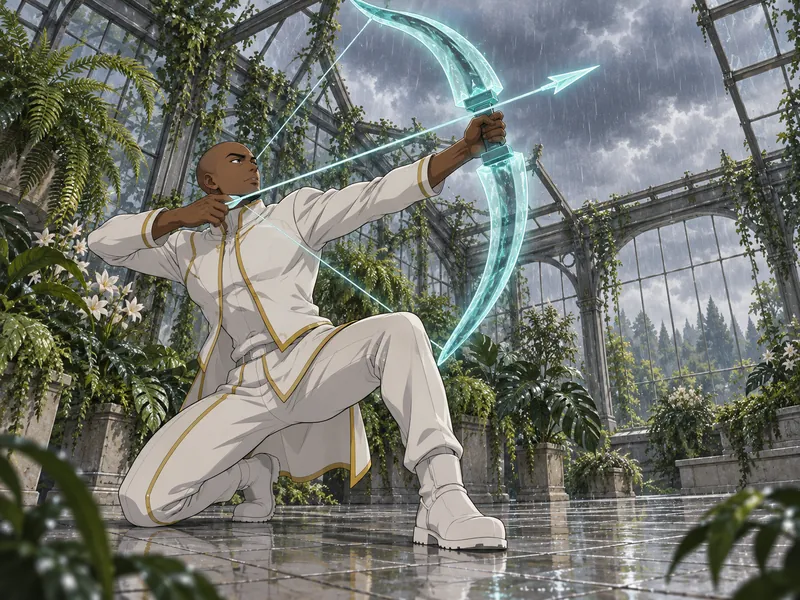
Gregor is a broad, dark-skinned Quincy with a shaved head and a plain white uniform edged in mustard. He kneels inside a glass greenhouse, aiming a teal spirit bow through the open roof. Two separated arcs and a rectangular grip give the bow a clear silhouette. His nickname Die Windstille describes calm air; its feminine article follows the noun, not his gender. It is an original nickname rather than a canon Sternritter epithet. A steady breathing rhythm is essential to his accuracy, making shelter, patience and a reliable lookout more useful than a dramatic claim of limitless power.

Steady the bow Die Windstille

Indigo Tortoise, original Hollow character

Hollow

Indigo Tortoise

Indigo Tortoise is a squat, armored Hollow braced across disused railway tracks. Its pebble-textured blue shell, four strong feet and smooth ivory shovel mask are distinct from a human fighter. A clean circular hole through the raised neck supplies the second essential Hollow feature. The red brick tunnel gives its protective shell a practical purpose: it can block the entrance, but cannot turn quickly while doing so. The English alias describes the silhouette instead of inventing a false translation. Keeping it an ordinary Hollow leaves room for a focused encounter without automatically promoting every creature to a Menos class.

Guard the passage Slate Shelter

Okada Minori, original Fullbringer character

Fullbringer

Okada Minori

Okada is 岡田, hill rice field, and Minori is 実り, harvest. This silver-curled man wears a plum raincoat and orange boots in a closed laundromat. His cherished brass measuring tape came from the person who taught him to repair damaged clothes. Drawing the tape with both hands creates a golden rectangular protective frame. Releasing either end collapses it, so the ability cannot become a hands-free solution to every danger. Everyday clothing, a visible treasured object and a specific emotional attachment keep the design grounded as a Fullbringer. The frame is a completed Fullbring concept, never a Bankai.

Hold the focus steady Copper Measure

Types

Choose the tradition before the words

A name can sound plausible and still belong to the wrong power system. These modes keep personal names, weapon names, descriptive aliases and epithets separate. The tool offers fan-made combinations within those conventions; it does not translate a biography or replace a fluent speaker’s review of an important final name.

Soul Reaper names

Start with a Japanese family name and a given name, displayed in that order. The card includes chosen kanji or spelling and a literal meaning gloss. Japanese personal names can have multiple spellings and readings, so the gloss belongs to the supplied spelling rather than every possible version of the name. The generated squad and seat are writing prompts. Change them to fit your timeline, and decide whether the character already knows a release or is still learning it. A quiet unseated character does not need a famous family connection to matter.

  • Family name first
  • Chosen spelling and gloss
  • Squad and seat

Zanpakuto names

This mode names the weapon concept rather than a human owner. It combines real Japanese nouns with no, a linking particle, and gives the release a spoken command. The Shikai name and a proposed Bankai name are visible on the same card so you can compare their relationship. Treat the final form as a possible story destination. A name alone does not establish the ability, its training requirements or its limits. Write what the sealed sword looks like and what physically changes when the command is spoken.

  • Named sword
  • Spoken command
  • Shikai and Bankai concepts

Arrancar names

Arrancar mode pairs an invented given name and surname, shaped from mixed European sound parts, with an original Spanish Resurrección phrase. Release nouns carry their correct article, and adjectives are adjusted for grammatical gender. The complete release is locked as one unit so rerolling cannot detach a feminine noun from its matching adjective. Números, Fracción and clearly labeled alternate-universe Espada options provide different story positions. The artwork still needs a mask fragment and a clean Hollow hole. An exotic name alone does not make a white-clothed character read as an Arrancar.

  • Invented Arrancar personal names
  • Agreement-aware releases
  • Rank context

Quincy names

Quincy mode uses German-style given names and surnames, plus a German nickname with its article. A nickname is not the same thing as a Schrift, and this tool does not hand out the canon Sternritter epithets. The ordinary identity can work for an independent Quincy, a family-trained archer or an alternate-universe character. Make the white uniform and spirit bow clear in the drawing. Then connect the nickname to a behavior, reputation or technique restriction rather than claiming that a dramatic title automatically creates a new power.

  • German-style names
  • Real noun articles
  • Original nickname

Hollow aliases

Hollow mode uses readable English descriptive aliases built from a mood or material and a creature shape. These are fan writing names, not invented Japanese presented as translation. A full mask, stylized hole and distinct body plan do more visual work than a long title. Pick a movement and a sensory habit, then use the alias to reinforce them. Menos classes are available as context, but the choice should fit the story. A low-profile Hollow with an unusual behavior can be more memorable than another supposedly unbeatable monster.

  • Descriptive English
  • Mask and body silhouette
  • Optional Menos context

Fullbringer names

Fullbringers receive a Japanese personal name and an English object-centered focus. Begin with the object’s history: who gave it to the character, how it was used and why it survived an ordinary change in life. The generated focus is a prompt for that attachment rather than a complete mechanical power. Decide how the object’s normal use becomes supernatural, then limit the transformation in a concrete way. A character who values a notebook might preserve routes or memories; they do not need a generic energy blade to fit the setting.

  • Human identity
  • Treasured object
  • Attachment before effects

Guide

Turn a random name into a character

A useful roll starts a decision rather than ending one. Keep a small set of candidates and compare how they sound, what their language implies and what you can actually draw. These steps help you move from a release card to a consistent OC without collecting unrelated titles.

  1. 1

    Pick a mode that matches the identity

    Choose the kind of character before rolling. A Soul Reaper personal name, an Arrancar release and a Quincy nickname serve different jobs. Switching modes clears the current locks so an old Spanish phrase cannot accidentally become a Japanese sword name. Start with the mode that matches your story’s base identity. If you are writing an unusual hybrid, first make a coherent base character and explain the exception in your own notes rather than asking a random roll to supply the whole premise.

  2. 2

    Read the meaning and say the command

    Read the spelling and gloss together, then say the name aloud. The release animation deliberately pauses at the command so you can hear where the phrase begins and where the weapon name follows. Check whether the sound suits the character’s temperament. A clipped command can feel very different from a flowing name, and that contrast may be useful. Do not treat a literal gloss as a full cultural explanation. For a major project, ask a fluent speaker to review the final wording in context.

  3. 3

    Lock the part that already works

    Use the lock beside a part to preserve it, then reroll the rest. A locked personal name keeps its associated meaning. A release phrase stays together as a grammatical unit. You can also reroll a single unlocked row when only one detail feels wrong. Compare the Shikai and Bankai concepts after changing either one: independent locks are useful for exploration, but you are responsible for keeping the final forms connected in your story. Prefer a shared motif and a changed scope over two unrelated powers.

  4. 4

    Make the constraint visible in a scene

    Read the story constraint as a writing challenge. If the character needs a clear line of sight, place a corner or moving obstacle in the scene. If a shield requires stillness, give the team a reason to retreat. This turns a generic weakness into a decision the reader can understand. Keep an ordinary skill available when the release is the wrong answer. The name card can suggest a direction, but the strongest part of the OC is usually how they respond when that direction fails.

  5. 5

    Save and compare a few candidates

    Favorites remain in this browser when local storage is available. Load a saved card to compare it with a new roll, remove candidates you no longer need and copy the final text into your own notes. Export a PNG when you want a visual release card for a planning board or a conversation with an artist. Keep a separate text copy if the exact spelling matters. Browser storage can be cleared, so a favorite is a convenience rather than a permanent backup of your project.

  6. 6

    Carry the concept into the drawing page

    Draw this OC sends the name, spiritual identity and release notes to the Bleach OC creator. Review the destination fields and add the visible design: black shihakusho and a sword for a Soul Reaper, a fragment and hole for an Arrancar, or a white uniform and spirit bow for a Quincy. The bridge does not generate an image automatically. You choose when to draw under the image-credit policy. Begin with a plain full-body reference, then try a setting once the defining features are stable.

FAQ

Bleach name generator questions

Juniper Vale, an original original anime characterKaito Arashi, an original anime characterSorrel the Fennec, an original Sonic the Hedgehog characterStarlit Quill, an original My Little Pony: Friendship is Magic characterRei Kagami, an original My Hero Academia characterFlarepaw, an original Warrior Cats characterTinsel the Raccoon, an original Five Nights at Freddy's character

Your next OC is one sentence away

Sign up for 10 bonus credits and make your first OC free.