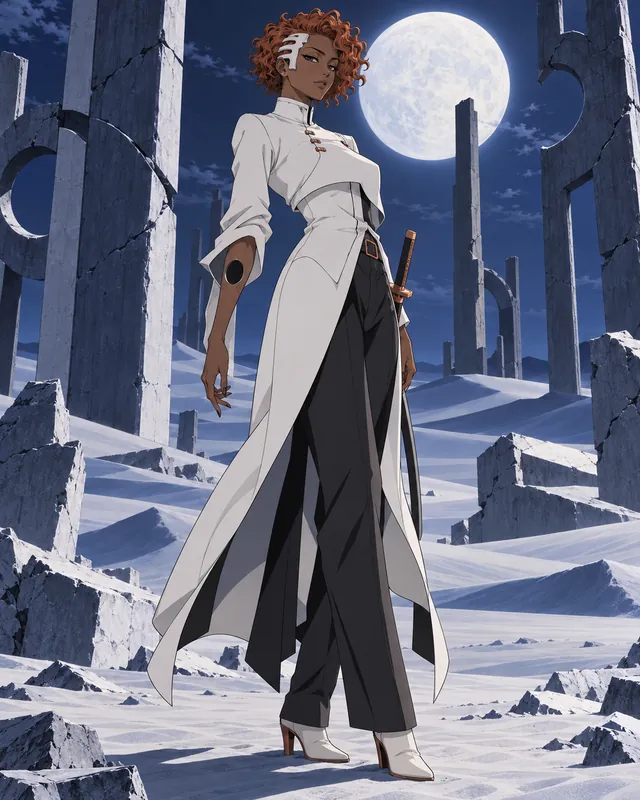
Jovana Jolmere
Restorer- Copper braid, angular lapels
- Counts a delayed shadow
- Needs direct sunlight
Build your own JoJo's Bizarre Adventure OC with a bold silhouette, a dramatic pose and a weakness that makes the story interesting. This JJBA OC maker designs the person behind the power. Start with Surprise me or the free JoJo name generator below; use the companion JoJo Stand Generator to design their Stand and its stats.
Ideas
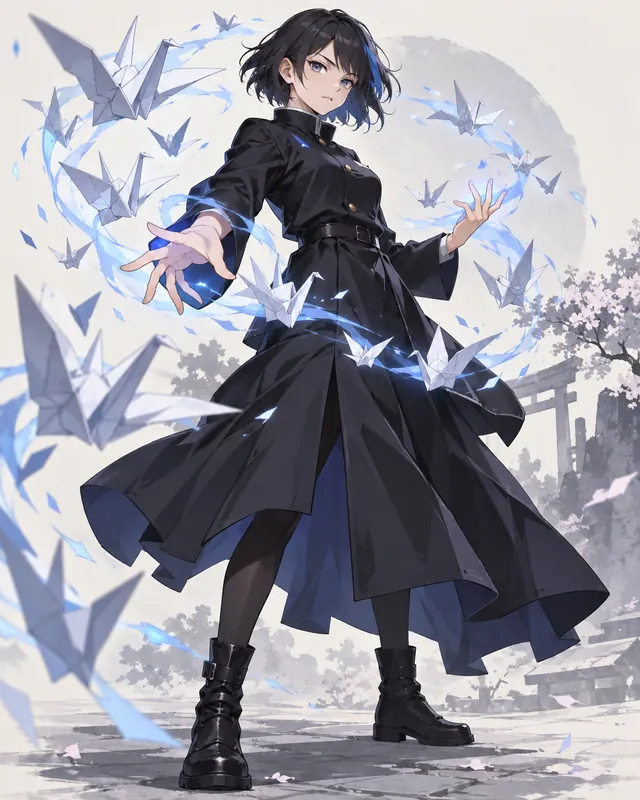
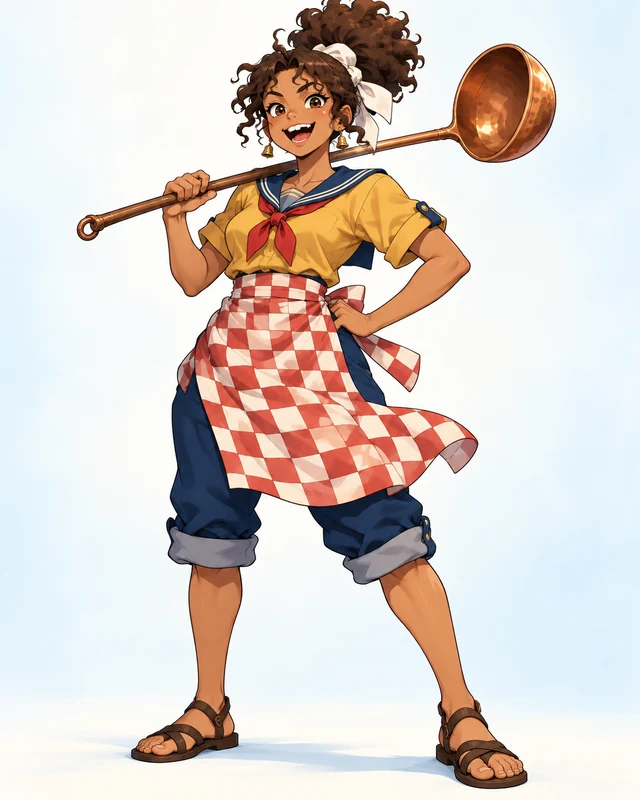
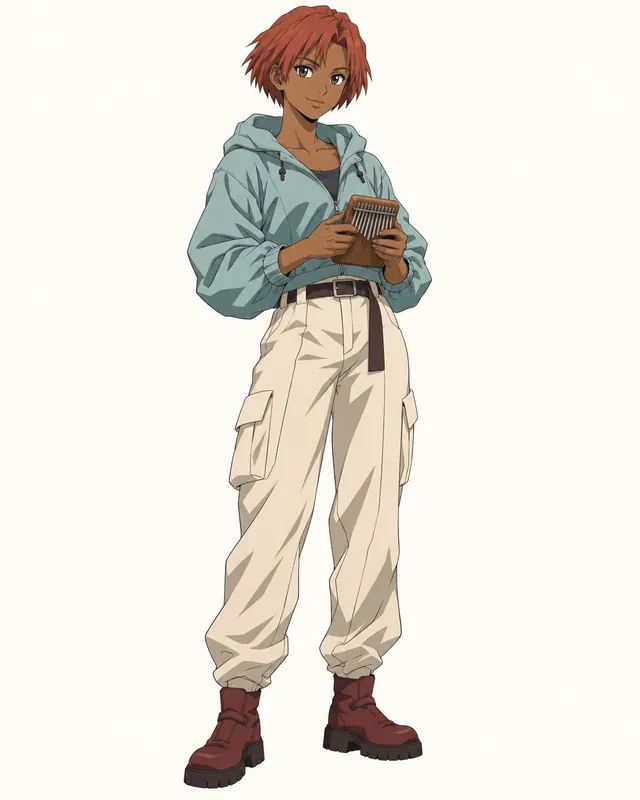
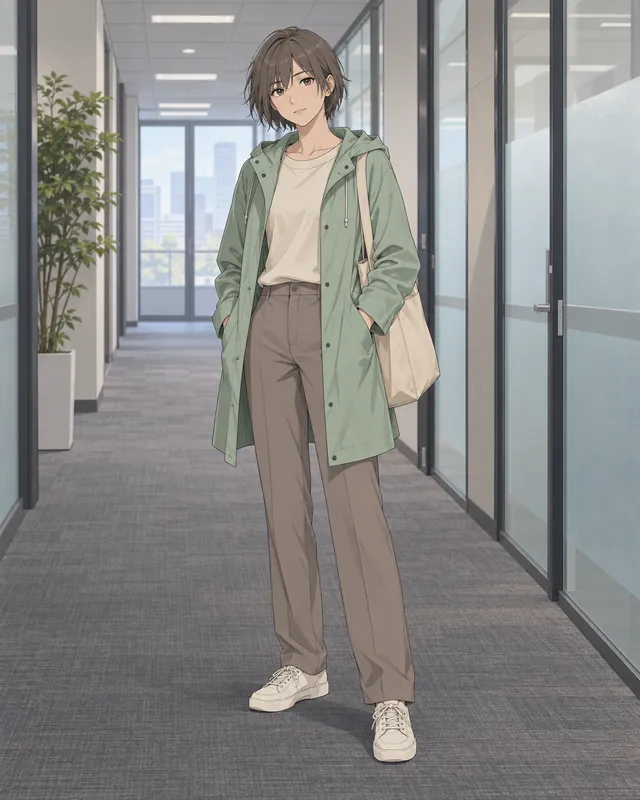
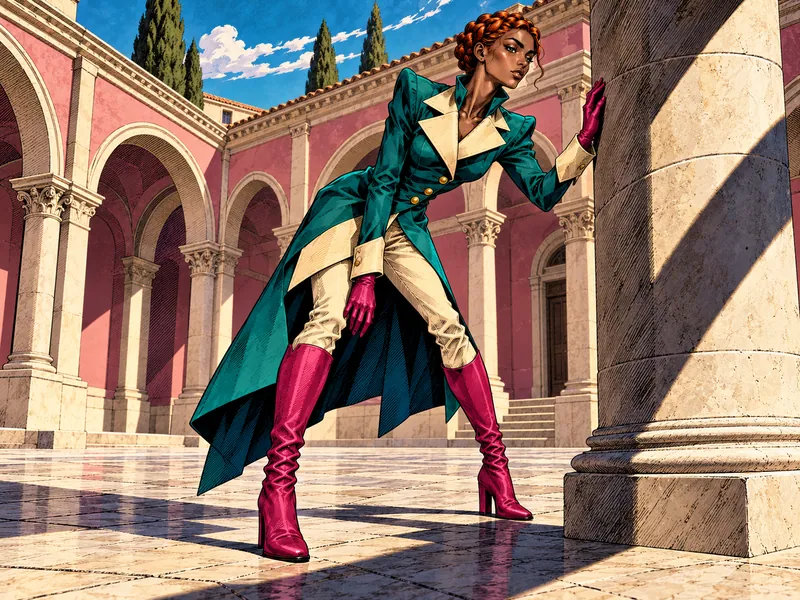
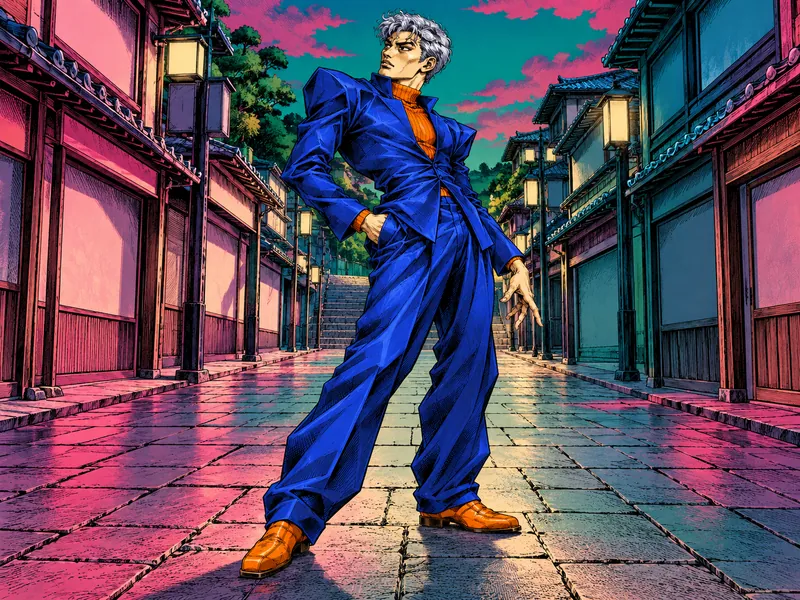
A memorable JoJo OC has a job, an unusual habit and a problem their power cannot solve immediately. These original characters start from different silhouettes and settings. Load a card to carry its colors, wardrobe and story hook into the studio, then change the detail that matters most to you. They are independent fan concepts, not missing members of a canon team or secret relatives of a protagonist. Their powers are small story premises to develop, rather than claims about existing Stands.
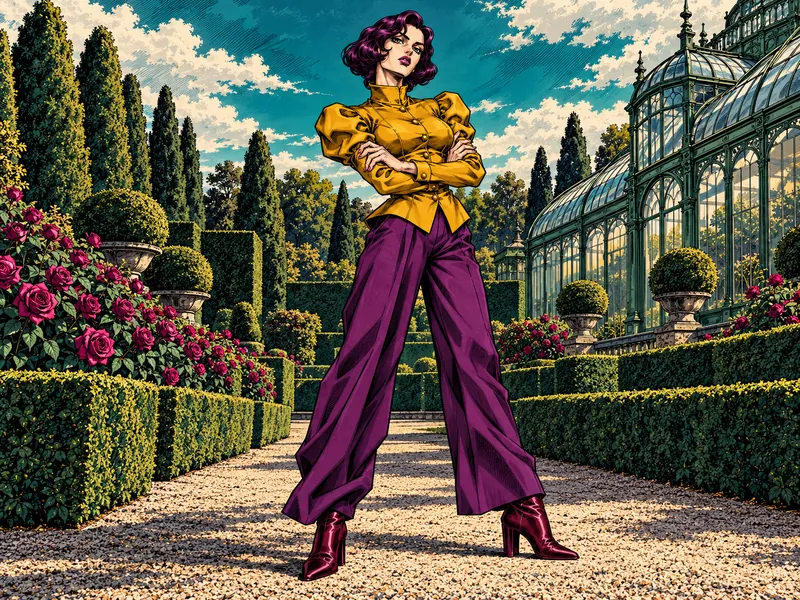
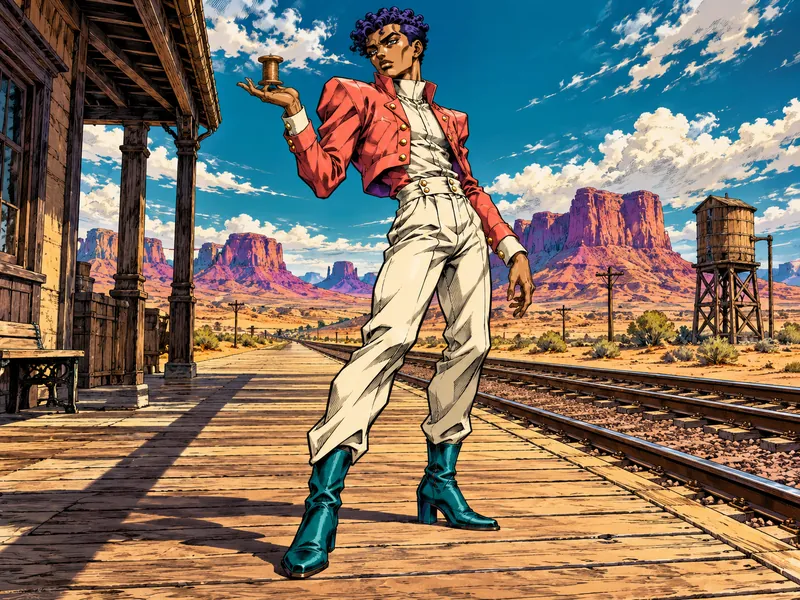
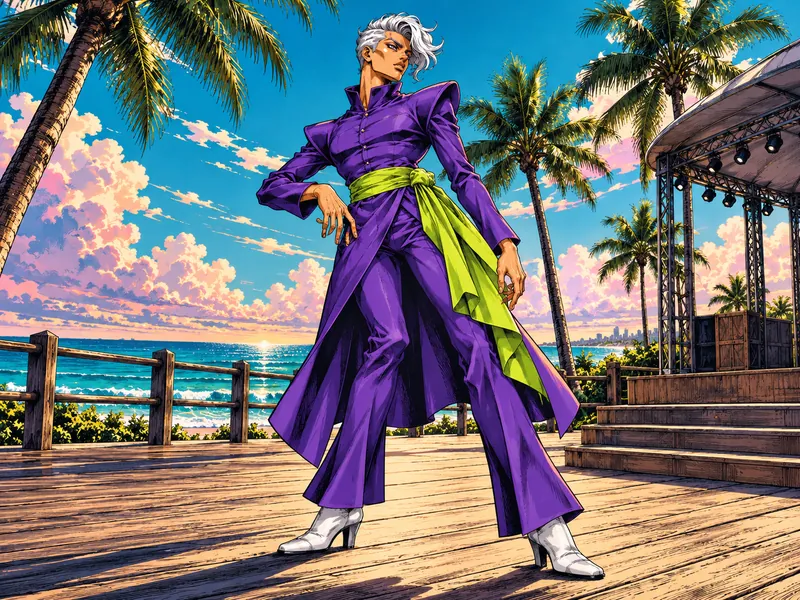
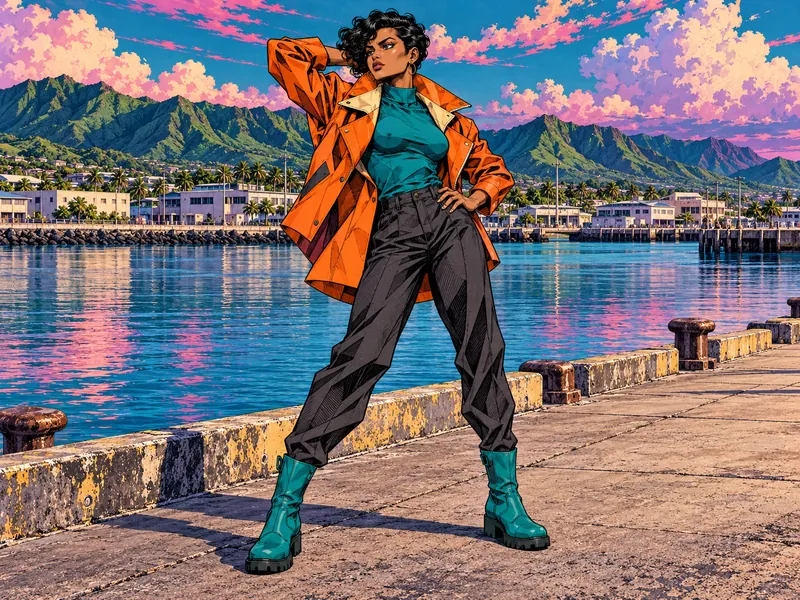
Art styles
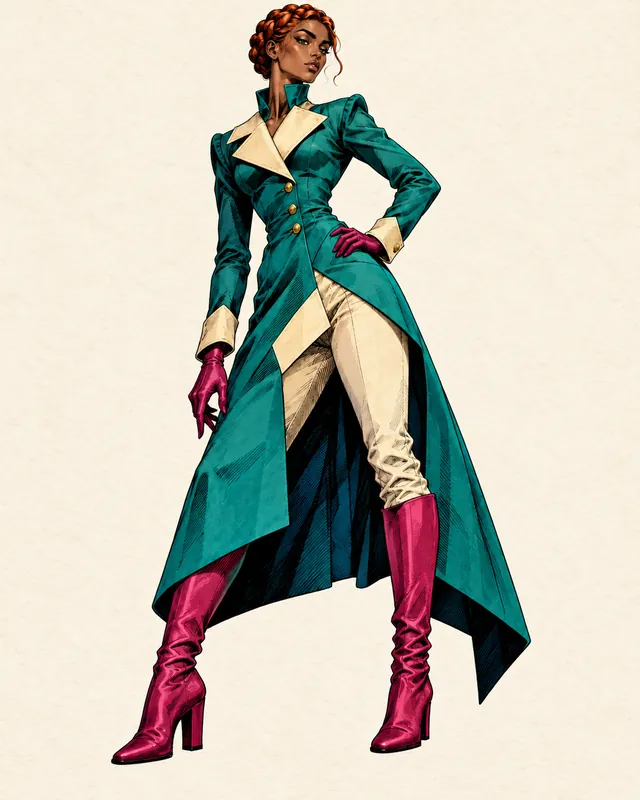
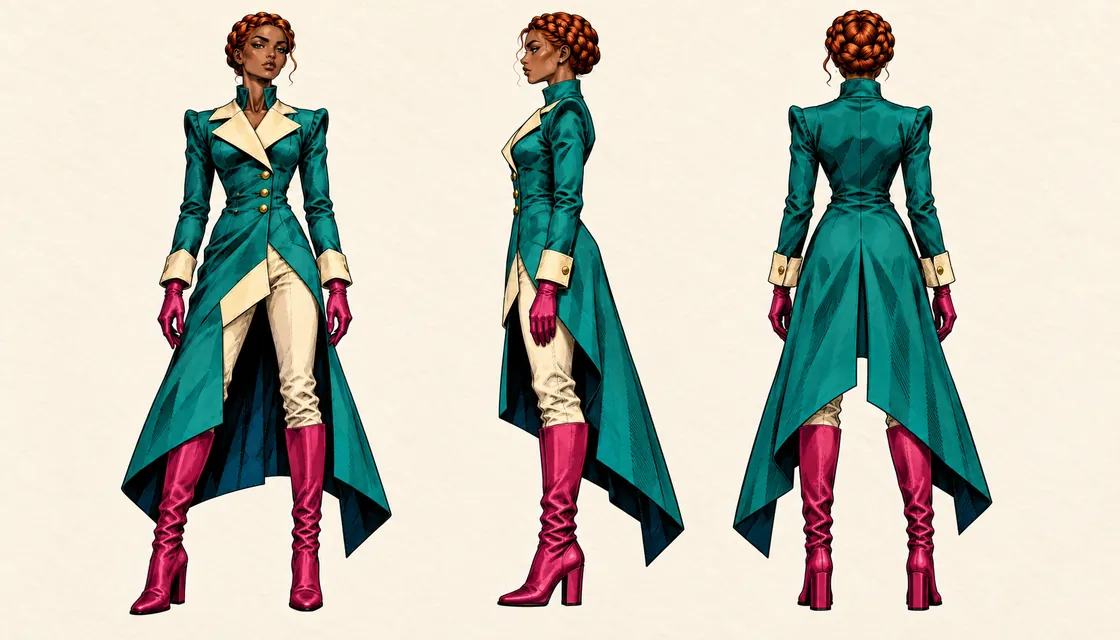
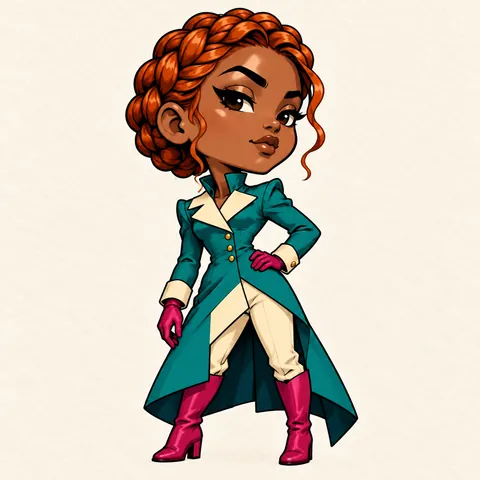
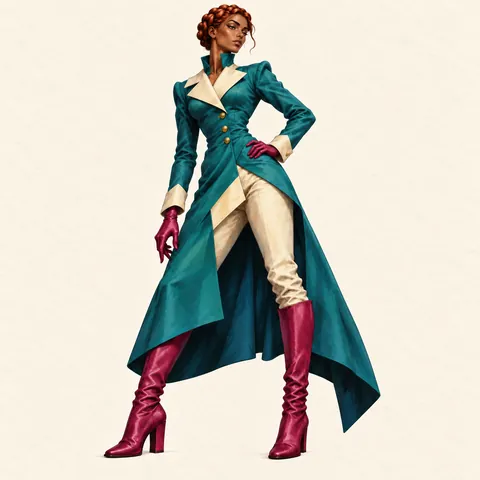
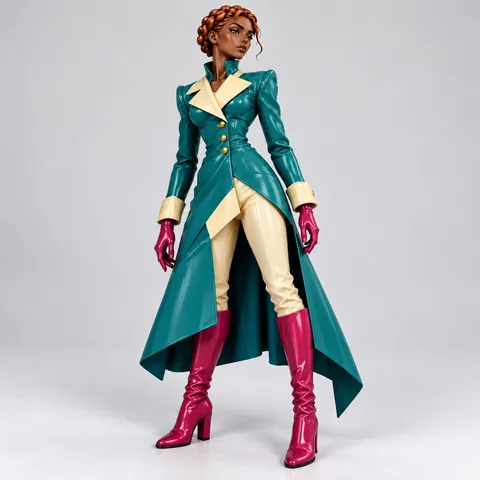
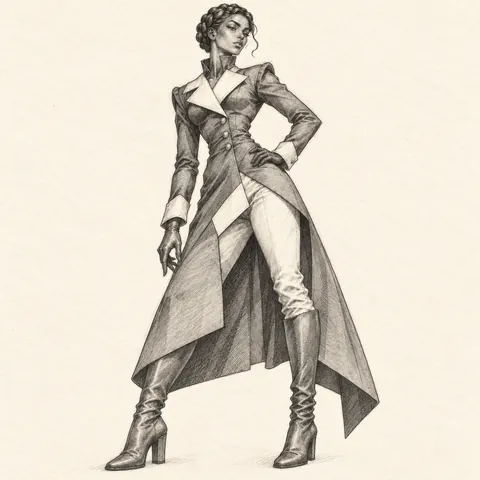
Jovana Jolmere keeps her copper crown braid, dark brown skin, teal asymmetric coat, ivory trousers and magenta gloves across these studies. The native illustration uses heavy ink hatching and angular planes. Chibi changes her proportions to a compact figure with a large head; the semi-realistic study uses painted light; the 3D version has modeled cloth and physical depth; the sketch uses graphite on paper. Compare the silhouette before the surface detail. The reference sheet gives front, side and back views for continuity, so a different angle should not quietly replace the coat fastening or braid arrangement.
Know the rules
Choose a setting before choosing the power. JoJo changes its lead, location and visual mood across its Parts, so an outfit needs a context as well as a striking color. The notes below separate verified series concepts from suggestions for your own fan character. Start with a small local problem, keep the setting recognizable through ordinary architecture and clothing, and let a strong silhouette carry the visual connection. There is no need to claim a famous family connection to make an interesting character.
Sources: JoJo Wiki: series and Parts; JoJo Wiki: Stand stats; JoJo Wiki: JoJo nickname
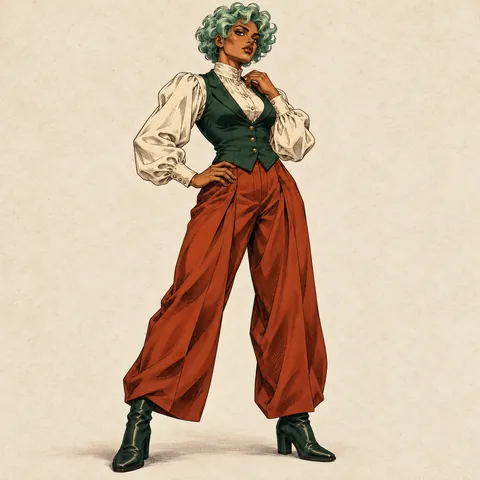
Part 1, Phantom Blood, centers on late Victorian England. Part 2, Battle Tendency, moves through a 1930s adventure with New York and European locations. Part 3, Stardust Crusaders, follows the journey from Japan toward Egypt. Those are different design briefs: a structured visiting jacket, practical travel layers and a modern street outfit each belong to a different everyday world. Let your character have a believable occupation within the setting before adding an unusual accessory. Hamon is central to the early Parts, while Stands become the main power system in Part 3. A fan story can invent a new incident nearby without inserting the OC into every famous event.
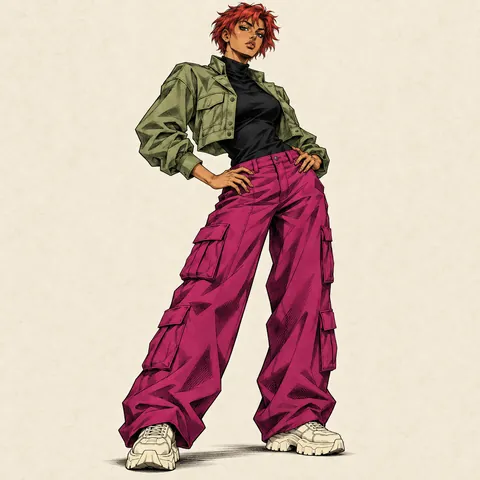
Part 4, Diamond is Unbreakable, uses Morioh in 1999; Part 5, Golden Wind, also called Vento Aureo, takes place in Italy in 2001; Part 6, Stone Ocean, begins in Florida in 2011. A neighborhood repairer, theater worker or waterfront guide can feel connected to a location without wearing a canon uniform. Choose one daily route and one person they regularly help. Their supernatural problem can interrupt that routine instead of replacing their whole identity. Avoid copying the pompadour, cap, signature hair ornaments or suit patterns of the main cast. A new silhouette should still be identifiable when the colors are removed.
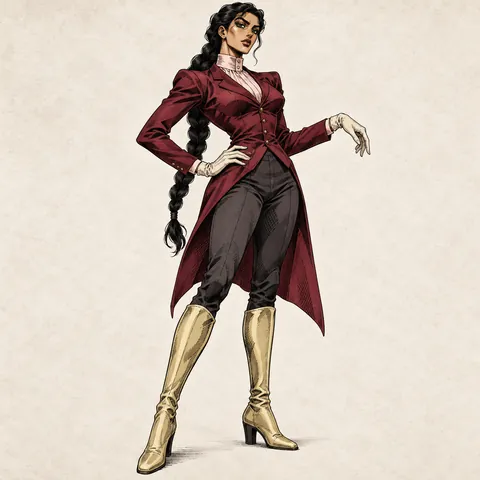
Part 7, Steel Ball Run, takes place across the United States in 1890. Part 8, JoJolion, begins in an alternate Morioh in 2011. Part 9, The JOJOLands, is the current manga Part and centers on Hawaii; its serialization began in February 2023. Parts 7 onward belong to the second continuity, so matching place names do not make every earlier character relationship carry over. Use travel wear, coastal work clothes or a modern island wardrobe as your starting point. For a race-era OC, choose an original occupation beside the route rather than copying a famous rider. Contemporary jewelry or technology needs a deliberate alternate-setting explanation.
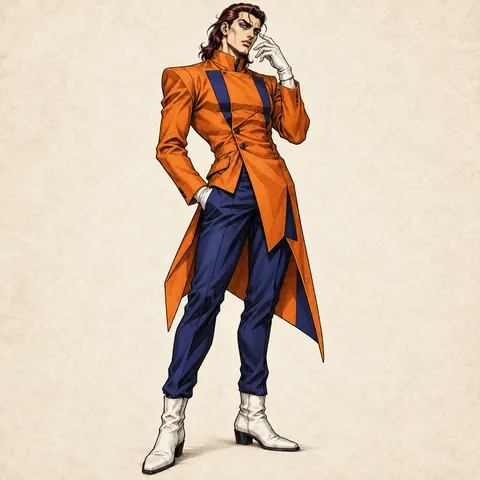
A Stand manifests its user's life energy, but its form and behavior can vary widely. Close-range, long-range and automatic describe useful distinctions, not a complete list of mutually exclusive classes. A close-range Stand can have an ability that reaches beyond its body; an automatic one follows conditions rather than continuous instructions. The familiar chart has destructive power, speed, range, stamina or persistence, precision and development potential. A through E are common ratings, with special cases such as none, unknown or infinity. They are descriptive guides rather than a universal numerical combat simulator. Design the human here, then use the JoJo Stand Generator to work through the separate ability and chart.
Hamon, also called the Ripple, is a breathing-based energy associated with sunlight. The Spin uses a special rotational technique, especially important in Steel Ball Run. Both are distinct from simply summoning a humanoid Stand, although the series can connect different supernatural systems. For an original beginner, show concentration through posture and a practical exercise rather than surrounding them with every possible power. A quiet water tray or a small practice spool can explain what they study. The object is a story prop, not a recommendation for a real-world exercise. Give the student a mentor, a repeated mistake and a reason to keep trying. Ordinary observers are equally valid characters.
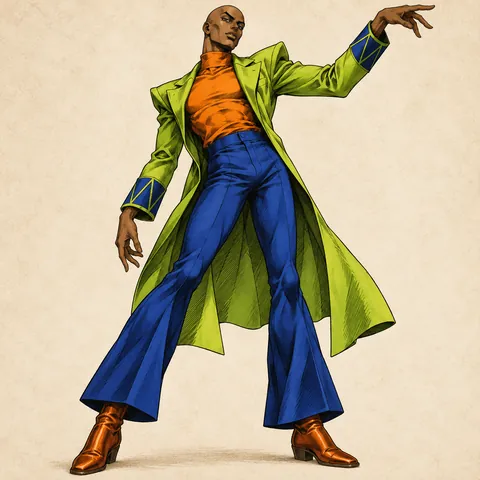
JoJo is known for expressive poses, fashion references and bold changes in color. Build that feeling through an unexpected shoulder line, a strong hip-to-shoulder twist and a hand gesture that reinforces the character's mood. Keep the pose balanced enough to understand and the clothing fully covering. Heavy ink hatching and sculpted facial planes help the native art feel different from a generic anime portrait. A musical influence can inform rhythm, mood and an invented alias without copying album artwork or a band logo. Avoid the star birthmark as a shortcut to lineage, and avoid the Speedwagon Foundation and Passione symbols. Original seams, cuffs and color blocks are more useful design material.
Names and aliases
The JoJo nickname often comes from two sounds within a name: Jonathan Joestar, Jotaro Kujo and Giorno Giovanna illustrate different routes to it. The last example uses the sound of Gio rather than the English spelling Jo. That does not mean every character needs the nickname or belongs to the Joestar family. This free local mixer pairs an original Jo-starting given name with an invented Jo-starting family name. Say the result aloud before keeping it. Switch to Music-flavored alias for an independent stage name, or below the names choose a music-flavored alias and a limited ability premise. The aliases use musical vocabulary and original imagery instead of lifting a real performer, band or song title. Neither names nor aliases establish canon ancestry.
Jo-starting given name + invented Jo-starting surname
Musical imagery, an exact condition, a reason it can fail
Guide
Treat the design as a small mystery with a person at its center. The image should tell you who they are before a long ability explanation is needed. These five steps connect the era, silhouette, personality and power rule, while leaving room for another character to matter. Keep a short written brief beside the final art so future drawings do not drift into a different costume or an unrelated power.
Start with the setting chips and decide whether your character belongs near a canon location or in an independent fan-story town. Choose a job or daily responsibility that creates contact with other people: restoring a courtyard, carrying parcels, mending stage clothes or surveying a route. Add one small frustration they would still have without supernatural powers. That detail gives a friend something to notice and gives the story a beginning. If you mix eras, explain the choice in your notes. A race-era traveler with modern electronics needs a deliberate alternate premise rather than an accidental historical mismatch.
Choose a fashion silhouette, then use the large garment as your main color and repeat the accent in just a few places. A broad lapel, sculptural sleeve or diagonal coat fastening reads more clearly than dozens of tiny decorations. Describe hair by its shape, not only its color. Jovana has a copper crown braid, which remains visible in a sketch and a small thumbnail. Keep logos and familiar canon accessories out of the brief. If a friend immediately identifies an existing character, change the garment structure, hair and pose together before adding more detail.
A dramatic JoJo pose should express a thought: listening for a repeated footstep, refusing to admit a mistake or studying a strange reflection. Set the shoulders against the hips and choose one clear gesture. Keep both hands understandable instead of asking for a complicated knot of fingers. A strong expression and a readable angle do more than an extreme bend. The drawing should stay teen-safe and fully clothed. For a reference sheet, switch back to clear standing views so an artist can see the coat seams and footwear without guessing what is hidden behind the pose.
Decide whether the character uses a Stand, Hamon, Spin or ordinary observation. For a Stand user, finish this sentence in your own notes: the ability works when this condition is met, but fails when this obstacle appears. Be specific about what the power observes or changes. Following a reflection along a visible surface is easier to stage than controlling all light everywhere. Use the companion Stand tool for the separate manifestation and stat chart. Keep its visual design distinct from the human outfit while repeating one small motif, such as a rectangular seam or a muted accent color.
Shuffle the names mixer, say a result aloud and check that the nickname follows naturally from its sounds. Select a music-flavored alias only if its mood suits the ability. You can edit both fields before generating. Compare the same character across art styles, keeping the original hair, palette and garment closures in the description. Save the image with a short note about the limitation, setting and everyday role. When you share it with friends, describe it as an original fan character. Ask for feedback on whether the pose, silhouette and power condition tell the same story.
Other fandoms
Tools
FAQ

Sign up for 10 bonus credits and make your first OC free.