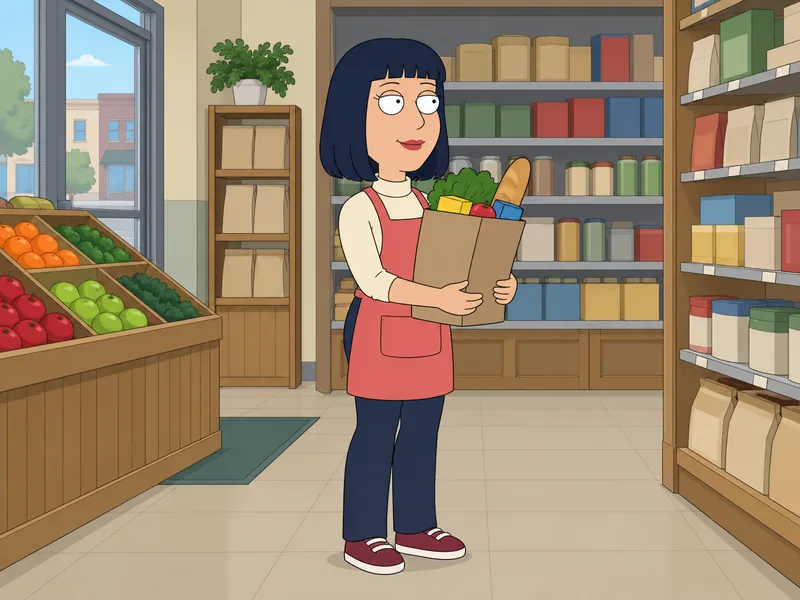
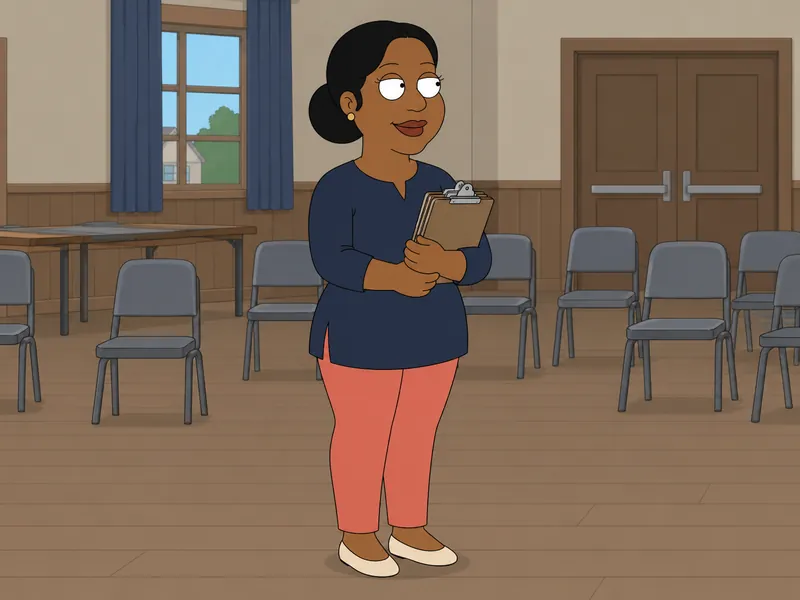
Romy Pennick
Shopkeeper- Owns a tiny grocery
- Keeps every receipt
- Her sister handles deliveries
This Family Guy OC creator starts with a new Quahog resident: an everyday job, a family connection, and one clean running gag. Choose a role, outfit colors, and a visible comic prop. Try an original idea below, or mix your own name and habit before generating rounded, flat-color cartoon art.
Ideas
A good resident can carry a scene before a famous character enters it. These six starters use different jobs, family situations, silhouettes, and comic habits. Pick a card to load its settings, then change the name, outfit, or running gag. The prop makes the joke readable; the background gives the resident a place to spend an ordinary afternoon. These are fan-created examples, not forgotten characters from an episode.


Know the rules
Quahog is the fictional Rhode Island setting of Family Guy. The series was created by Seth MacFarlane and uses recurring neighbors, workplaces, and cutaway jokes to turn everyday situations into comedy. You can borrow that broad structure while keeping your OC and humor original. The categories here are design starting points, not official character classes or a claim that every resident follows the same formula. Use the facts as context, then make a person with a recognizable routine.
Sources: Family Guy season one: debut and episode count; Family Guy season two: episode count; Family Guy cast and setting

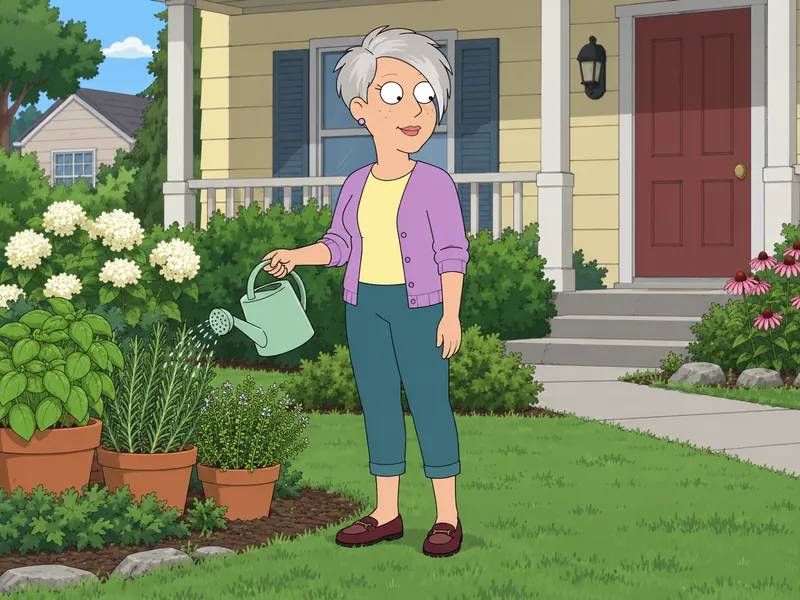
Build the neighbor around a routine that other people can interrupt. A morning plant check, a porch repair, or a weekly grocery trip gives the scene a clear starting point. Choose an everyday outfit with one recognizable shape, such as a loose cardigan or a square work jacket. The joke should come from how seriously the resident treats a small task, not from humiliating a vulnerable person. Petra, for example, treats a wilted herb as an underperforming teammate. Her watering can tells you what she cares about before she says anything. Give the resident one skill that actually helps someone, too. A useful neighbor is more interesting than a person who exists only to make a mistake.

A shop creates a reason for strangers to meet your OC. Decide what the store sells, who helps run it, and what minor problem keeps returning. Keep the business original rather than placing a new face behind a canon character's counter. The apron, bag, or tool should explain the job without a printed sign. Romy's grocery works because the task is ordinary while her receipt archive is excessive. Her sister can disagree with the filing system without becoming the target of the joke. When writing a prompt, describe the clothing and one object first; a full inventory of shelves will make the character less readable at small sizes.

Town work supplies small rules and deadlines that a character can misunderstand. Think about route planning, meeting supplies, park maintenance, or library equipment rather than copying the show's police, news, or medical cast. A town worker does not need an official badge to be understandable. A plain jacket and a folded map can communicate the role. Noel is good at organizing large routes but overcomplicates the shortest walk. That contrast is the joke. Keep the mistake reversible and harmless: a long route to a nearby doorway is enough. A familiar workplace background should support the silhouette, with no lettering, seals, or official signage behind the resident.
Write one relationship that changes how the resident behaves. A sibling might be practical where the OC is ceremonial, or a cousin might enjoy the hobby but dislike its storage requirements. That gives the character a reason to explain, hide, or defend a habit. You do not need to draw the entire family in the first image. Put the relationship in the profile and keep the art focused on one person. Avoid making the OC a secret Griffin relative as a shortcut to importance. An independent household can still belong in Quahog and leaves room for your own stories, names, and visual choices.
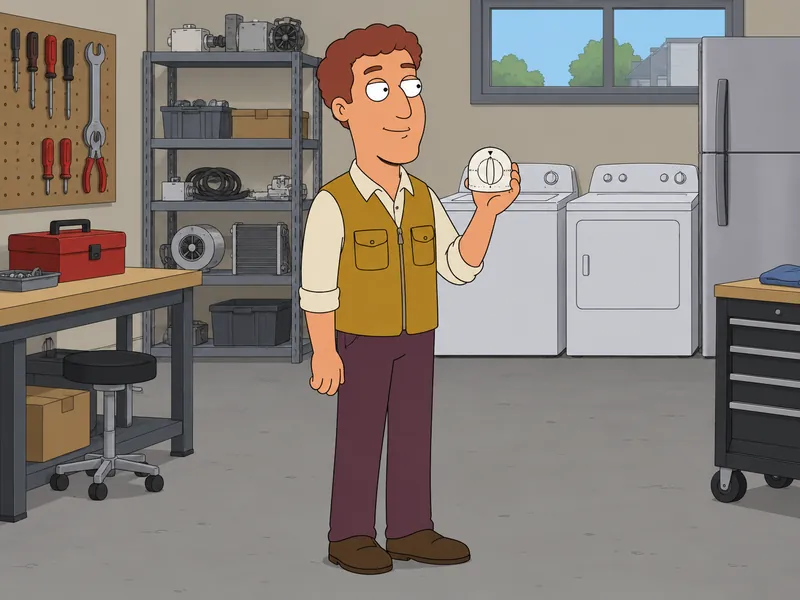
A running gag repeats a recognizable pattern with a new inconvenience. Establish the habit, let an ordinary situation trigger it, and finish with a small surprise. Bram sets a timer for every task, then needs another timer to remember why the first one rang. Next time the same habit can interrupt lunch instead of work. The joke resets without anyone being hurt. Avoid quoting the series' crude material or building the joke around sex, cruelty, or a real person's identity. The page uses the show's everyday cartoon setting as a design reference while keeping the examples suitable for teens.
Family Guy characters use simple contours and large readable eyes. For an OC, test the outline at thumbnail size: can you tell the hairstyle, body shape, and main clothing shape apart? Use a rounded nose and clear eyes without borrowing a named character's face. Do not combine a recognizable canon hairstyle with that character's outfit colors and call the result new. Change the haircut, proportions, clothing structure, occupation, and attitude together. Flat colors help the design feel like a television cartoon, while a quiet background prevents tiny props from competing with the face. Save complicated patterns for a later drawing.
Names and gags
Use an ordinary first name and a believable surname, then make the joke come from behavior. A name does not need to announce the whole premise. The mixer provides starting combinations that you can edit in the name field. Pick a gag below to fill the job-and-gag field, and add the job yourself if your resident has a different occupation. A repeatable habit should work in more than one place: at home, at work, and during a completely unnecessary errand.
Everyday first name + original surname
One habit, many inconvenient situations.
Guide
Start with a short scene rather than a list of references. Your resident needs a task, a small obstacle, and a response that reveals their personality. This workflow turns those choices into a readable prompt and an image you can refine. Keep a copy of the final description if you want the same character in a later portrait or scene.
Write one sentence about what your resident wants to finish today. A grocery owner wants the delivery sorted; a route planner wants a quiet lunch; a neighbor wants one plant to survive the week. That practical goal makes later jokes easier to write. Pick a role tile that fits the goal, or clear the tile and describe a different occupation in Extra details. Keep the first scene small enough to understand without a paragraph of backstory. If you cannot explain the task to a friend in one breath, simplify it before adding a costume.
Choose a family connection and explain one disagreement that can stay friendly. The OC may love planning while their sibling prefers improvising. Use that contrast to choose a prop or an expression: a tightly held checklist, a proud little smile, or a bag packed for an absurdly short trip. You can keep the other family member outside the image. This gives the character a social life without asking the model to draw several people. Write the relationship in your saved bio so future scenes preserve it.
The Family Guy character maker works best with a specific object and behavior. Replace "very funny" with "carries a folding stool for lines that never form." Replace "clumsy" with a harmless, repeatable mistake. Choose one object rather than a pile of competing jokes. Imagine the character in three places and check that the habit still makes sense. A good gag can move from the porch to the shop to a town meeting, changing its consequences while keeping the resident recognizable.
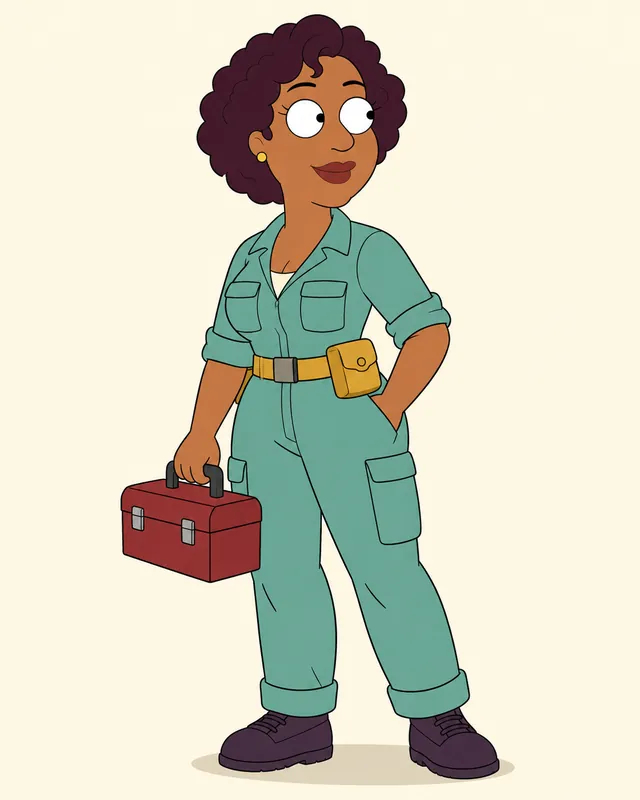
Pick the main outfit color and a quieter or brighter accent. Describe the hairstyle, body build, collar, trousers, and shoes in that order. Keep the outfit practical for the occupation and different from the canon cast. A teal jumpsuit, mustard pouch, and short plum curls read more clearly than a list of tiny pins. Use a plain background for your first reference image. Once the silhouette works, choose a harbor or suburban setting and keep the surrounding objects simple and unbranded.
After generation, compare the result with the saved prompt. Check the hands, eye direction, hairstyle, and the object that carries the gag. If an appliance repairer is holding a grocery bag, change the prop description before trying again. Check for accidental writing or a costume that resembles the named cast. Keep the version whose personality reads without explanation, then save the prompt with the image. For a later portrait, reuse the same hair, clothing colors, and face description so the resident stays consistent.
Other fandoms
Tools
FAQ







Sign up for 10 bonus credits and make your first OC free.