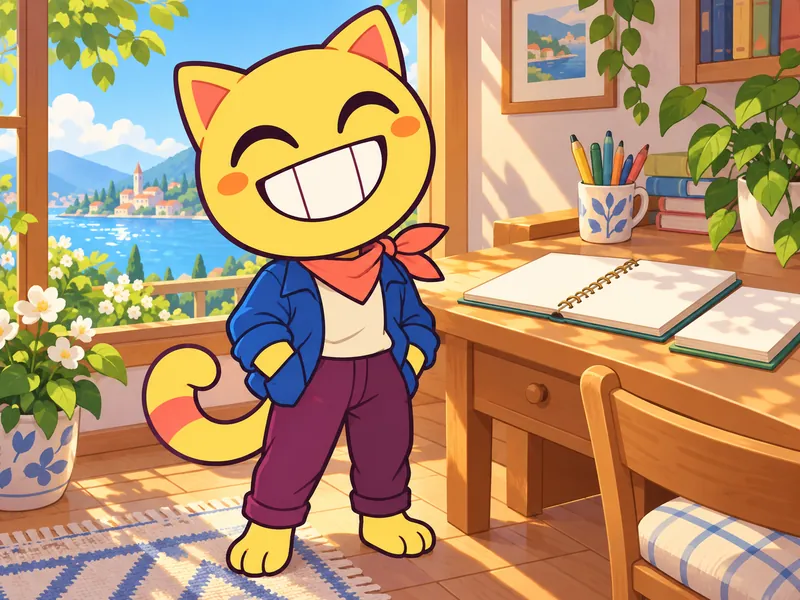
Zest Hiccup
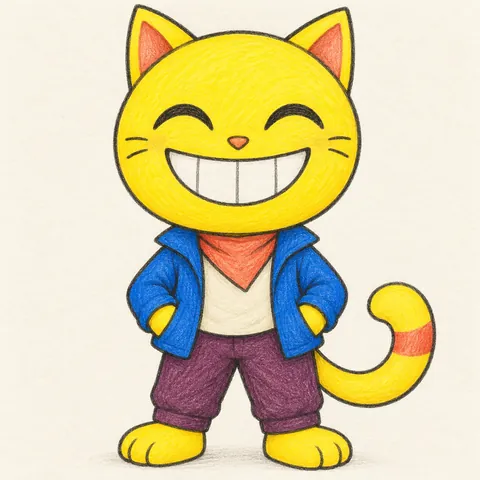
Big grin- A grin wider than the notebook
- Coral scarf, one tail band
- Collects tiny everyday victories
Build an emoji cat OC around a big, readable expression. This emoji cat creator pairs an original round face with your own body base, outfit and colors. Try a grin, joyful tears or a pout, then make a portrait, full-body image or reference sheet.

Ideas
Each idea starts with a different expression and a matching everyday situation. Load a card to fill the fields, then change its name, clothing or markings before drawing. The characters are design examples, not adoptable versions of another creator’s OC. Keep the emotional silhouette even when you replace the palette.

Art styles
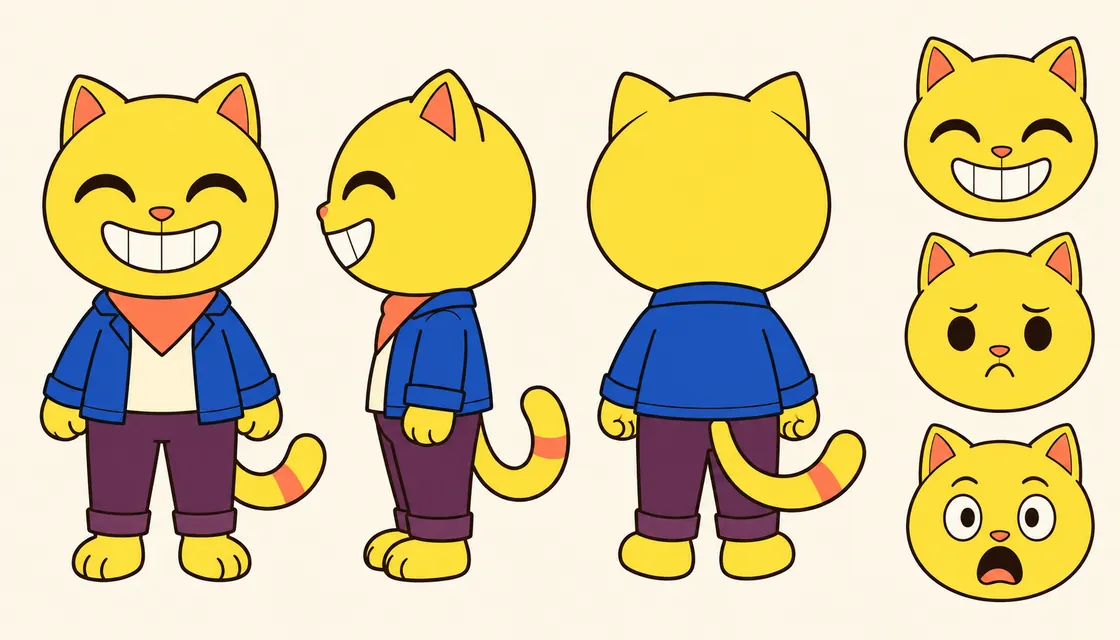
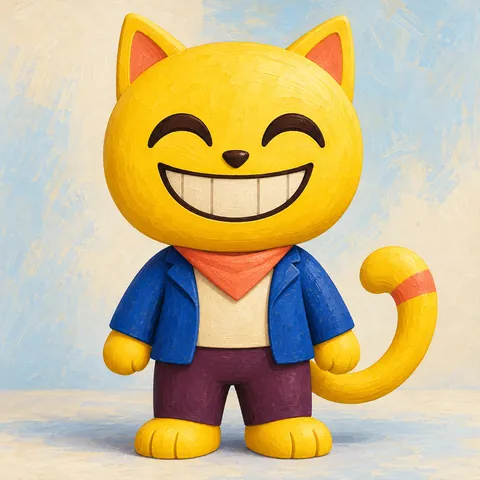
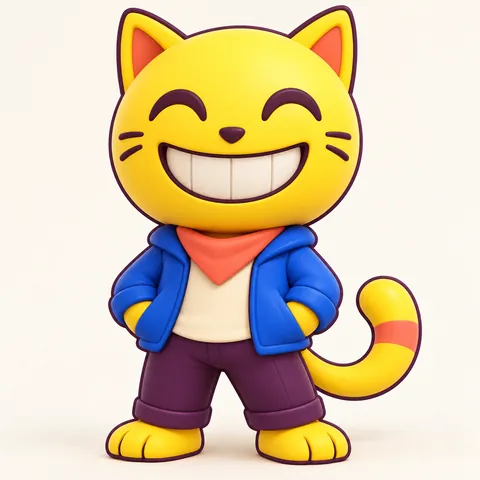
Zest Hiccup keeps the same lemon face, cobalt jacket, coral scarf, plum trousers and single coral tail band across these studies. The native look uses thick outlines and flat color. The emoji cat maker 3d option adds a toy-like surface while keeping the round face. The reference-sheet example combines body views with expression studies for a sticker-sheet plan; it is a single image, not separate sticker files or an animation.

Know the rules
The face is the organizing feature of an emoji cat, not a breed or a franchise power system. These seven presets are our design vocabulary for the page. Mix them with three body bases and your own fur pattern. The counts below describe the controls here, not invented statistics about the wider community.
Sources: Emoji cat maker on Picrew; Emoji cat projects on Scratch; FlipaClip emoji cat eye tutorial

A big grin needs a broad mouth shape and eyes that agree with it. Start with a round head, two compact ears and a tiny nose, leaving most of the face available for the expression. Curved closed eyes make the smile feel different from a stare with exposed teeth. Keep the teeth as a simple pale band or a few wide divisions instead of a dense grid. The mouth should stay inside the head outline with enough cheek space on both sides. Zest uses a coral scarf below the face, where it cannot interrupt the grin. Test the design as a small square before adding accessories. If the face loses its expression when reduced, make the eyes and mouth larger rather than adding more detail. This is a design method, not a required platform emoji shape.

Tears of joy work best when the eyes squeeze upward and the mouth opens into laughter. Place a large tear at each outer eye corner, with a clear gap between the tear and any cheek patch. Downward eyebrows and a trembling mouth suggest sadness instead, so keep those for the crying option. Aqua Snicker uses an uncomplicated aqua face and mint clothing; the blue tears remain the strongest small accents. Avoid covering the cheeks with whiskers, decorative freckles and several layers of tear shapes at once. For a later animation, keep the tear attachment point stable while changing its size. A single still image cannot show timing, but it can establish where those shapes belong. Check that a tear has not become a detached ornament beside the head.

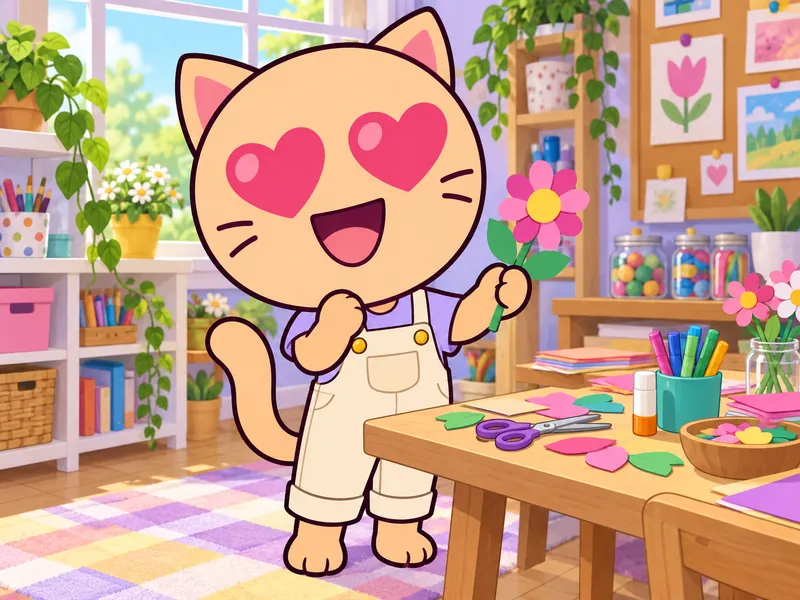
Heart eyes describe a visible expression here, not a romance requirement. A character can be delighted by a handmade gift, a favorite song or a beautifully repaired notebook. Give both eye shapes enough interior space that they remain hearts at thumbnail size. A small smile beneath them completes the expression without competing for attention. Peach Fondly keeps the paper flower away from the face so it does not obscure an eye. Use a contrasting eye color, then repeat that color only once elsewhere in the outfit. Avoid surrounding the head with floating hearts, which can confuse the character silhouette and make a crowded profile picture. This page offers an original emoji-like interpretation; it does not reproduce the exact heart-eye asset used by any phone platform.

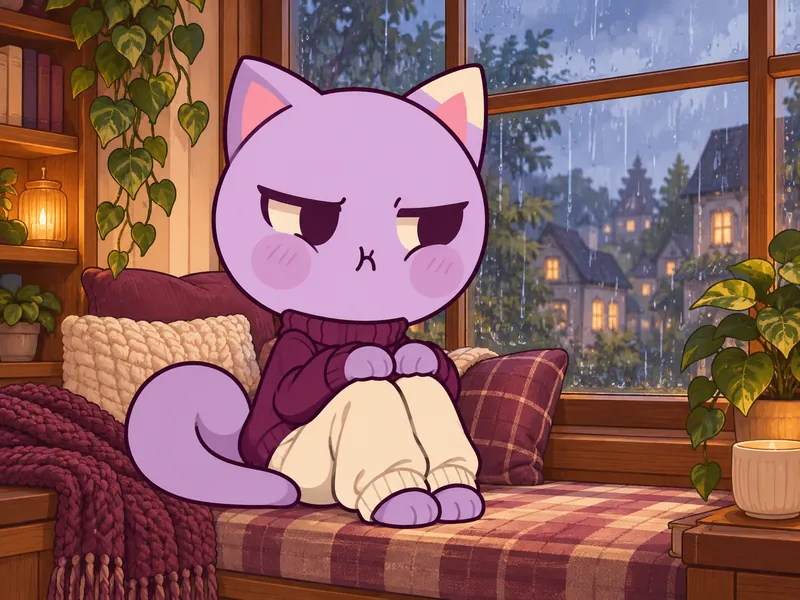
A pout can be playful, disappointed or stubborn. Puff the cheeks slightly and use a compact pursed mouth, then choose whether the brows lean inward or rise at the center. Keep the emotion mild if the character is meant for a friendly sticker collection. Lilac Hushpuff sits beside a rainy window, giving the expression a small story without adding a caption. Do not change the whole head into a realistic feline muzzle to express the pout. The round emoji face should still do most of the work. On a seated body base, leave room between the paws and chin so the mouth remains visible. A sweater collar can sit lower than usual if it would otherwise hide the bottom of the face.

A crying expression uses a downturned mouth, raised inner eyebrows and tears that travel down the cheeks. It can represent a touching story, a lost pencil or relief after a difficult day. There is no need for injury or frightening scenes. Keep the tears broad and simple so they remain readable against the fur color. If you choose blue fur, use a lighter or darker tear color instead of making the streams disappear. Do not reuse the joyful-tear eyes unchanged, because closed laughing eyes can reverse the intended mood. For an expression sheet, preserve the ears, head width and signature marking while changing only the emotion. That makes the panel recognizable as another feeling from the same character, rather than an unrelated sad cat.

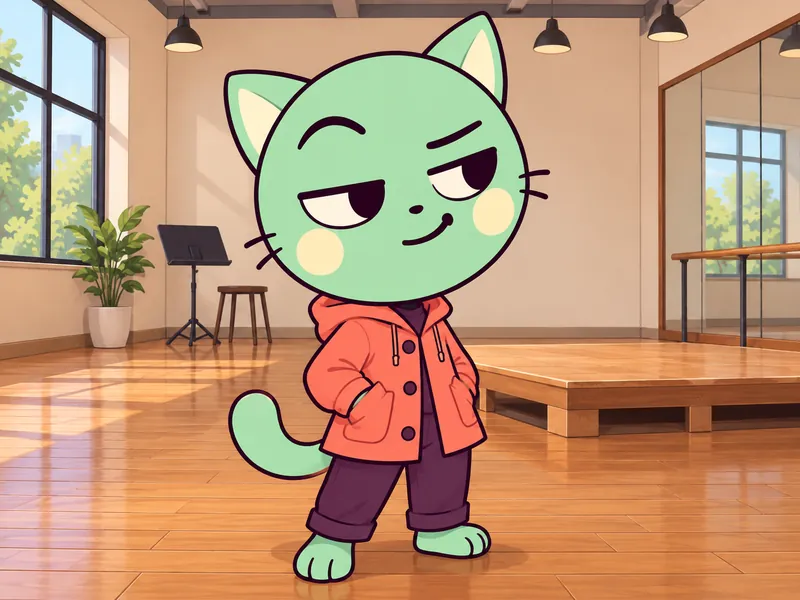
A smirk needs only a small imbalance: one mouth corner higher, one eyebrow raised or one eye slightly narrower. Use one or two of those changes before exaggerating everything. Mint Sideglance keeps a broad round face and a relaxed pose, so the expression reads as a private joke rather than a villain. Write which side rises from the character’s perspective if consistency matters across several views. Avoid adding a grin associated with a famous striped fantasy cat, and keep the palette and outfit independent of recognizable characters. A smirk is especially useful for a portrait because a small head tilt can support it. Leave enough space around the eyes for the asymmetry to show after a circular profile crop.

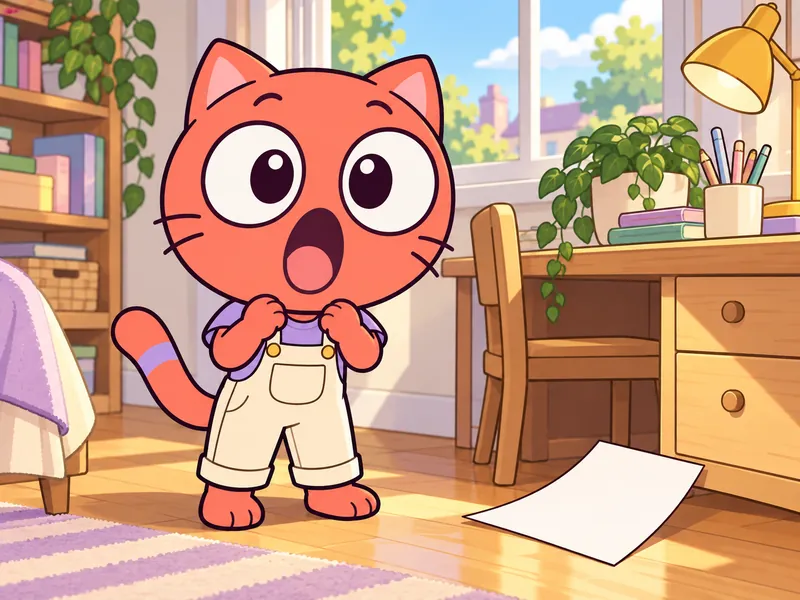
A shocked face usually benefits from wide eyes and a small open round mouth. Let those shapes contrast with the large round head instead of filling the face with extra punctuation. Coral Gaspnote reacts to a harmless stationery mishap, keeping the scene light and suitable for a friendly character collection. Raised shoulders can support the expression on a full-body drawing, but do not let the pose cover the mouth. Check the pupils carefully: both should point toward the same intended subject unless you deliberately describe a different gaze. Avoid floating exclamation marks or platform-style reaction badges. For a sticker plan, a simple surprised face with a clean outline is more useful than a complicated scene that becomes unreadable when scaled down.
Names and details
Mix a color or texture word with a small sound or gesture. These are optional playful names for an original setting, not an official emoji cat naming system. Try a few aloud and keep the one that suits your character’s personality. The detail buttons add a visual anchor to the signature field; edit the color to match your chosen palette. Search your final name before sharing it publicly so you do not accidentally adopt another creator’s established identity.
A playful working name, ready to edit
Keep one anchor across every expression.
Guide
Build from the face outward. The goal is an original character whose expression is clear before anyone notices the outfit. Use the generator as a drawing brief, compare the result with that brief, and revise the details that drift. Your first appealing picture is a starting reference, not a guarantee that every later image will match it.
Choose an expression before choosing a costume. Describe the eyes and mouth in ordinary words: curved laughing eyes with a broad grin, or wide eyes with a round open mouth. Keep the head circular and the ears compact. Draw a tiny rough version, or reduce your reference image until it is the size of a profile icon. You should still be able to name the emotion without reading a label. If it looks like an ordinary cartoon cat, simplify the muzzle and let the eyes and mouth occupy more of the face. Save a short identity checklist at this stage: head shape, ear shape, signature marking and palette. These are the parts that should survive every later expression.
Use head only for a face study or a compact profile picture. Sitting gives the character a gentle silhouette with paws gathered beneath the head. Standing full body gives you room to show trousers, sleeves and the complete tail. For an emoji cat maker full body result, select the standing base and the full-body output together. Specify that both feet, ears and the tail tip remain inside the frame. A body base is a proportion plan, not a downloadable layered doll supplied by this page. Keep the body simple enough that the face remains the focal point, and give upright characters a complete ordinary outfit. Check that a seated pose has not quietly turned into a cropped standing figure.
Choose one main fur color, one outfit color and a smaller accent. A broad tail band or a single ear tip is easier to preserve than many tiny spots. Keep high-contrast patterns away from the eyes and mouth so the emotion does not disappear into the fur. Describe left and right from the character’s perspective when a marking is asymmetrical. If the outfit has a scarf, place its knot below the face and keep the ends from covering the paws. Test the palette against both light and dark backgrounds before using a portrait as a profile picture. Bright flat color helps the native emoji look, while a 3D study can use softer shading without changing the underlying color boundaries.
Select the reference-sheet output and ask for a small expression study alongside front, side and back views. State that the same head shape, outfit and markings repeat in every view. A practical sticker-sheet plan can show a grin, a pout and a surprised face without placing captions or symbols around them. The output is one composed image; individual stickers still need to be cropped and prepared in an editor. Inspect each face for mismatched eye positions, missing markings and changes to the scarf knot. Keep a clean body view as a separate reference if a busy expression layout makes the clothing hard to read. Do not treat a generated sheet as an automatically consistent production model.
This page creates still images. If you want to animate your character in FlipaClip or another editor, begin with a small blink or a change from neutral to grin. Keep a stable head outline and move the eyelids or mouth on separate drawing layers in that editor. A short sequence is easier to revise than a whole scene with several characters. Use your sheet to keep the tail band, ear tips and clothing in the same places. Watch the loop at the intended display size and remove details that flicker or distract. The linked eye-animation tutorial is an example of the community’s workflow, not a promise that this site exports animation, layered files or a ready-made rig.
Other fandoms
Tools
FAQ
Sign up for 10 bonus credits and make your first OC free.