SLOT 01LEADER
Path
The Hunt
Dan Heng
Wind
Build an unexpected Honkai: Star Rail party or meet your next original traveler. The HSR Character Randomizer deals four playable characters from the roster you choose, with slot locks and challenge rules you control. Switch to OC mode for a new Path, Combat Type, home world, role, Light Cone concept and personality. Everything rolls in your browser, free with no sign-up.
93 eligible forms. Wiki roster snapshot: version 4.6, 2026-10-25. Multi-Path Trailblazer and March 7th forms cannot share a team.
Astral itinerary / Crew manifest
Path
The Hunt
Path
Harmony
Path
Preservation
Path
Abundance
occreator.org / Random challenge, not a recommended build.
Four travelers, one unexpected route.
Original travelers
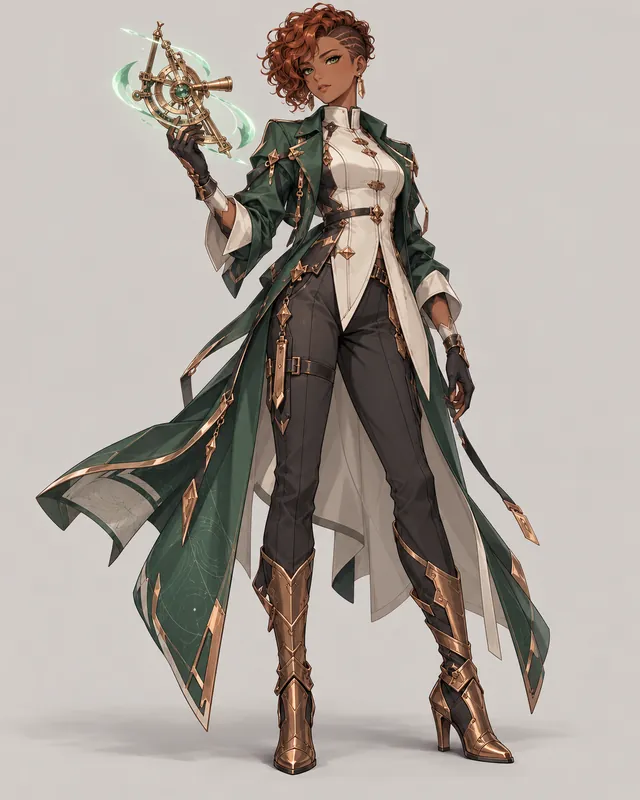
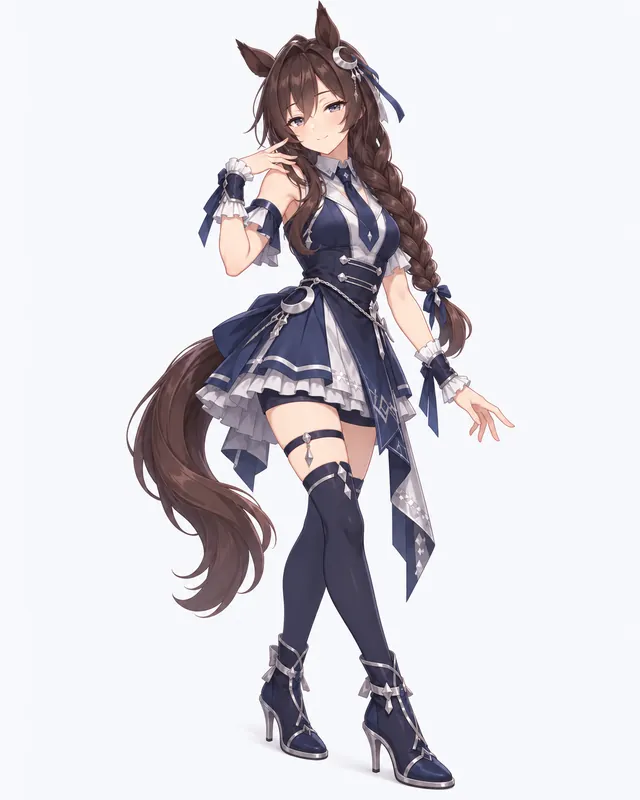
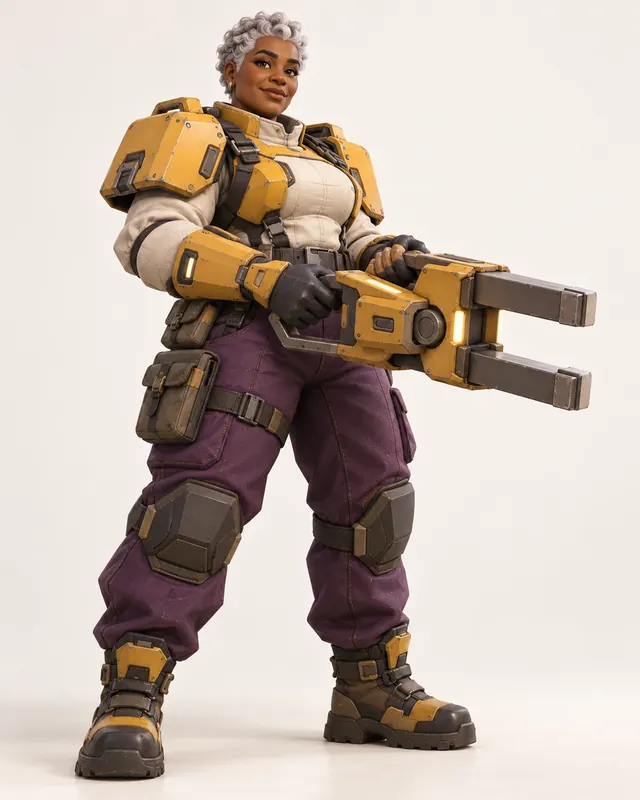
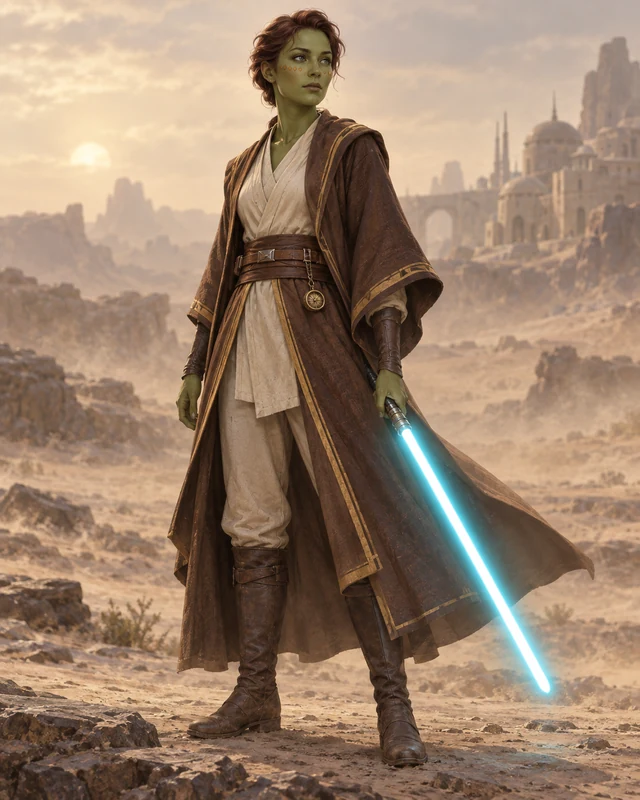
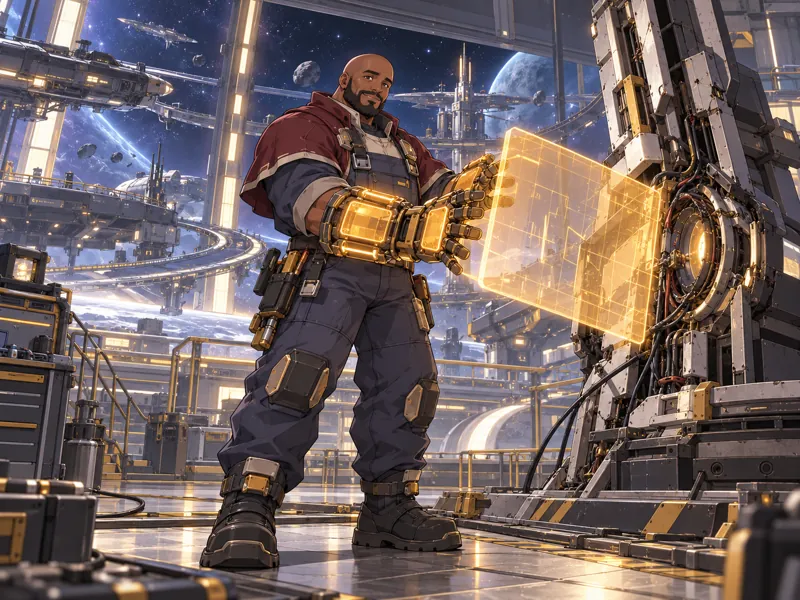
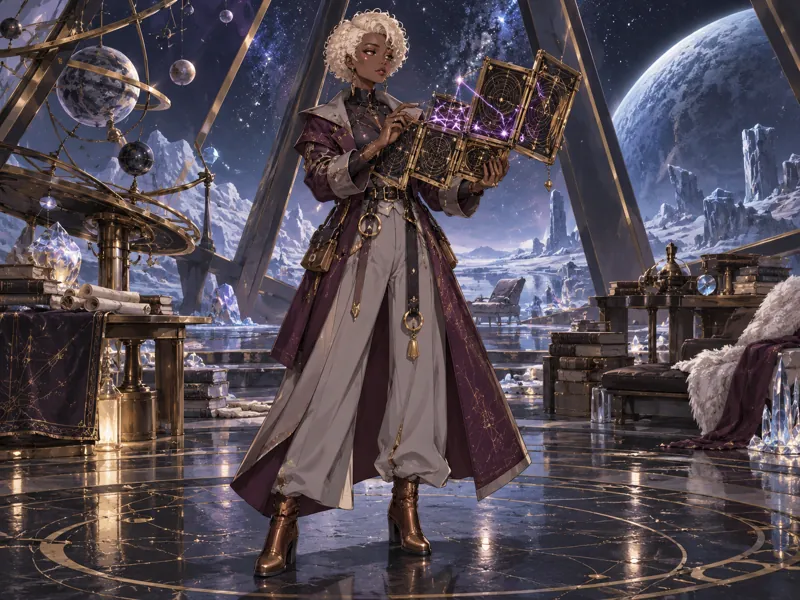
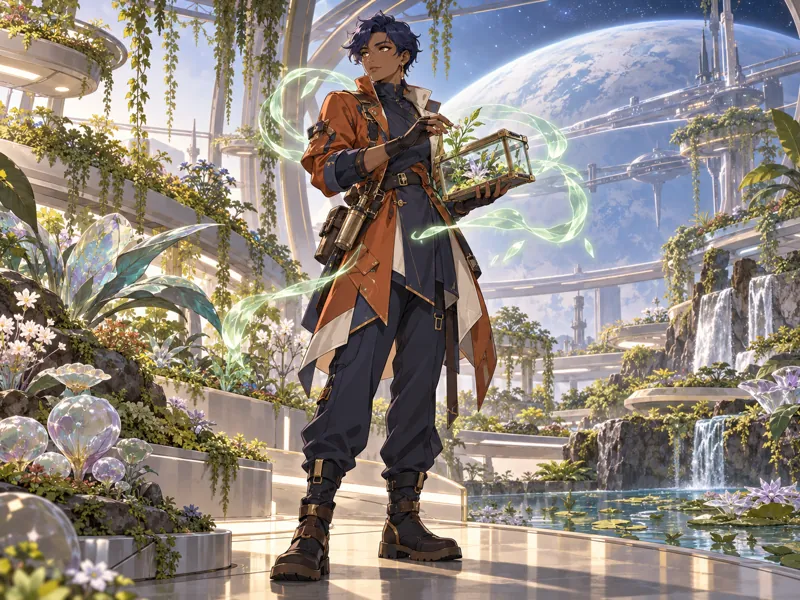
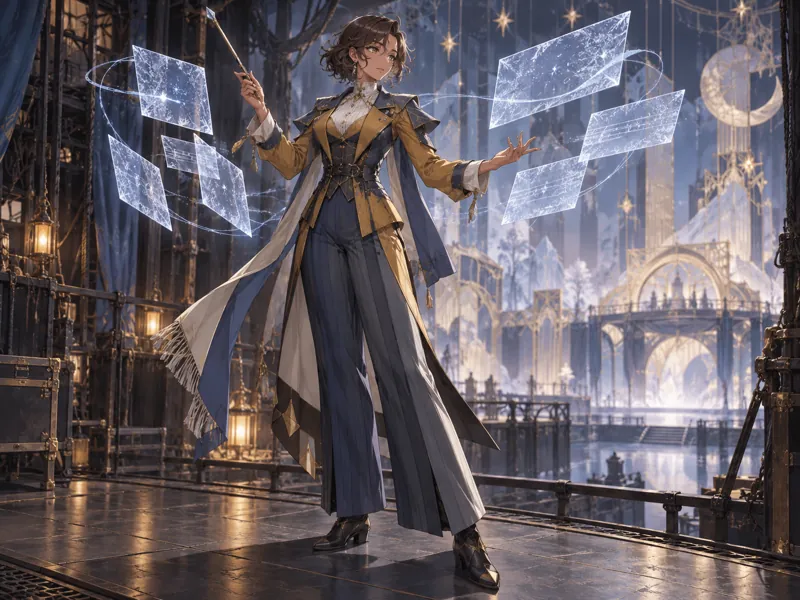
These illustrated examples are fan-made OCs, not playable roster characters. Each uses the same fields as OC mode and starts with an everyday responsibility that can grow into an interstellar story. Keep the Path and Combat Type if they fit your idea, then change the work, relationships and visual details to make the character your own.
Preservation / Imaginary
Oren repairs passenger signals on a station that most route planners have forgotten. His shaved head, broad cobalt-gray overalls, burgundy shoulder mantle and amber-glass gauntlets distinguish him from a ceremonial knight. Imaginary barriers shelter the relay while he works. Give him a practical limit: he can protect the equipment or the evacuation route, but cannot maintain both screens at full strength. His first story begins when a train answers a signal sent years ago.
Light Cone: The Last Train Waited: a repaired signal lamp glowing through fog.
Erudition / Lightning
Tavia maps charged dust currents from an ice-moon observatory. A cream-colored coiled afro, plum travel coat and folding brass instrument give her a clear silhouette without borrowing a familiar costume. Lightning travels along the instrument panels as she compares several moving objects at once. Her weakness is overconfidence in an elegant model: a traveler who does not follow the expected route can force her to start again. The field role suggests area attacks, not an official kit.
Light Cone: A Compass Without North: a repaired telescope finding its first star.
Abundance / Wind
Mirel keeps an orbital greenhouse alive while delivering medical supplies to its scattered residents. Close-cut indigo hair and a russet work jacket keep the design separate from robed healers. Wind carries carefully measured recovery light from a rectangular specimen case. Their story problem is allocation, not a mysterious unlimited cure: supplies spent on one emergency must be replaced before the next journey. Start with one person they promised to revisit and a practical reason the return trip is difficult.
Light Cone: Until the Flowers Wake: a greenhouse reflected in a helmet visor.
Harmony / Ice
Vesna works behind the performance, coordinating entrances through frosted sound panels. Her mustard conductor jacket, chestnut waves and slate trousers make a grounded alternative to a glamorous stage idol. An Ice assignment does not require an emotionally cold personality: she loves crowded festivals and needs quiet afterward. Build a scene where the planned performance collapses and she must support unfamiliar people without rehearsal. Her Light Cone remembers the empty theater, where the crew finally hears its own footsteps.
Light Cone: The Quiet After Applause: an empty stage after the audience leaves.
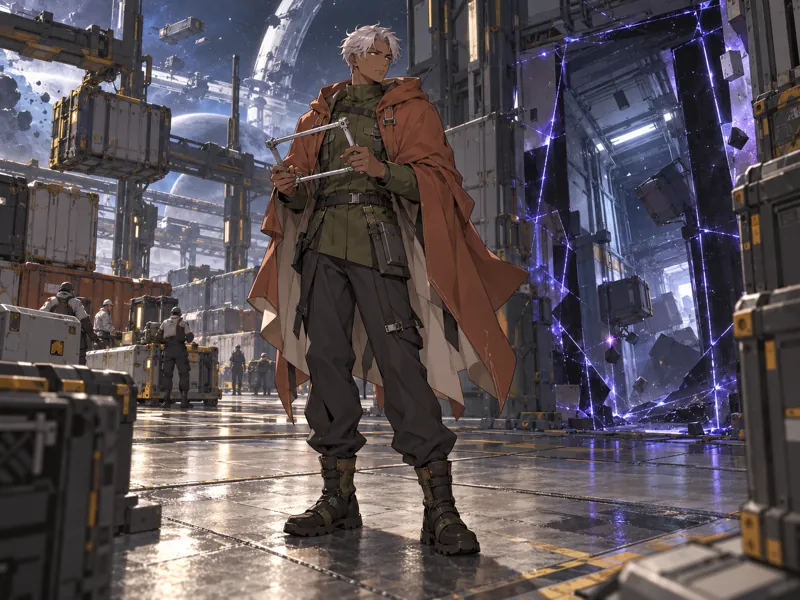
Nihility / Quantum
Corvin investigates cargo routes that appear to arrive before they depart. Pale silver hair, a terracotta survey cape and an angular measuring frame avoid the familiar dark hacker silhouette. His Quantum effects reveal unstable seams rather than turning every problem into a portal. The debuff role becomes a story method: he makes a hidden weakness visible so someone else can act. Keep his curiosity generous, and give him one mystery he refuses to solve without the owner’s permission.
Light Cone: The Distance Between Two Doors: a chalk route surviving the rain.
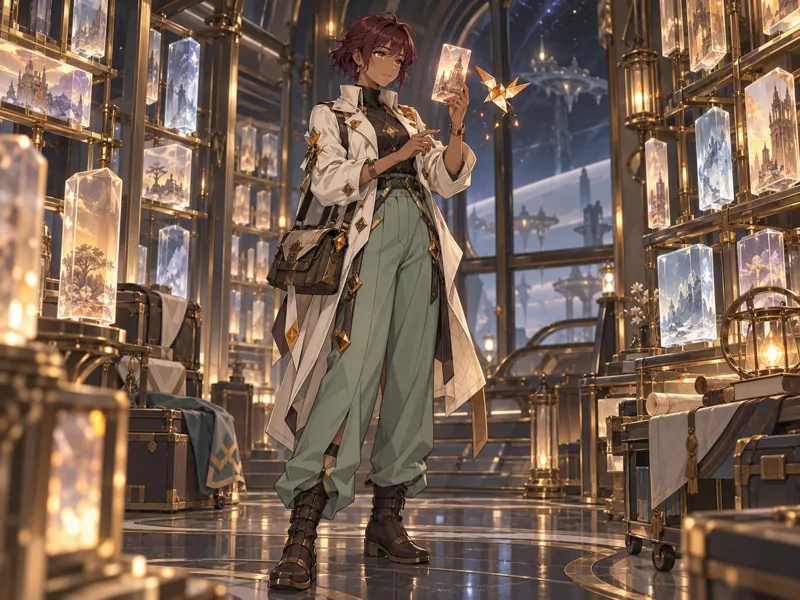
Remembrance / Fire
Ivara restores damaged travel memories in a mobile archive. Her cropped burgundy hair, ivory expedition jacket and broad mint trousers stay distinct from familiar memory-themed characters. A small translucent origami-like ember companion holds the fragments she is not currently examining. Remembrance supplies the partnership idea; Fire supplies the visual energy, not a demand for destructive behavior. Her central choice is whether an incomplete but honest memory should be repaired at all. Let the original owner have a voice in that decision.
Light Cone: Someone Kept the Lantern: a library book returned centuries late.
Types
A useful challenge changes one assumption at a time. Start with a broad roster, see what the roll asks you to reconsider, then add a restriction with a clear purpose. These are play and writing prompts rather than recommendations for a particular combat stage. The HSR Character Randomizer checks eligibility, but it cannot inspect your builds, investment, available Light Cones or an enemy lineup.
Open the roster desk and leave selected only the character forms you can actually field. Select all is a convenient starting point; Clear roster is better for a small account. Ownership stays on this browser rather than syncing with your game account, and the tool never asks for a login or account identifier. A form you deselect will disappear from the next eligible pool. If you have already locked that form, the next roll explains the conflict instead of replacing it behind your back. Remember to update your chips when you obtain a new character.
This challenge gives each of the four slots a different playable Path. It is a way to escape a familiar lineup, not a guarantee of balanced damage, support and sustain. Two characters on different Paths can still compete for resources, and a Path name does not describe every detail of a kit. If you select only three allowed Paths, a four-slot unique-Path team is impossible. The tool keeps your previous result and asks you to broaden the pool. Combine the challenge with a locked favorite to discover which other roles you tend to overlook.
All four characters share the same Combat Type. With several types allowed, the roll finds a type that can supply a legal team; with one type selected, the restriction becomes explicit. Ownership, rarity and Path challenges still apply at the same time. A mono-type roll is useful for a themed stream, a casual account exercise or a color-led OC party sketch. It does not promise that the chosen type can handle every enemy. Check the actual stage and your characters before treating the result as a playable plan.
No 5-stars removes every five-star form from the eligible pool, including forms you received without spending. This is a rarity rule, not a claim about cost, power or accessibility. It can bring overlooked four-star characters back into view while leaving your ownership choices intact. Selecting five-star rarity at the same time creates an empty pool, so the tool asks you to change a filter. Try a broad four-star team first, then lock one character and reroll the remaining slots. The resulting constraint is easier to understand than stacking several challenges immediately.
This rule excludes characters whose kits can heal allies, including optional healing traces or Eidolons that you may not have enabled. It is deliberately broader than removing Abundance alone, because healing can appear on other Paths. Attackers who only restore their own health remain eligible. Shielding and damage prevention are different mechanics, so they can still appear if your other filters allow them. Treat this as a casual challenge with an extra planning step. The generator cannot tell whether your team survives a particular fight, and it does not evaluate your equipment or skill order.
OC mode leaves the playable roster behind and builds a fan character from setting-shaped fields. The Path and team role stay linked, while Combat Type, background, personality and a memory-like Light Cone concept create room for interpretation. Names use a modest science-fantasy given-name and family-name format suitable for independent travelers. A workplace on the Xianzhou does not automatically make the character locally born or change that naming tradition. Lock the identity once it feels right, then explore individual parts. Draw this OC transfers the dossier into the separate Honkai: Star Rail OC Creator for review.
Guide
The first card is already filled so you can explore the controls immediately. Nothing runs against your game account, and a roll does not spend currency or make a wish. Use the team desk for playable characters and the OC desk for original writing concepts. The two modes preserve their own current result when you switch between them.
In team mode, open Roster and challenge desk and select your owned forms. The chips are toggles, so an active character belongs to the pool and an inactive character does not. All forms start selected until you save a different roster. If browser storage is blocked, your selections still work during the current visit; copy or export anything you want to keep. Trailblazer and March 7th forms are listed separately for selection, but two forms of the same character cannot occupy the same team.
Choose a Path, a Combat Type, a rarity or a challenge. Selecting several Paths or types means any of those selections is allowed; selecting none means the category is unrestricted. Challenge chips combine with those filters rather than replacing them. For example, Ice plus no 5-stars plus one per Path may leave too few distinct roles. That is a useful constraint failure, not a broken roll. Remove one restriction or choose more owned characters until four legal slots are possible.
Roll team reveals the four cards in sequence. Reduced-motion preferences skip the animation and show the finished result immediately. Read the Path and Combat Type beneath each name, then decide whether the combination is interesting for your purpose. Random leader marks one slot as the leader without rearranging the locked positions. It is a house-rule prompt, not an in-game leadership bonus. You might let that character choose the route, lead a screenshot scene or become the focus of a short writing exercise.
Each team card has its own lock and reroll button. Rerolling a single slot temporarily keeps the other three in place, and the replacement must satisfy every active restriction. If no replacement can fit, adjust the constraints instead of repeatedly clicking. OC mode offers the same control for every field. A locked team role also preserves its Path because a coherent role should not drift into a different combat family. Rerolling the Path deliberately updates its unlocked role to match.
Favorite stores a team or OC on this browser, with room for up to thirty entries. Load a saved card to continue working, or remove it when the idea no longer fits. The team history keeps the last ten rolls during this visit. Copy creates plain text that can be pasted into notes or a group chat, while PNG card exports the visible dossier without the editing buttons. Saved results do not automatically override your current filters, so check the notice before your next team roll.
Switch to OC mode when you want a new traveler rather than a canon lineup. Read the Light Cone as a captured memory and the role as a fan concept, then add a visual idea in the linked creator. Draw this OC prefills the matching fields and description without starting image generation. Review the destination before generating: the local text tool is free, while the image creator has its own credit and preview rules. A specific silhouette, outfit and practical limitation will make the result more personal than a longer list of powers.
Draw them next
Tools
FAQ


Sign up for 10 bonus credits and make your first OC free.