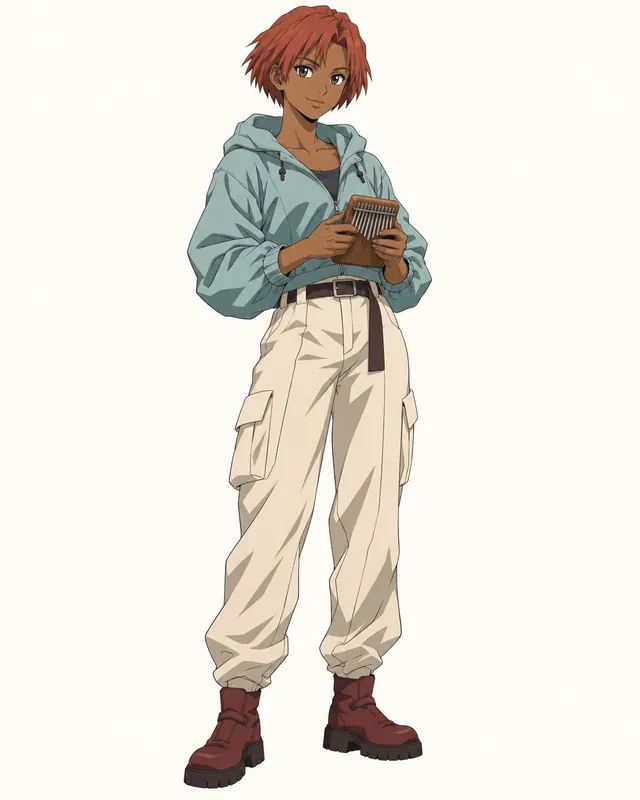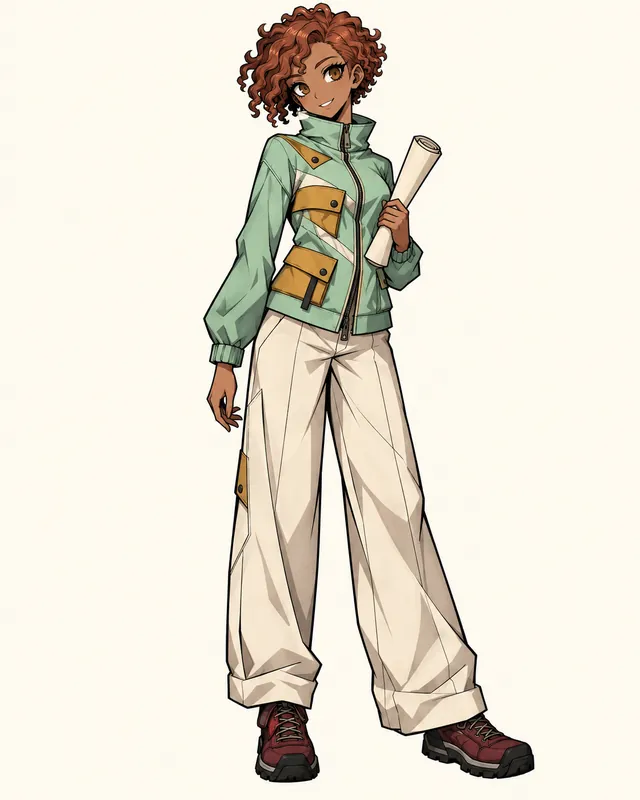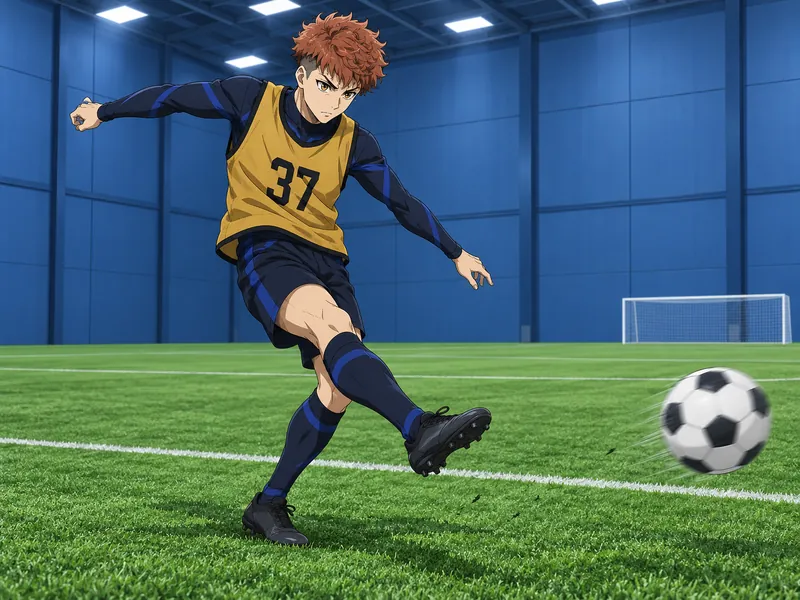
Tsuchida Keisuke
Late finisher- Bib 37, copper curls
- Waits half a beat
- Needs room to plant
This Blue Lock OC Creator starts with the play that makes your striker different. Choose a position, an original football weapon and an ego, then give the player an unmistakable kit and haircut. Surprise me works like the fan Blue Lock wheel trend: it sets position, weapon, personality and look together from sixteen coherent presets. Build Blue Lock OCs whose strengths create opportunities and whose weaknesses create a story.
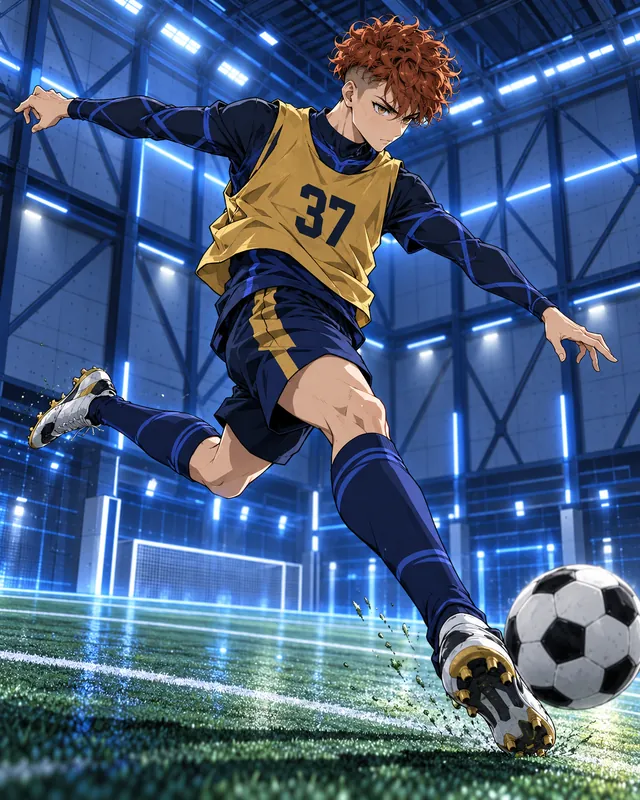
Ideas
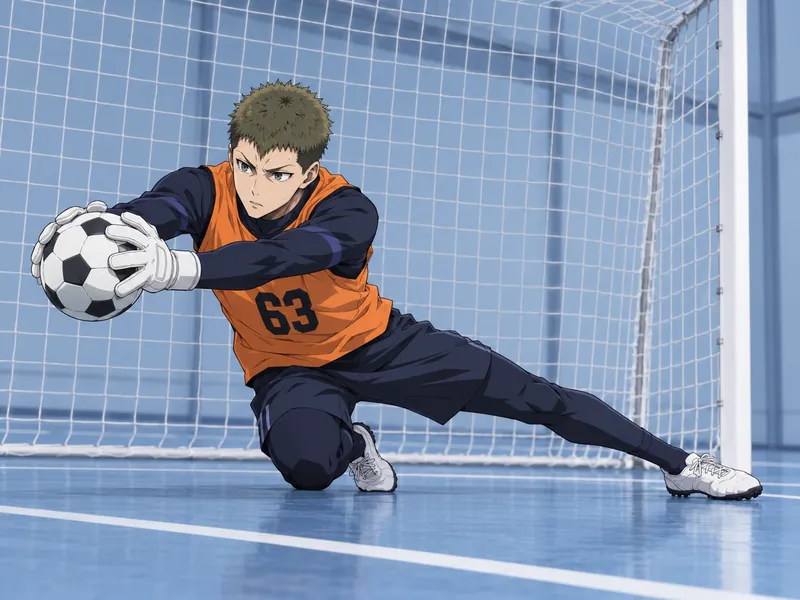
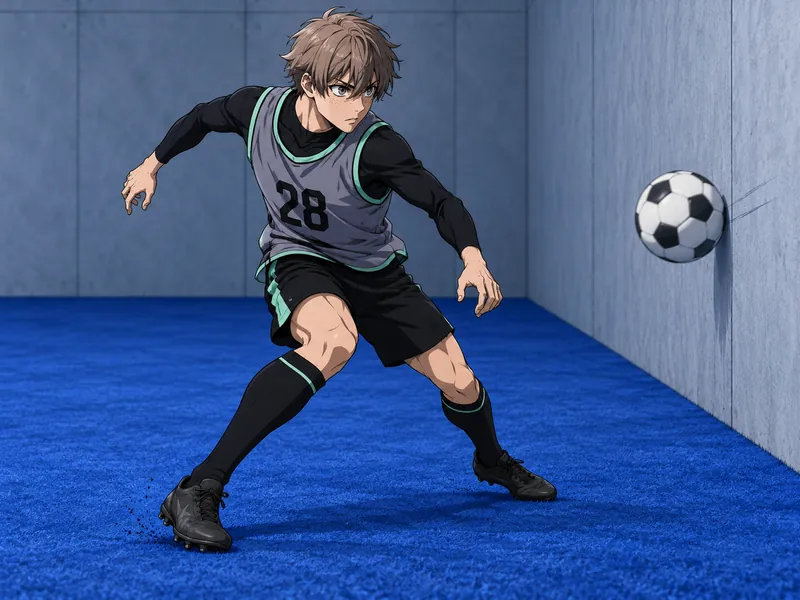
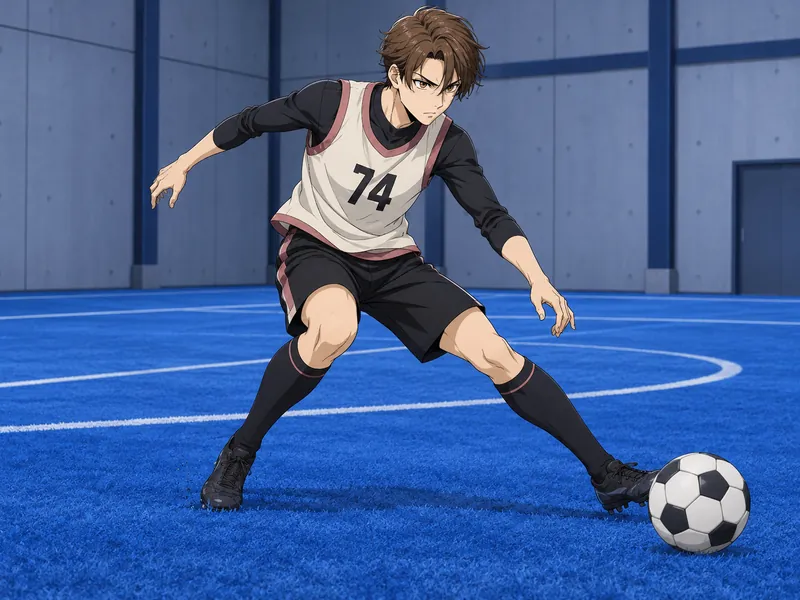
Each player starts from a different football problem. Use an idea to load the matching position, skill and appearance, then change the details that matter to your story. These are original fan players, not alternate versions of the main cast. The illustrations show training moments rather than official team membership.
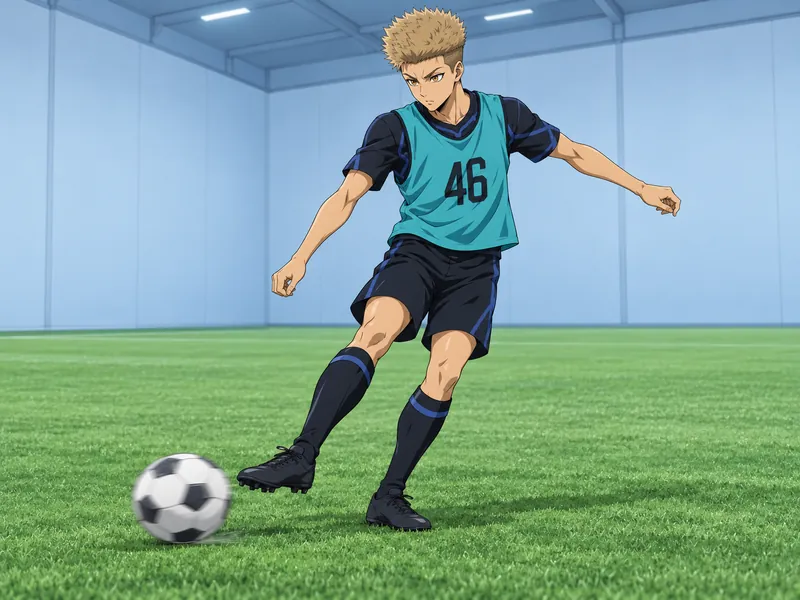
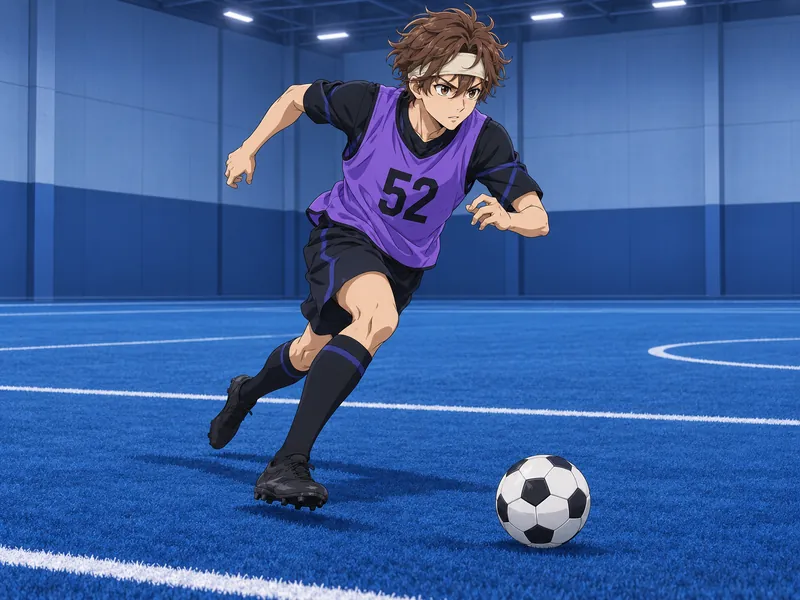
Know the rules
Blue Lock treats football skill and ambition as connected problems. Build from that relationship instead of adding unrelated powers. The role and personality labels in this maker are writing prompts, not an official classification system. Pick a stage before deciding what your player knows, and label major changes to the premise as an alternate universe.
Sources: Blue Lock Wiki: Weapons; Blue Lock Wiki: Neo Egoist League; Blue Lock Wiki: characters
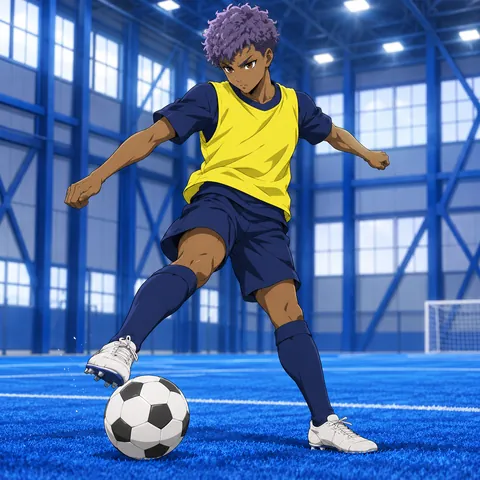
The wiki describes weapons as individual skills a player performs especially well. For an OC, explain the action before giving it a dramatic name. Late hinge means delaying a plant foot to change a finishing angle; it does not stop time. A useful weapon has a setup, a successful situation and a counter. Write the counter as something an opponent can actually do during play. Crowding the plant foot creates a different problem from forcing a weak-foot touch. This Blue Lock weapon generator offers sixteen original skill hooks, not renamed copies of Direct Shot, Emperor Impact or Metavision.
Ego is more useful in an OC story when it appears in a decision. Does the player take responsibility for a risky finish, demand a return pass, or refuse to settle for a role that hides their best skill? Our labels such as Patient closer and Quiet competitor are fan-writing prompts rather than canon categories. They do not prescribe a diagnosis or a permanent personality. Let the same teenager be confident during a drill and awkward while asking a teammate for help. The contrast creates room for growth without requiring a secret family connection to a famous striker.
The premise recruits forwards, but the story later uses players across the pitch. A fan roster still needs midfielders, defenders and a goalkeeper. Choose the position that makes your weapon useful rather than calling every character the best striker. A winger can create width; a defensive midfielder can protect a passing lane; a goalkeeper has a different view of danger. The position chips include broad jobs and more specific roles so you can sketch either a simple profile or a fuller lineup. They are not fourteen official Blue Lock classes, and changing a chip does not automatically balance a team.
First Selection, Second Selection and Third Selection describe different tests in the project, followed by the Japan U-20 match and later the Neo Egoist League. Treat that order as a timeline, not a set of interchangeable school houses. A player at an earlier stage should still be discovering how to use their own advantage. If your OC joins after the known roster is established, explain that as an alternate setup rather than silently replacing a canon participant. You can also write a training vignette without inserting the character into every recorded match. That keeps the focus on the new player.
The league uses Bastard München, FC Barcha, Manshine City, Ubers and Paris X Gen. Those names provide context for a fan story, but the art here uses invented kits without their crests or real-world sponsor branding. Pick a training environment that challenges your player rather than using a club as a guaranteed upgrade. For example, an OC who relies on spontaneous runs could struggle when asked to explain the decision to a partner. Avoid declaring a new official signing or inventing a canon result. Your own practice match can reveal the skill without rewriting the published standings.
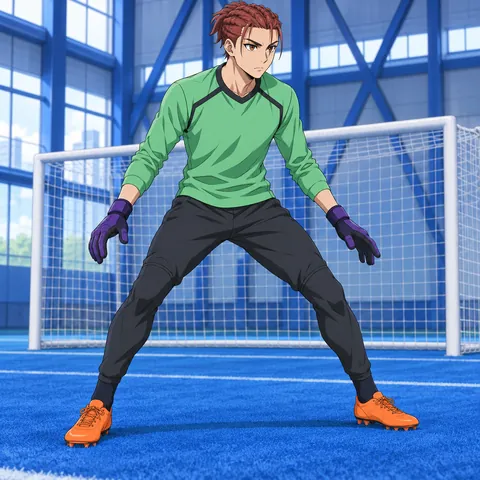
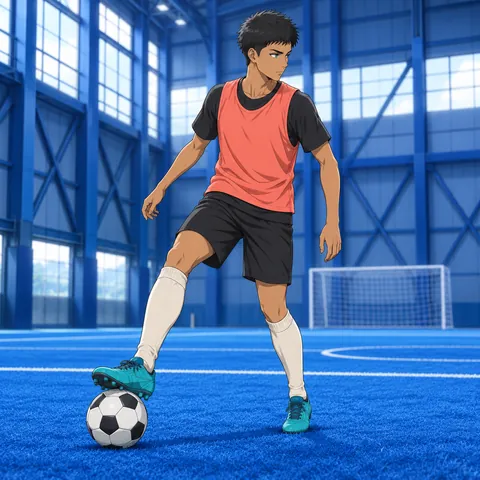
Start with a haircut, a readable expression and the shape of the uniform. Numbered bibs, cleats, high socks and a ball communicate football before the effect lines appear. Use sharp eyes and directional movement to suggest concentration. Avoid copying a canon hairstyle and changing only its color, especially long red hair, familiar black-and-yellow framing, or a recognizable tattoo and uniform combination. A modest original palette often reads more clearly than several competing supernatural effects. Keep teenagers in practical, fully clothed sportswear and use the lighting to dramatize the play. The art should still work when the aura is removed.
Names and nicknames
The Japanese players generally have a family name and given name; nicknames describe a reputation rather than replacing that identity. Isagi Yoichi and Itoshi Rin illustrate the name structure, not options to copy. This mixer uses family-name-first romanization for the Japanese-name set and a separate adjective-plus-role pattern for fan nicknames. Choose a result as a working name, then edit it in the form. Romanization alone does not establish a kanji spelling or a precise meaning. The nickname cards supply a play identity separately, so you can keep a restrained everyday name and a more theatrical match reputation.
Family name + given name; switch sets for fan nicknames
A teammate should be able to explain the nickname after one practice.
Guide
A convincing player needs an identifiable play, an ambition and someone who makes that ambition difficult. Work through these five passes before asking for a dramatic final image. You will have a more useful brief for a roleplay profile, a fan comic or an artist.
Describe the ball, the space and the next decision. Your striker receives a pass near the edge of the box and has to choose between a crowded finish and a return ball. That is enough to test a weapon. Avoid beginning with a claim that the OC outperforms every famous player. Show what they can do under a specific condition, then show how a defender could make that condition disappear. If you cannot describe the action without naming an existing character, revise the skill until it belongs to your player.
Use Surprise me if you want the Blue Lock spin the wheel experience without assembling several unrelated lists. The preset sets the position, weapon, ego type and appearance together, plus a short description that explains the skill. Read the whole draft after a spin. Change one detail at a time so you can see whether the relationship still works. A keeper with a finishing idea can be an interesting backstory, but the current match role should be clear. The control generates original concepts rather than drawing a canon name from a roster.
Choose two colors, a bib number and one haircut feature. Plain numbered training gear is enough to suggest the setting without official emblems. Explain the pose through a real soccer action: planting a foot, taking a first touch or leaning into a pass. Keep both the supporting leg and the ball in the composition when the action needs them. Use the portrait output for the face and the full-body output for the kit. A strong silhouette and an intense expression will do more for recognition than several unrelated glow effects.
Use the description as a compact Blue Lock OC template: name, age, position, preferred foot, weapon, useful range, weakness, ambition and a teammate conflict. If you want numbers, write your own speed, shooting, passing, dribbling, defense and overall notes there and label them as fan estimates. This page does not calculate a stat chart. Explain at least one rating with an observed play, such as accurate short passes but inconsistent long switches. That makes the profile more useful than assigning the same high score to every category.
Save the written settings with the image so the same character can be recognized later. Check the jersey number, haircut, eye color and kit accents before treating a new picture as a finished reference. A reference sheet can serve as a Blue Lock OC base for further drawing, but generated views may need manual corrections. Add your own notes about the weapon rather than expecting the picture to explain its timing. When posting, identify the work as an unofficial original character inspired by Blue Lock and distinguish your invented match from canon events.
Other fandoms
Tools
FAQ







Sign up for 10 bonus credits and make your first OC free.