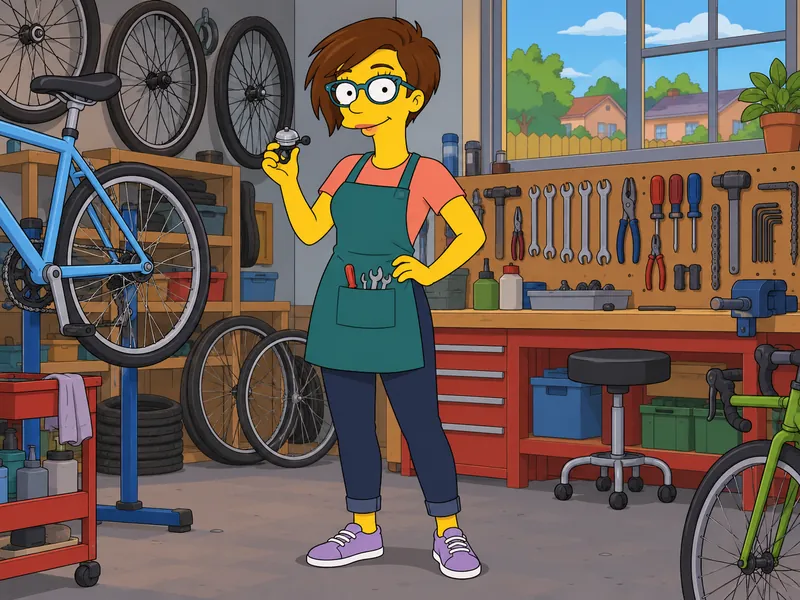
Marnie Bellwick
Mechanic- Hears every loose bell
- Fixes the small things
- Names each spare wheel
This Simpsons character maker turns a written description into an original cartoon resident. Start with Yourself to describe your hair, glasses, clothes and everyday job, or invent a neighbor with a funny habit. There is no photo upload: your words guide the picture. Choose a portrait for an avatar or a full-body view for a character reference, then check the result for the details that make it yours.
Ideas
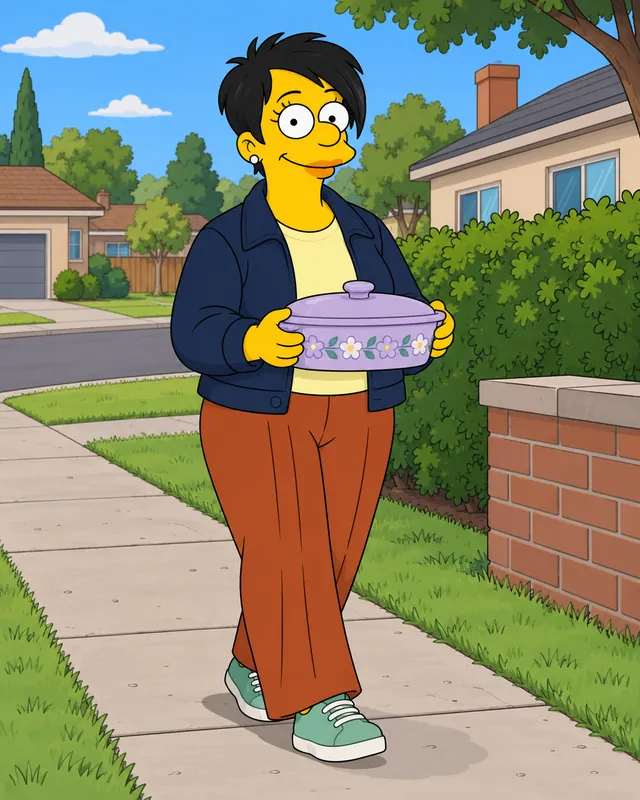
A job, a recognizable silhouette and a small contradiction can make a resident memorable. These cards introduce six different people, not six outfits for the same face. Their workplaces are original Springfield-style places without copied signs or landmarks. Use this idea fills the fields and description; change the personal details before generating if you want the character to represent you.


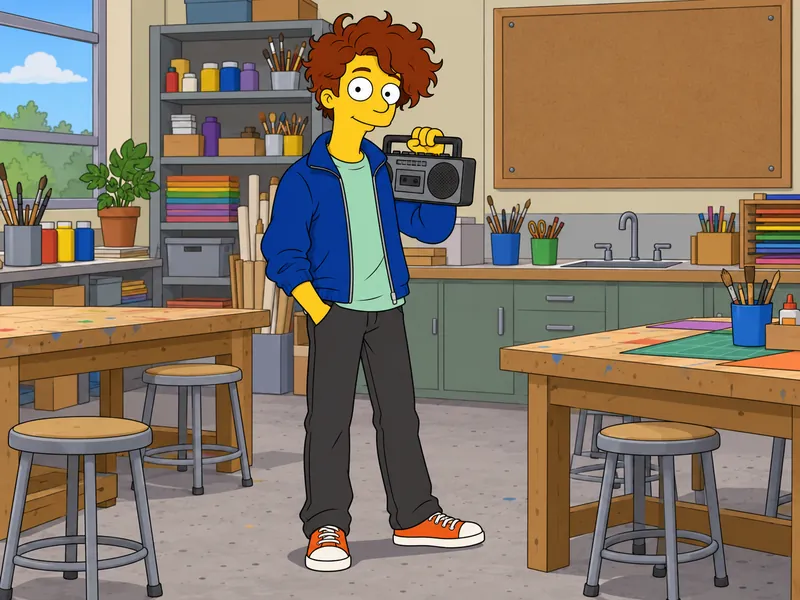
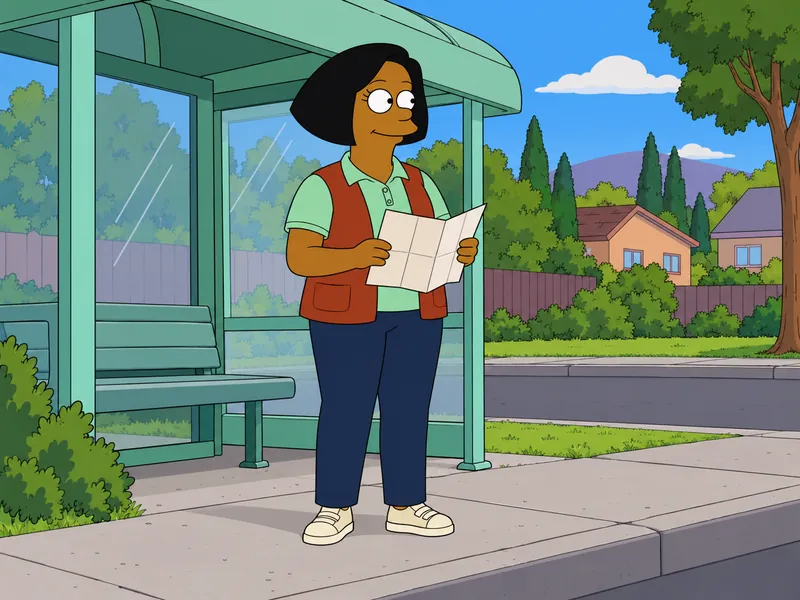
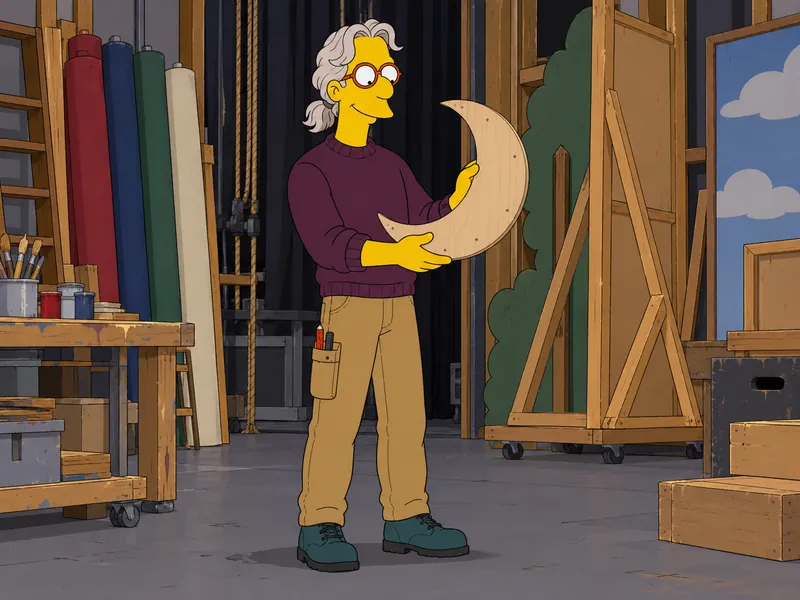
Know the rules
The familiar visual language comes from simple shapes that remain readable in a tiny preview. Keep the eyes, mouth and hair clear, then add clothes that explain a daily routine. A character can share the show's cartoon grammar while having an original face, family situation and job. These notes separate useful design conventions from details that belong to a specific recurring resident.
Sources: Matt Groening interview: design and yellow skin; Wikisimpsons: characters; Matt Groening interview with David Sheff
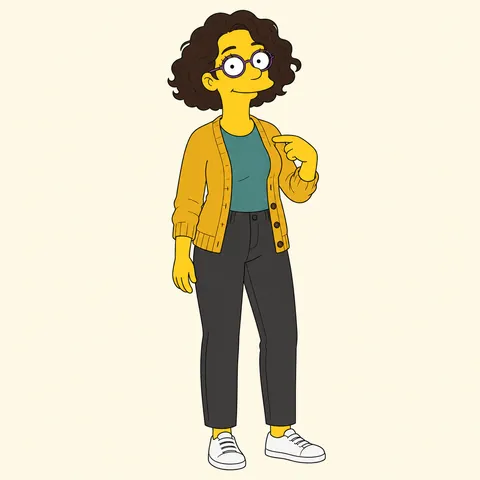
Yourself is a written-description starting point, not a photo filter. Choose a hair shape first, then clothing and skin color, and use the face field for hair color, glasses, nose shape and expression. Describe a few visible details you recognize rather than asking for an exact likeness from no reference. A curly bob and round glasses are useful instructions; a complete life story is harder to translate into a small portrait. Keep the job or hobby in its own field so it can suggest a prop without replacing your face. If a result feels unlike you, change one visible feature at a time and save the written description that worked best.

Large round white eyes, small dark pupils and a rounded projecting mouth help the design read as this kind of television cartoon. Four-digit hands and clean flat color complete the visual shorthand. The familiar yellow skin is an option, not a requirement: the show includes people with other skin tones, and the picker offers several. Keep the face shape and hairstyle original rather than combining a famous resident's head with new clothes. In a portrait, the eyes should remain easy to read behind glasses. In a full-body image, check that the hand holding a prop has sensible anatomy and that the mouth is not distorted by an exaggerated expression.
Choose a shape you can recognize from across a room: a wedge bob, close crop, rounded afro, loose waves or low ponytail. Then specify the color separately. Avoid a tall blue tower, familiar spiky child silhouette or a distinctive recurring resident's hair and face combination. The twelve hair chips are suggestions rather than a fixed library of drawn parts; the model interprets your words. If your actual hairstyle is not listed, select the nearest shape and explain the difference in the face field. Keep small clips and accessories simple, because too many tiny shapes can overwhelm the eyes and create stray objects around the head.

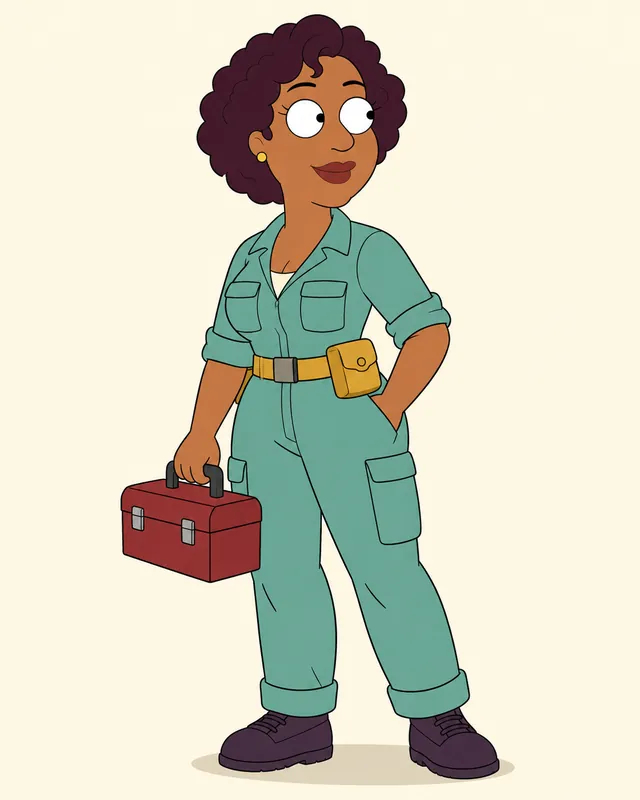
The worker tile uses plain coveralls and a toolbox, while the illustrated mechanic wears an apron over ordinary clothes. Both communicate practical work without a corporate logo. Pick a job, then give the person a habit that complicates it: the careful baker gives away the best loaf, or the route planner always stops to help one more neighbor. A uniform should support that idea, not turn the character into a copy of an existing employee from the show. Use original shops and public spaces. Do not reproduce the Kwik-E-Mart sign, recognizable power-plant branding or a famous resident's complete workplace costume.
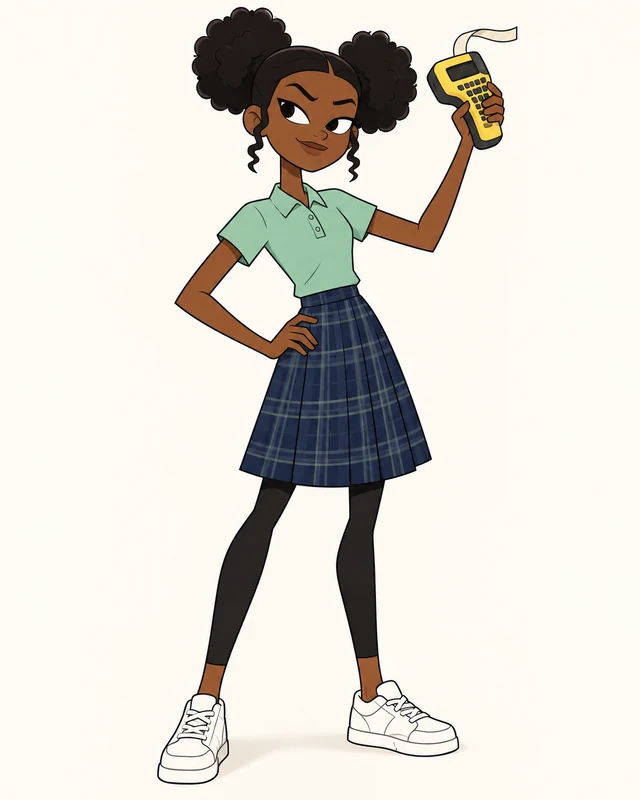
Parent, grandparent, sibling and neighbor are relationship choices, not instructions to resemble a particular Simpson. Decide who relies on this person and what small task they take too seriously. A grandparent might organize a garden plot, while a sibling repairs bikes or volunteers backstage. Give each person a separate silhouette and a color they enjoy. If you design a whole household, create one reference at a time and write the shared relationships in your notes. A group does not need the same number of people, ages or roles as the central family. Keep child and teen designs age-appropriate and focus their stories on school, hobbies and friendship.
Choose a portrait output when you want a profile picture. Keep the face large, leave space above the hair and use a plain background so glasses and expression remain clear after a circular crop. A job prop can sit near the shoulder, but it should not cover the eyes or mouth. For a full-body reference, describe trousers, shoes and the shape of the outer layer as carefully as the face. The same written identity can support both outputs, although AI may vary details between images. Compare hair parting, glasses color and clothing before treating the pictures as one consistent character. Save the clearest version as your reference.
Names
The show uses ordinary personal names alongside surnames and nicknames that can hint at a role or personality. This mixer follows the everyday first-name and surname approach without rebuilding the names of recurring residents. Its invented surnames are light, pronounceable suggestions, not official additions to Springfield. You can keep your own first name for a self-portrait and use only a surname idea, or replace the whole result. The quirk cards supply a prop or habit that can be shown without writing a joke on the image. Both controls run locally, are free with no sign-up and only fill your draft fields.
An everyday first name + an invented surname
Choose one clear prop or action, then make the reason personal.
Guide
Use the page as a design notebook. Start with visible details, then add the small routines that make the person feel at home in a neighborhood. The generator interprets a description rather than assembling exact hand-drawn parts, so a clear first prompt and a careful review matter more than a long list of unrelated accessories.
For a self-portrait, choose Yourself and write down four visible features: hair shape, hair color, glasses or no glasses, and the clothes you usually wear. Add a job or hobby only after the face is clear. For a fictional resident, choose a starting role and one small daily goal. You might invent a gardener who wants neighbors to share tools or a baker who wants to finish one loaf on time. Avoid using a canon name as shorthand for the face. Describing the shape directly gives the model useful information while keeping the person separate from an existing cast member.
Select the closest hair chip, then explain what makes it yours in the face field. A side part can be smooth or wavy, and a bob can have a blunt edge or an asymmetric wedge. Choose yellow if you want the familiar cartoon palette, or select another skin tone. Skin color does not determine a job, personality or family role. Keep glasses simple and specify their frame color. If you change several visual details at once after a generation, it becomes harder to tell which edit helped. Work from the head outward so the final portrait remains recognizable at a small size.
Choose clothes that suit the day rather than dressing everyone as a celebrity or superhero. An apron can belong to a bicycle mechanic, a cardigan to a gardener and a waistcoat to a transit dispatcher. Then add a contradiction that suggests a scene: someone who plans every minute might always stop to chat, while a quiet person might build enormous theater props. Put the routine in the job field and the single visible object in the quirk field. This keeps the prompt organized. If you want a family role, explain the relationship in words instead of borrowing the central family's names or silhouettes.
A portrait suits an avatar because the face and glasses can stay large. Leave a little space around the hair so a circular profile crop does not cut it off. A full-body view is better for showing the outfit and shoes, while a reference sheet can help record several views when available. Keep the first background plain if you are still deciding the face. Later, use an original neighborhood place such as a workshop, library or garden. Do not add a famous sign merely to prove the setting. The cartoon shapes and everyday story already communicate the intended inspiration.
Inspect the eyes, mouth, hand anatomy and the shape of any held object. Check that the output kept the skin tone, hair color and clothing you selected. AI may invent lettering on a tool or alter glasses between views, so reject unwanted marks and record corrections. Save the accepted image and the short description together. If you use the picture as a profile image, preview it at the small size where people will actually see it. When sharing the design, call it an original fan character and disclose AI assistance where relevant. A recognizable reference is the start of your own drawing and storytelling work.
Other fandoms
Tools
FAQ




Sign up for 10 bonus credits and make your first OC free.