OC Creator logoOC Creator
Free browser name studio

CRK Name Generator

Bake a name with a recipe behind it. This crk name generator combines flavor words into original Cookie Run OC concepts, then adds a rarity, battle position, class, skill, outfit detail and invented homeland. Open a fresh recipe to light up the reveal card, or keep the name and reroll just one detail. Everything happens in your browser, free with no sign-up. Save a favorite, copy the full recipe or download a PNG before taking the character to the drawing studio.

  • Free with no sign-up
  • Lock, save and remix
  • Download your PNG card

THE RECIPE LAB

Bake a character recipe

Free, local, no sign-up. Lock the details you love, then reveal something new.

Name

Toasted Quince Cookie

Rarity

Epic

Position

Middle

Class

Magic

Skill

Ribbon Rally

Look

wafer cape

Homeland

Crumbglass Harbor

Locked fields stay exactly as saved, even when another detail changes. These are fan concepts, not official characters.

RECIPE REVEAL / 01ORIGINAL OC

Fresh from the imagination oven

EPIC REVEAL

Toasted Quince Cookie

MagicMiddle
SIGNATURE SKILL
Ribbon Rally
FLAVOR NOTES
Toasted Quince-inspired wafer cape.
ORIGINAL HOMELAND
Crumbglass Harbor

A fan-made recipe card. No game odds, purchases or official frame.

Name generation and card downloads are free. Drawing opens a separate image tool with its own preview and credit policy.

Your saved collection 0/24

Saved in this browser. Load a card to edit or export it.

Your first favorite belongs here.

Cookie Run OC creatorPony namesOC namesRandom OC

Original field notes

Six recipes with a story inside

These original concepts show how a name can carry a whole design. Take the reasoning as a starting point, then change the details until your character has a purpose of their own. These are writing examples, not official characters or game additions.

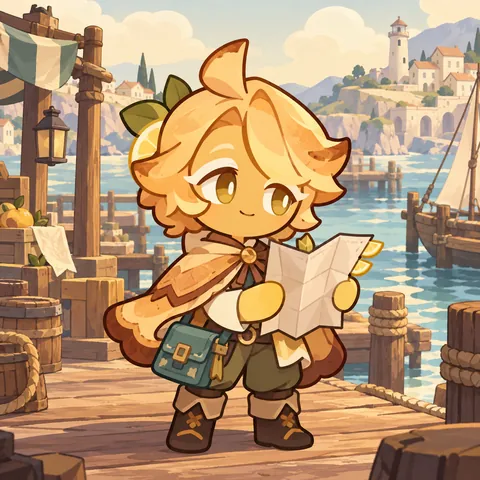
Toasted Quince Cookie, original character illustration

Concept 01

Toasted Quince Cookie

A harbor mapmaker uses thin quince slices as page markers and wears a short wafer cape that never drags through puddles. Their skill, Ribbon Rally, unfurls a trail for lost travelers to follow. This is a Middle-position Magic concept with an Epic label, but the personality is practical rather than grand. The toasted edge suggests warm brown piping, while the pale fruit suggests a lighter face and gloves. Their weakness is refusing to discard an outdated map. A first story could ask them to redraw a familiar pier after a storm, accepting help from somebody who has never held a compass.
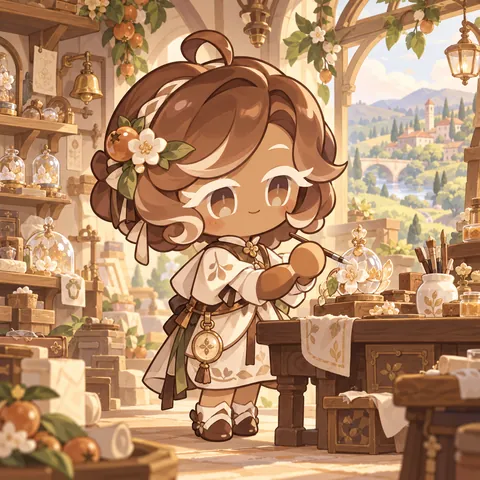
Silken Medlar Cookie, original character illustration

Concept 02

Silken Medlar Cookie

A quiet conservator repairs cracked sugar ornaments in a small hill workshop. Silken describes the smooth glaze rather than an expensive costume, and the medlar gives the palette soft brown and cream. The Support concept carries a tiny brush and a biscuit pocket watch. Their skill, Glaze Guard, protects a repaired object long enough for its owner to carry it home. Give this Cookie a habit of asking permission before touching anything valuable. The interesting conflict is not raw strength: they have to finish a repair while learning that a visible seam can be part of an object's history.

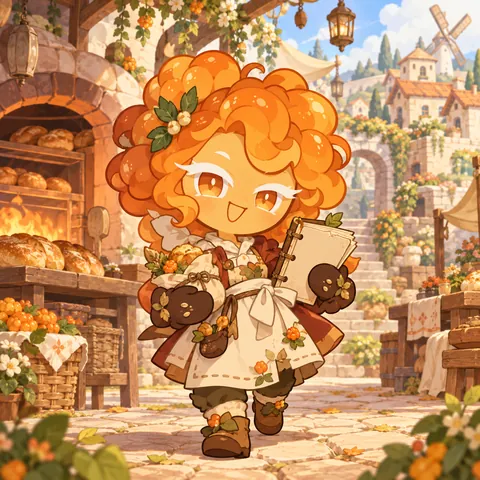
Spiced Cloudberry Cookie, original character illustration

Concept 03

Spiced Cloudberry Cookie

This wandering cook keeps a folded apron, seed-studded gloves and a recipe notebook with uneven pages. The orange fruit establishes a sunny accent, while spice suggests confident gestures and a quick temper that cools just as quickly. As a Bomber concept, their thrown bundles scatter harmless clouds of fragrant crumbs. A Rear position lets the silhouette stay small while the skill effect spreads outward. Their invented home is a windy village with a communal oven. Write a scene where the cook must serve a guest who dislikes every familiar recipe, forcing a thoughtful experiment instead of a louder presentation.

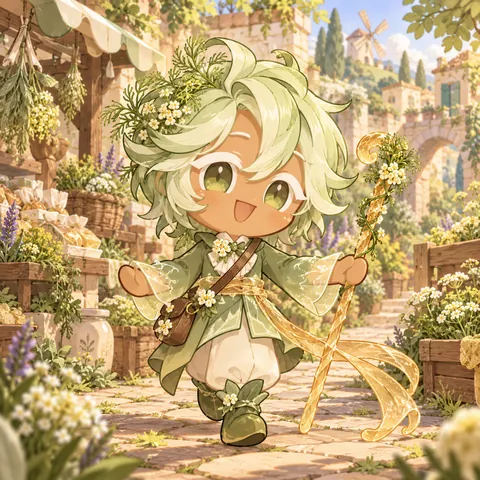
Candied Fennel Cookie, original character illustration

Concept 04

Candied Fennel Cookie

A messenger from a garden settlement wears leaf-shaped boots and a sugar-thread sash. Fennel gives the name a recognizable ingredient without borrowing a famous hero's title. The candied finish can appear as translucent edges on the sleeves. For a Charge concept, use a long candy staff that doubles as a walking stick rather than a copied weapon. Their skill, Zest Zigzag, describes a route through a crowded market. Give them a very ordinary flaw: they remember every delivery address but forget personal appointments. A friend who waits at the wrong gate gives the character a problem worth solving.

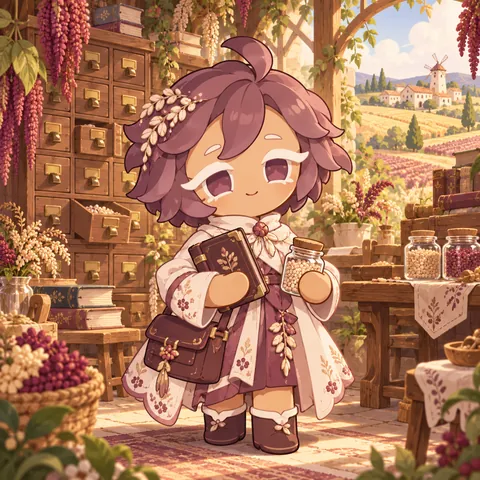
Chilled Amaranth Cookie, original character illustration

Concept 05

Chilled Amaranth Cookie

A patient librarian keeps seed samples beside books about forgotten harvests. The design uses a pale cape, small grain patterns and a sturdy square satchel. Chilled can mean a frosted finish and a measured speaking voice; it does not require ice powers or a royal backstory. This Defense concept protects a traveling seed collection with Shortbread Shield. Their home is an original farming town, not a hidden branch of a canon kingdom. Start the story with one missing label. Finding the seed's origin becomes a reason to travel, ask careful questions and trust memories that were never written down.

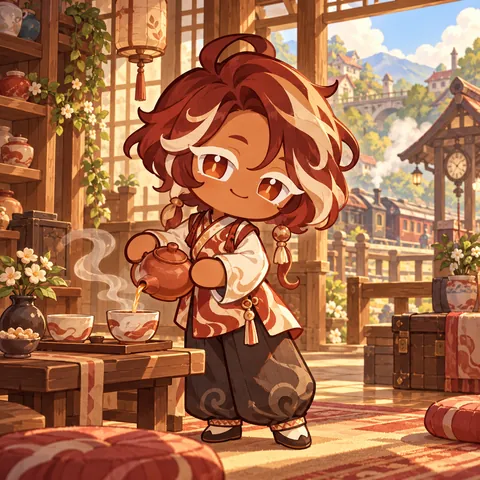
Marbled Rooibos Cookie, original character illustration

Concept 06

Marbled Rooibos Cookie

A tea-house performer pours swirling ribbons of color while telling stories to tired travelers. Marbled supplies an immediate costume pattern, and rooibos suggests warm reddish tones. Keep the swirl broad enough to read at a small card size. This Healing concept offers Syrup Shelter as an invented skill title; its effect could be a comforting circle of steam. Their hometown has a station where travelers rarely stay long. Their flaw is changing the ending of every story to make it happier. A meaningful challenge asks them to tell the truth kindly when a visitor needs honesty more than a perfect ending.

Directions

Find your recipe direction

A useful name gives you something concrete to draw and something believable to write. Try these six directions when a completely random roll feels too broad. Keep the strongest detail, then use the other fields to build a contrast.

Fruit and orchard recipes

Fruit names offer a clear starting palette, shape and texture. Choose one ingredient that you can picture without opening a reference sheet, then decide whether its skin, slices, seeds or leaves matter most. A quince-inspired Cookie might use pale flesh and golden peel rather than the same red costume associated with another fruit. The preparation word changes the mood: chilled suggests stillness, toasted suggests warmth, and candied suggests a shiny finish. Avoid piling every feature onto the outfit. One recognizable silhouette and two small accents are enough to support the name while leaving room for a personal object and an expression.

  • Original concept
  • Name to design
  • Story first

Herbs and floral infusions

Herb and flower recipes work well for gardeners, couriers, librarians and performers, not only healers. Rosemary or chrysanthemum can suggest branching shapes, while tea gives you steam, cups and layered colors. Think about what the character does with that ingredient instead of assigning a personality from a stereotype. A gentle herb-themed Cookie can still be impatient with careless visitors. A bold floral design can still prefer quiet work. Keep the chosen plant readable in one costume detail, such as a collar or satchel clasp. If you use a real plant, check its appearance before describing it in the drawing prompt.

  • Original concept
  • Name to design
  • Story first

Seeds, grains and warm ovens

Grain recipes make grounded characters with useful jobs. Buckwheat, millet, amaranth and rye provide visual textures that differ from glossy candy. Try woven cuffs, a flour-dusted apron or a seed pattern on a cape. The word before the ingredient should add something you can actually draw or hear in the character's voice. Rustic suggests rough surfaces; golden suggests color; crisp suggests sharp shapes. A Common or Rare fan concept can be just as memorable as an elaborate guardian. Give the character a local responsibility, a favorite place and a mistake they are trying to put right.

  • Original concept
  • Name to design
  • Story first

Cream, glaze and sugar craft

A sweet finish can become a material language for the whole design. Piped icing creates loops, wafer layers create straight edges, and sugar glass creates transparent shapes. Pick one of those materials as the main idea and use the others sparingly. An outfit built from five different desserts often loses the name's meaning. The card's look field is deliberately a small prop or garment detail so you can build around it. Imagine the character in silhouette before adding decorations. If the shape still resembles a famous Cookie, change the headwear, proportions and equipment rather than merely swapping its color.

  • Original concept
  • Name to design
  • Story first

Battle roles as writing prompts

The eight regular Kingdom classes used here are Charge, Defense, Magic, Ranged, Healing, Support, Bomber and Ambush. Treat a class as a way to stage a scene, not a complete personality. A Defense character might be a timid guard who becomes brave for one friend. A Support character might be bossy about organizing supplies. Front, Middle and Rear are separate position labels. This generator makes fan concepts rather than balanced playable units, so its combinations do not promise a valid game build. Special, Guest and other rarity labels are creative labels here, not evidence that every label belongs to the same battle system.

  • Original concept
  • Name to design
  • Story first

Homelands and everyday stakes

The homeland bank contains invented settlements. That gives you room to decide what grows nearby, how travelers arrive and what the community expects from your Cookie. Start with one practical detail: a ferry landing, a shared oven, a seed archive or a market bell. Then connect it to the flavor. A fruit town might celebrate its harvest without making every resident look identical. Avoid presenting an invented place as a newly discovered canon kingdom. In your notes, call it an original setting. The place should create relationships and choices, not simply add another impressive title to the character card.

  • Original concept
  • Name to design
  • Story first

Guide

From first roll to a finished OC

You do not need to settle every detail at once. Work through the card in a few short passes, saving candidates whenever a promising combination appears. A small, clear idea is easier to develop than a character who does everything.

  1. 1

    1. Choose the flavor that you can picture

    Use Open a fresh recipe until one ingredient suggests a clear shape or color. Say the name aloud, including Cookie, and check whether somebody else could remember it after one introduction. The common flavor-plus-Cookie pattern is a useful starting convention, not a rule that describes every official character. Names such as titles or special guests can work differently in canon. This tool stays with readable food-inspired combinations. If a roll feels too busy, try another rather than inventing a complicated explanation. Write one sentence about why that flavor matters to the OC before you choose a grand backstory.

  2. 2

    2. Lock the detail with the strongest idea

    The lock beside each field protects exactly that field. Lock the name if the flavor is right, or lock the class if you already know the role you need in a group. Then reveal another recipe and compare what changed. The small reroll button changes only its own part, and it is disabled while that part is locked. A locked outfit will not silently change to match a new flavor, so review the result yourself. This deliberate control lets you keep a surprising combination or discard one that does not make sense for the character you are writing.

  3. 3

    3. Make the skill describe an action

    A skill title is more useful when it suggests something visible. Decide who moves, what appears and what changes by the end of the action. Ribbon Rally might guide allies toward a safe route; Glaze Guard might create a protective coating. Keep the effect small enough that the character still needs help. Do not copy an official skill's wording, numbers or animation. The generator provides original titles rather than battle statistics. Add a limit in your own notes, such as a short duration, a narrow area or a tool that must be repaired after repeated use.

  4. 4

    4. Give the outfit one flavor anchor

    Read the look line as a starting detail, not a complete costume. Link its material to the name and choose two main colors with one accent. If the name points to a warm roasted ingredient, a wafer cape and copper piping may communicate it better than a large crown. Keep the pose and expression tied to the personality. Compare the silhouette with familiar Cookies before drawing. A different palette alone does not make a copied design original. Change the shape of the hair, the role of the prop and the way the outfit moves together.

  5. 5

    5. Save candidates before choosing a winner

    Favorite stores a full recipe in this browser, including the small details you might forget. The collection holds up to twenty-four cards. Load a saved card to keep working, or remove it when you no longer need it. Copy gives you plain text for a document or chat. PNG card downloads a compact visual summary of the current recipe. Browser storage may be cleared by private mode or site-data settings, so export important candidates before closing the session. Try comparing three cards with different roles rather than saving ten nearly identical versions of the same flavor.

  6. 6

    6. Carry the recipe into the drawing studio

    Draw this OC opens the Cookie Run OC creator with the name, skill and compatible field choices filled in. The full card also travels in the description, including rarity labels that the parent form may not offer directly. Review that description before requesting an image, especially if you kept locked fields through several rerolls. The name generator itself stays free and local. Image creation is a separate tool with its own current preview and credit policy. Use the related tools to develop a personality or story problem, then return to the recipe if the character needs a clearer visual theme.

FAQ

Cookie Run naming questions

Juniper Vale, an original original anime characterKaito Arashi, an original anime characterSorrel the Fennec, an original Sonic the Hedgehog characterStarlit Quill, an original My Little Pony: Friendship is Magic characterRei Kagami, an original My Hero Academia characterFlarepaw, an original Warrior Cats characterTinsel the Raccoon, an original Five Nights at Freddy's character

Your next OC is one sentence away

Sign up for 10 bonus credits and make your first OC free.