Marlow Static
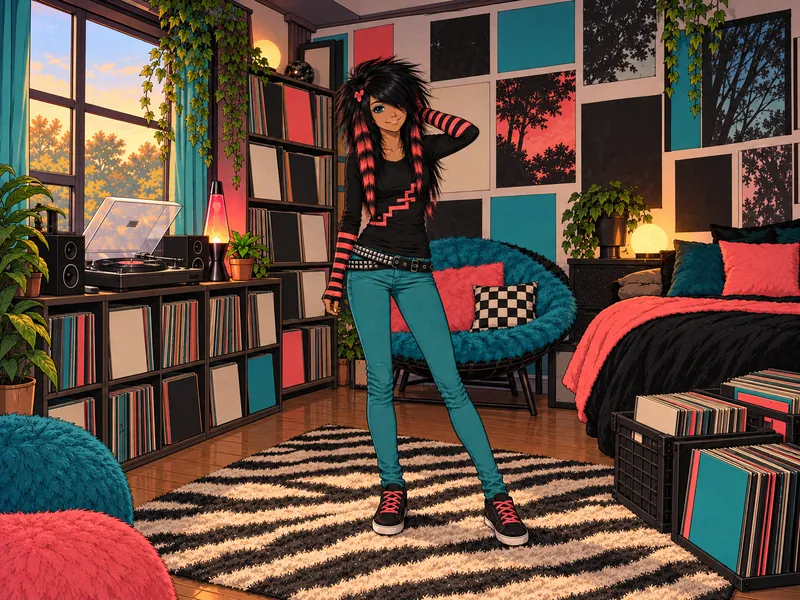
Scene- Makes playlists for the walk home
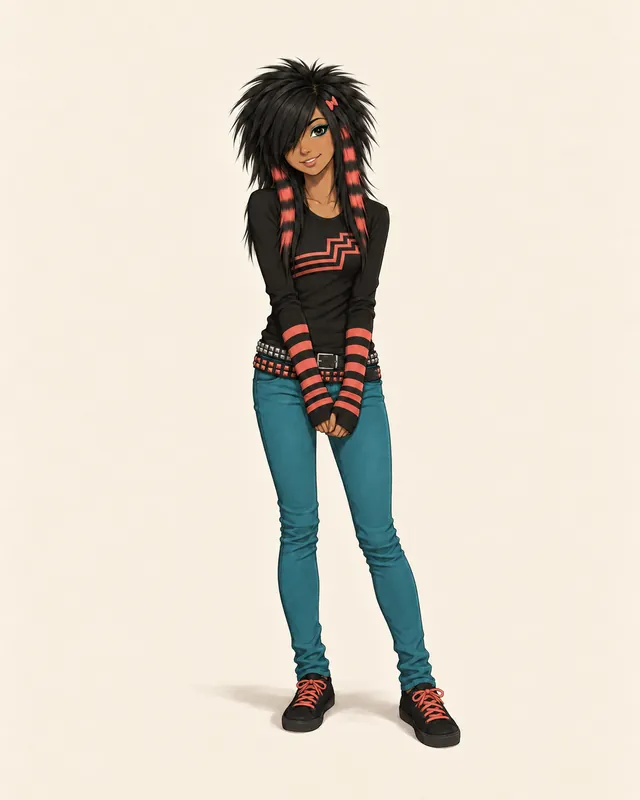
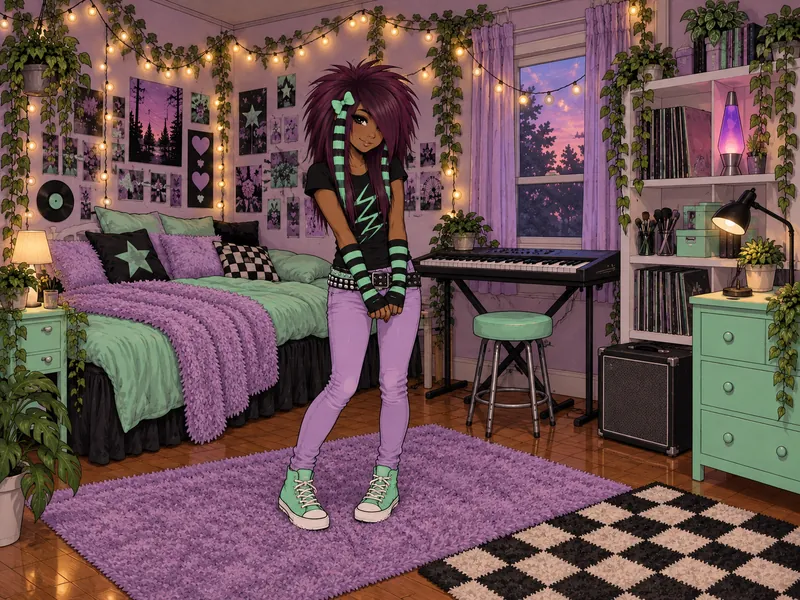
- Coral hair stripes, teal jeans
- Keeps the tee art original
Build an emo OC with side-swept bangs, studded belts, and a music-loving personality. This scene maker starts with late-2000s scene, emo, or pop-punk outfits. Add your own colors and invented tee graphics, then make a full-body reference or profile picture.
Ideas
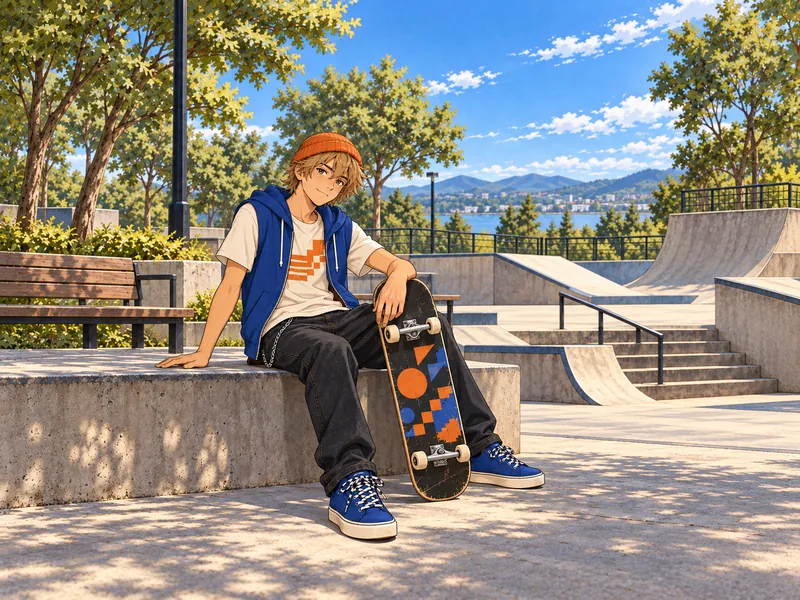
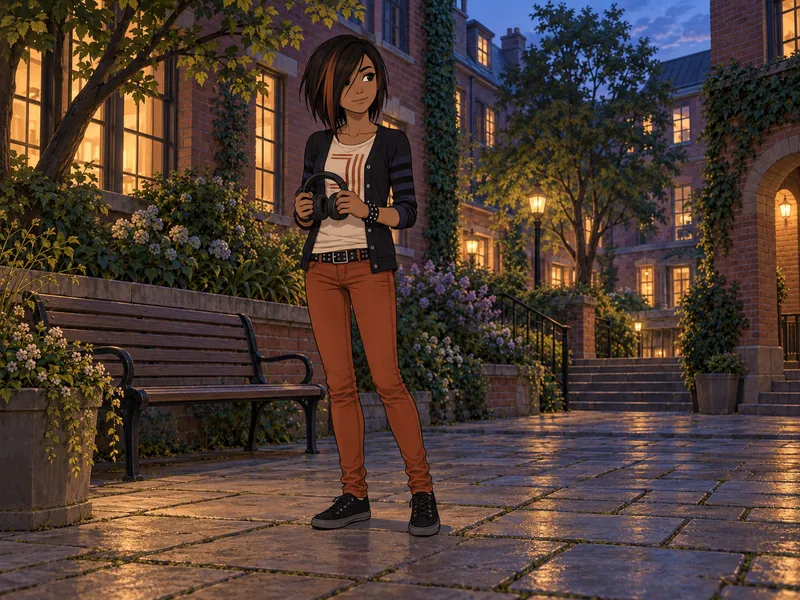
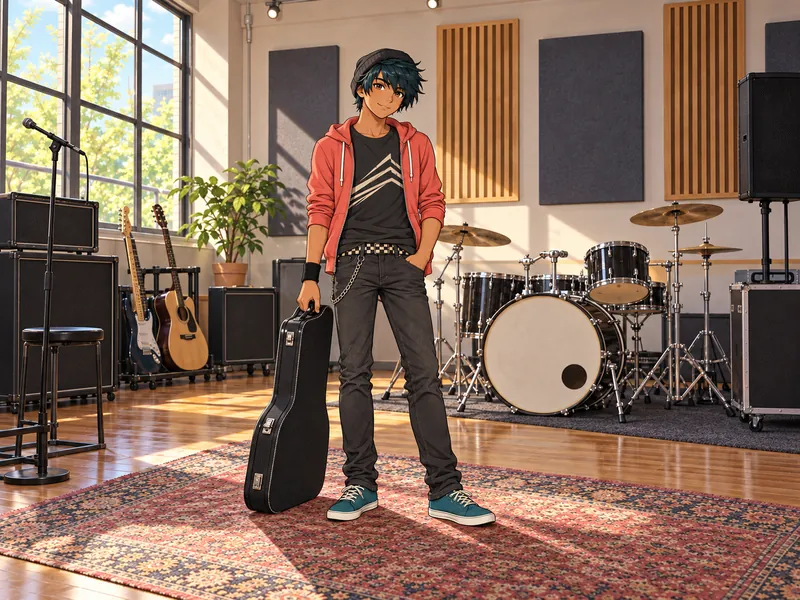
These examples show different ways to balance hair, color, and clothing. They are fictional characters, not portraits of musicians or copies of famous outfits. Load an idea to fill the design fields, then change the silhouette or signature color before drawing. The small habits give each character something to do beyond standing in a particular outfit.
Know the rules
These are overlapping music and fashion communities, not three rigid uniforms. For this page's designs, scene emphasizes bigger hair and brighter contrasts, emo uses a quieter palette and a strong fringe, and pop-punk starts with practical casual layers. Treat the tiles as visual starting points rather than a test of identity. The historical references below support the late-2000s clothing and hair details.
Sources: Scene subculture: fashion and history; Emo: music and fashion context; Nylon: raccoon-tail hair
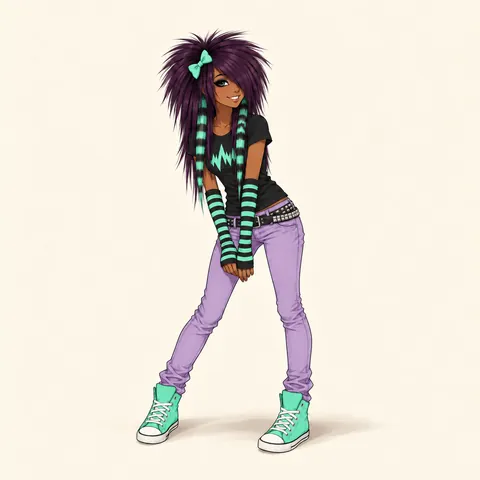
Scene fashion is associated with conspicuous hair, bright clothing, and strong contrasts. On your OC, give that energy a clear structure: one broad hair silhouette, one dark clothing base, and one accent that repeats in the shoes or shirt. Raccoon-tail stripes describe horizontal bands of color on a section of hair. They are a hair treatment, not an animal tail attached to the outfit. If the hair is already busy, keep the tee graphic simple so the face remains the first thing you notice.
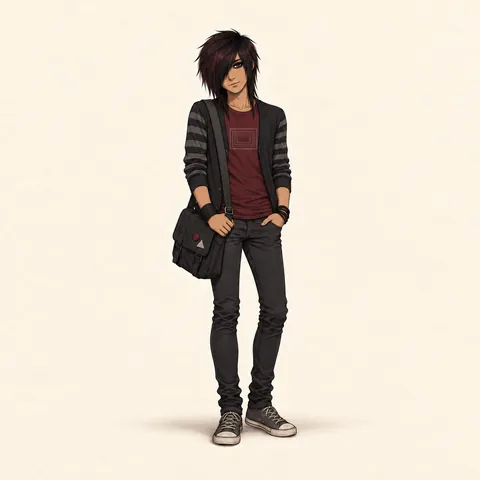
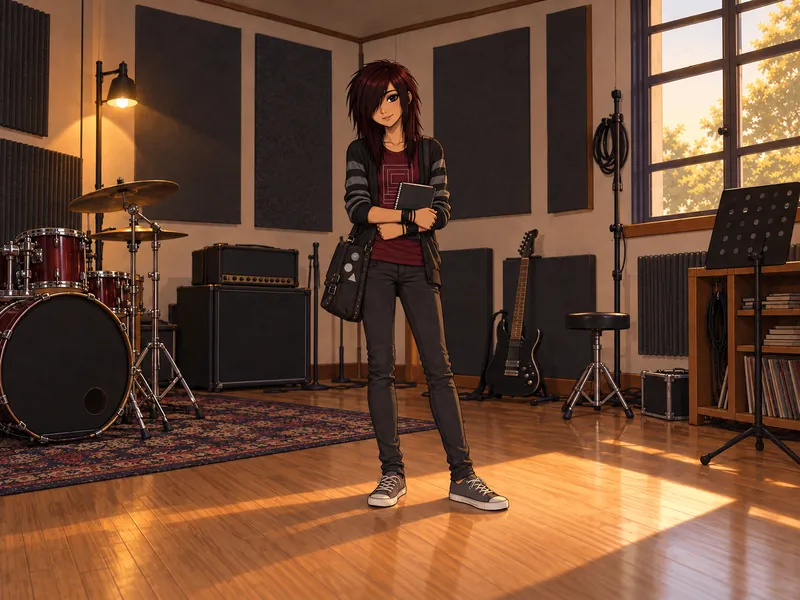
A side-swept fringe, eyeliner, slim trousers, and layered tops can establish an emo-inspired design without making every item black. Charcoal with burgundy or navy gives the outfit depth while keeping the palette restrained. Let the character's personality come from an ordinary habit, such as writing set lists or fixing a friend's headphones. A cheerful, patient, or talkative character can wear this style. Clothing does not prescribe a mood, and your OC does not need a dramatic backstory to make the look believable.
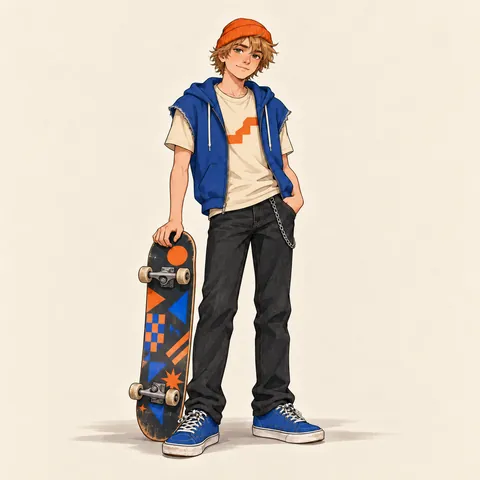
For this page's pop-punk option, start with a tee, an open overshirt, jeans, and sturdy canvas shoes. This is a design recipe rather than a universal dress code. Use a checkerboard detail on the laces or belt instead of spreading the pattern across the whole outfit. Juno's cobalt sleeveless hoodie supplies the main color while the cream shirt keeps the invented orange graphic readable. Give the character a rehearsal, a skate-park meetup, or a poster-making hobby so the casual clothes belong to a daily routine.
Tell the generator which section of hair carries the stripes and which colors alternate. A single coral-and-black section near the ear is easier to read than stripes scattered across every layer. Preserve a visible eye and the outer shape of the fringe when making a profile picture. A solid bright streak is a different choice and can work just as well, especially on wavy or curly hair. Do not ask for an animal tail when you mean the hair pattern; describe horizontal color bands directly.
A band-tee style shirt can suggest a music scene without naming a real act. Use an original stepped line, a few offset rectangles, or a hand-drawn abstract pattern. Keep it free of lettering so the image does not invent unreadable words. Check the background too: album sleeves, amplifier badges, and posters should be blank or use simple invented shapes. If a result resembles a familiar logo, replace that detail rather than assuming a small mark will go unnoticed. The graphic should support the outfit, not become its entire identity.
In a small profile picture, the hair shape, eyeliner, and collar may be the only details that survive. Build around those first. Use a background that separates the dark hair from the edge of the image, and leave room above the tallest layers. A neon accent works best as one clear patch of color rather than many tiny highlights. Check a circular crop before finishing: it can remove the striped hair section or the shoulder detail you meant to feature. Keep a full-body reference as a separate image for outfit planning.
Names and graphics
A two-word handle can sound like a screen name without claiming to be a real musician. The mixer pairs a given name with a sound or everyday-media word. Use a normal name if that suits your story better. The graphic cards add an original abstract design to the shirt field, so you can compare an angular motif with a softer one before drawing. These are visual suggestions, not real band identities.
given name + sound or media word
No letters, band names, or recognizable logos.
Guide
Start with a wearable outfit, then give the character a reason to choose it. The strongest designs have a few deliberate details rather than every possible accessory at once. You can use this workflow for a full-body reference, an illustrated profile, or a fictional group of friends with different tastes.
Choose Scene for bright contrasts, Emo for a quieter layered look, or Pop-punk for the casual outfit recipe shown here. These choices guide the drawing and do not determine who the character is. Decide whether the OC makes playlists, practices an instrument, repairs equipment, or organizes a rehearsal. That ordinary activity gives you useful visual details. A friendly character can wear dark clothes; a shy character can wear neon. Write the personality in your own words rather than expecting the outfit label to explain it.
Describe the length, the direction of the fringe, and one contrasting section. For raccoon-tail hair, say that the stripes are horizontal color bands on a lock near the ear. For an asymmetric bob, say which side is longer. If the character has curls or waves, keep that texture in the description instead of assuming all alternative styles require straight hair. Make sure the fringe leaves enough of the face visible for the expression you want. Use one hair statement consistently across later pictures.
Choose a dark or neutral base, then one main accent. Marlow repeats coral in the hair and shoe laces while teal sits in the jeans. Arden uses burgundy under charcoal layers for a quieter contrast. You can change those colors, but write down where each one belongs. A list of five bright colors without placement can produce a noisy outfit. Select one accessory in the picker and describe any extra item only if it contributes to the character's routine or silhouette.
Describe a small abstract graphic instead of asking for a real band shirt. Stepped lines, uneven rectangles, and loose zigzags fit a music-inspired outfit without copying a logo. Keep lettering out of the prompt and inspect the final shirt for accidental text. Apply the same rule to posters, album sleeves, and equipment in the background. A plain practice room still communicates a musical setting. If you want to remember an invented band name for the story, keep that name in the biography rather than printed in the image.
Generate a full-body reference first when belts, shoes, and layering matter. Review the hands, hair streaks, tee art, and outfit colors. Then use a portrait output for a profile picture, keeping the same written identity details. Leave space around the fringe so a circular crop does not remove it. Compare the smaller image with the reference before using it. If the two pictures disagree, choose the intended detail and correct the description. A clear reference helps later images feel like the same character.
Other fandoms
Tools
FAQ







Sign up for 10 bonus credits and make your first OC free.