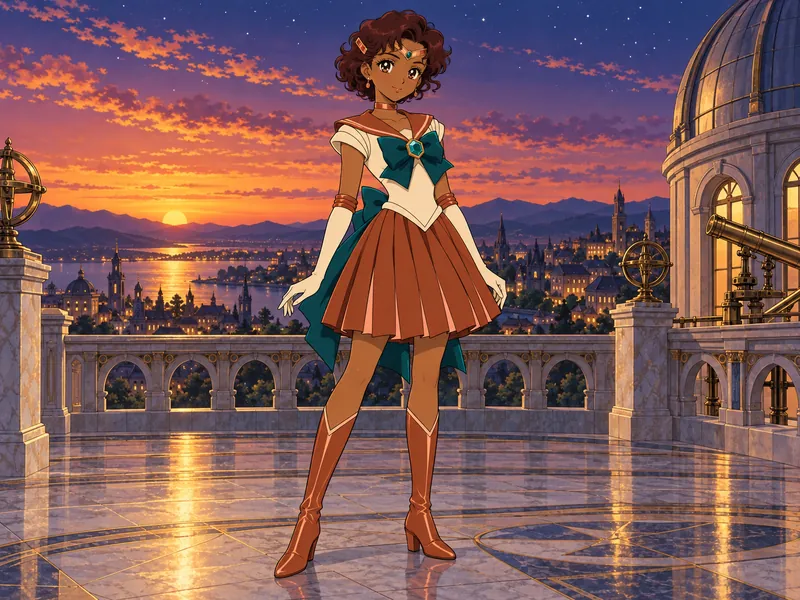
Sailor Virellune
Moon Guardian- Virellune: an invented world
- Virellune Lantern Refraction
- A team role, not every power
This Sailor Moon OC creator connects a celestial body, a fuku, a signature attack, and a civilian life. Design an original Guardian with a place in her own team. The Sailor Moon maker presets use invented worlds and original fan characters, ready for your changes.
Ideas
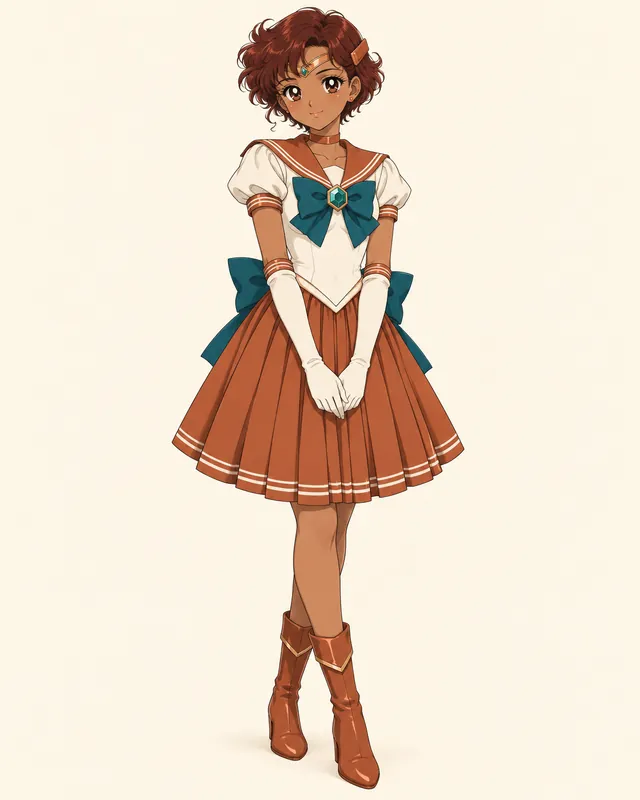
These Sailor Moon OCs use invented celestial bodies and deliberately different hairstyles, colors, and costume details. The body names are fan inventions, not astronomy facts or canon discoveries. Each Guardian has a small job within an original team, a civilian responsibility, and an attack that leaves something for a teammate to do. Pick the story that interests you, then adapt the design instead of treating the preset as a finished biography.
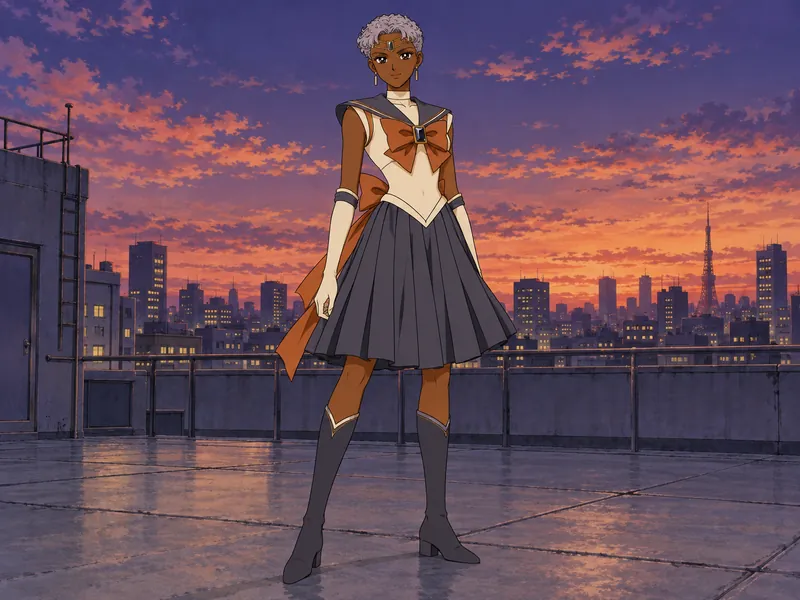
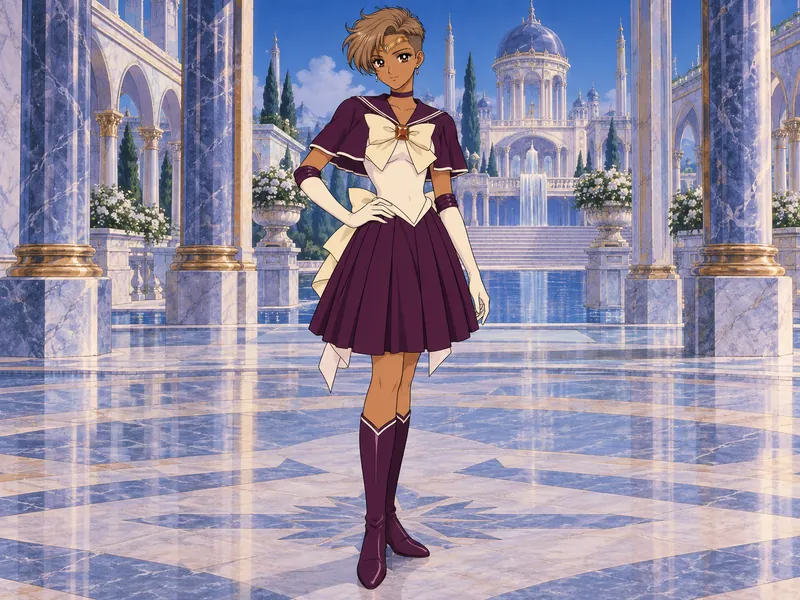
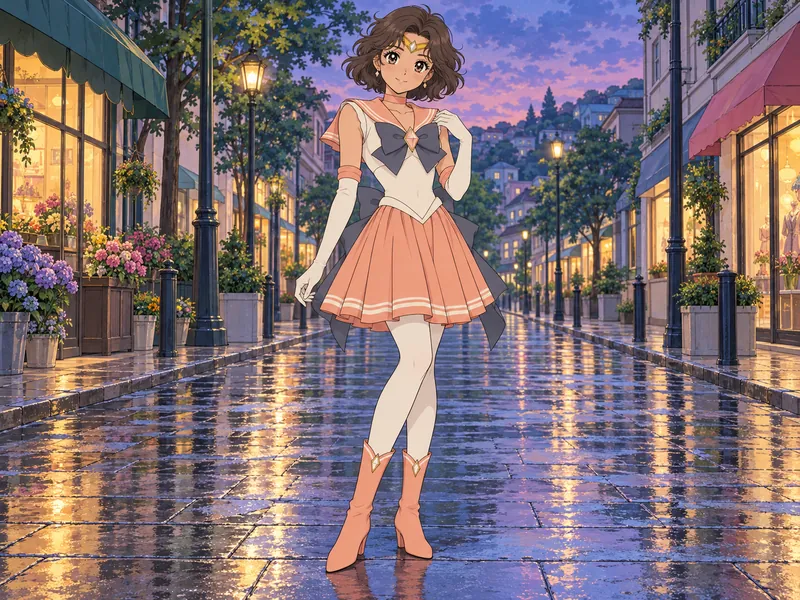
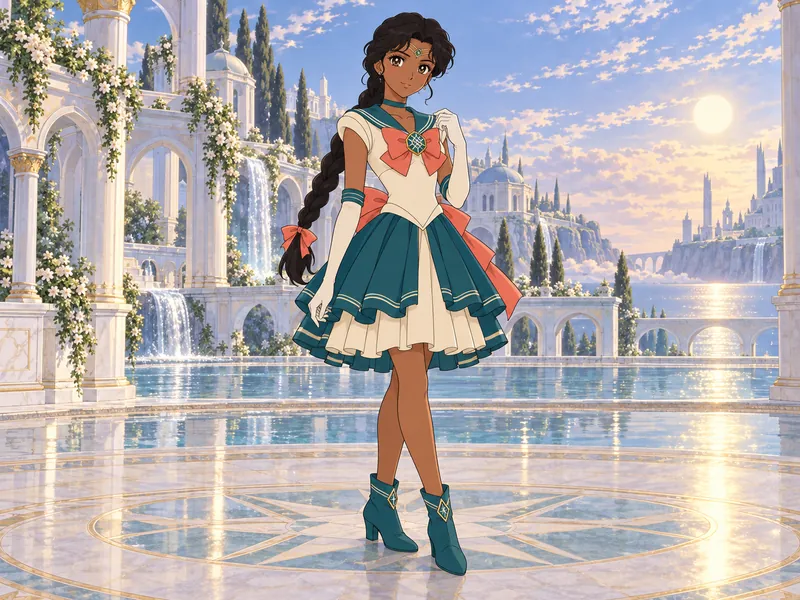
Know the rules
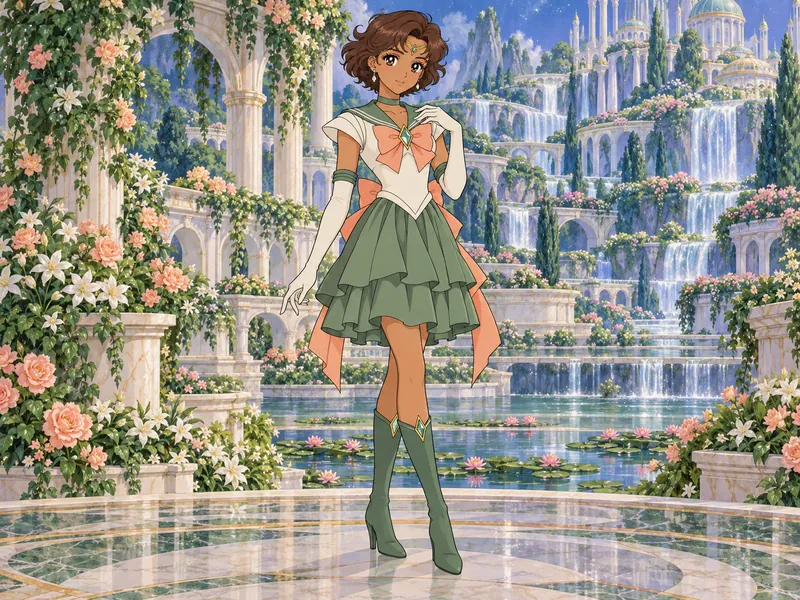
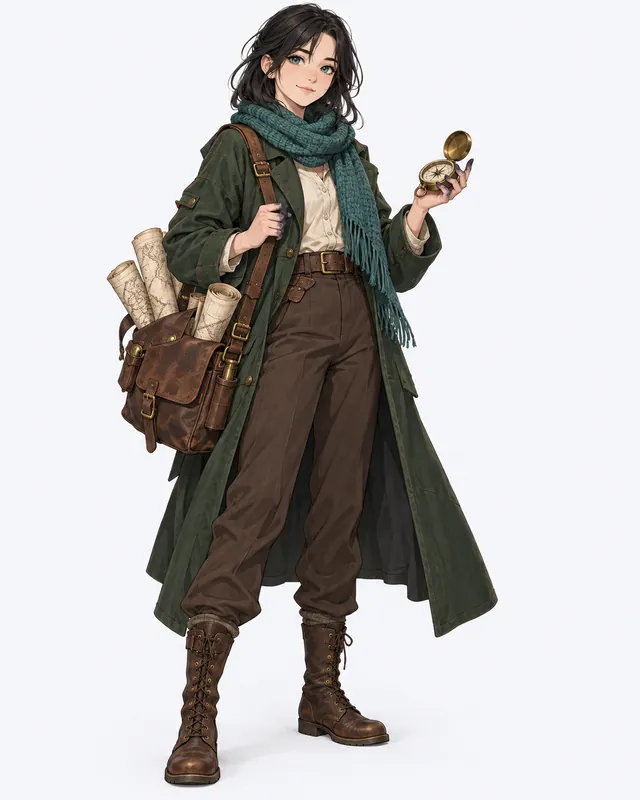
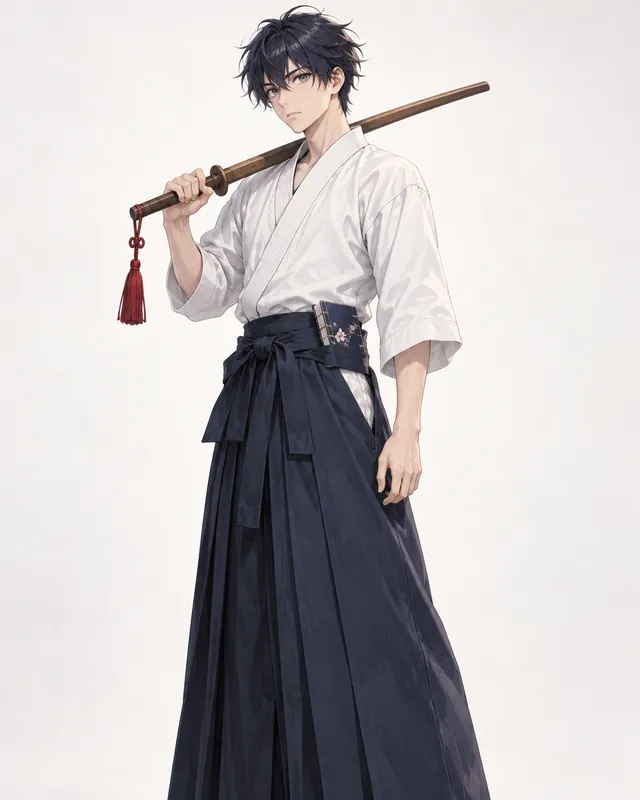
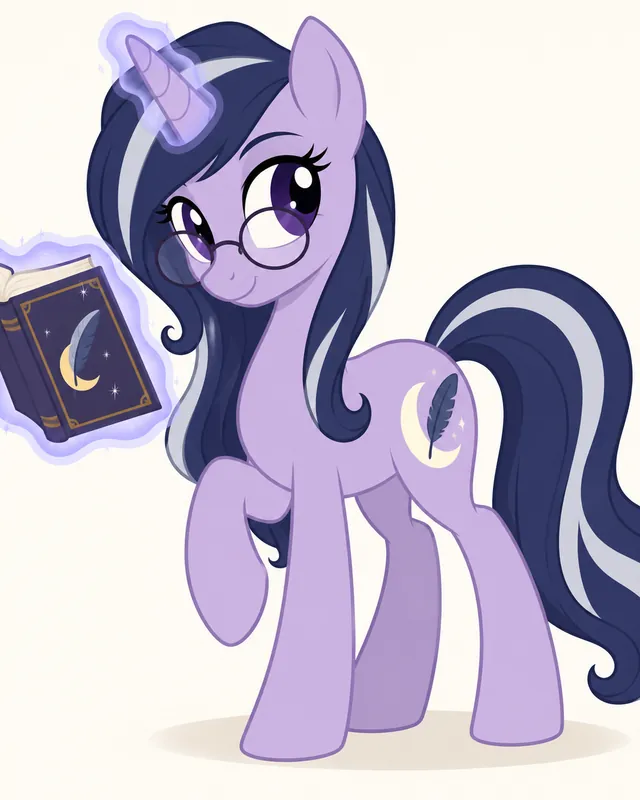
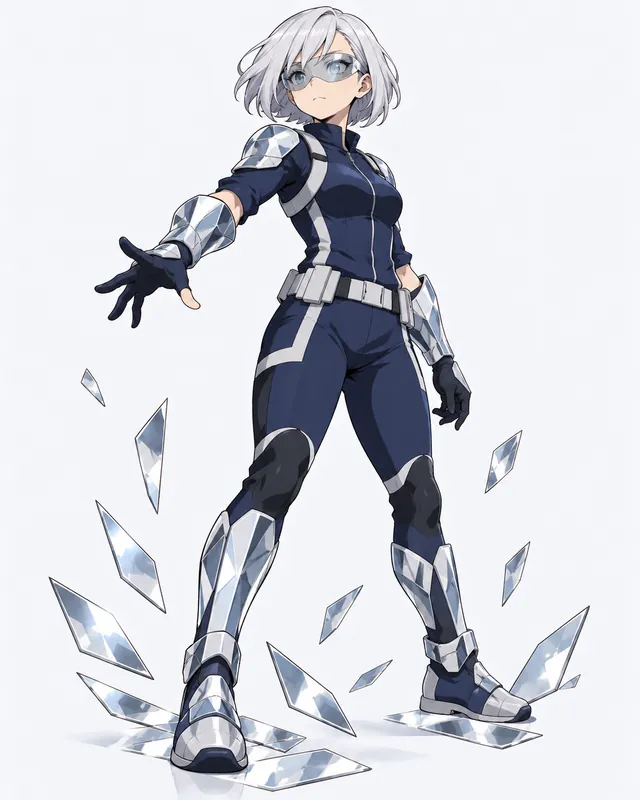
The Sailor Moon character creator uses recognizable fuku construction while leaving the identity original. The four picture tiles are this maker's design variations, not official transformation ranks. Canon uniforms vary across characters and adaptations, so choose a continuity before making detailed lore claims. The guidelines below separate familiar visual conventions from the new celestial worlds, powers, and teams you invent for fan work.
Sources: WikiMoon: fuku construction and variations; Sailor Moon Wiki: Guardian roster; Sailor Moon Wiki: named attacks
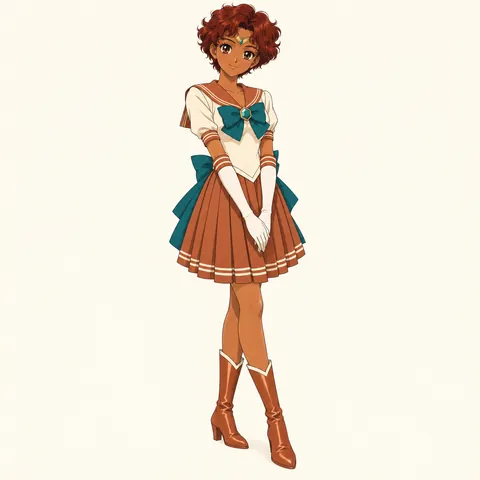
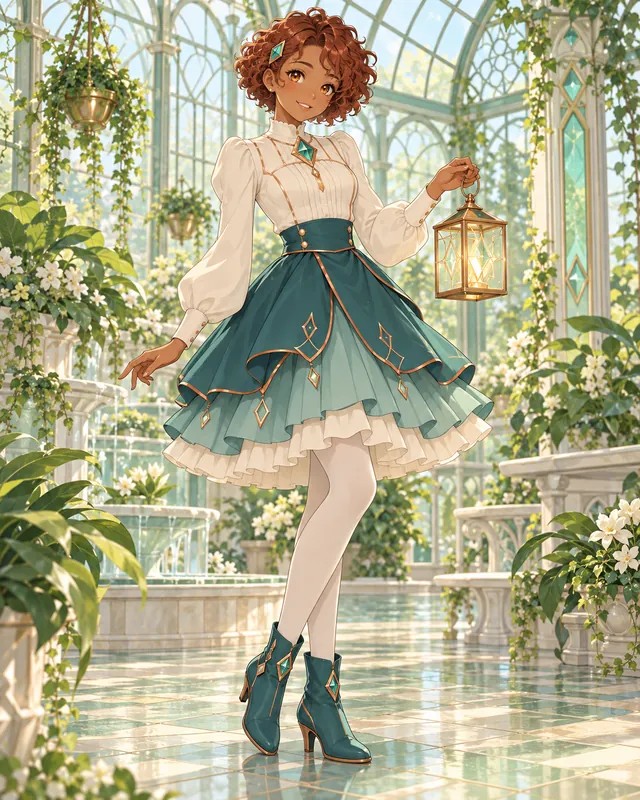
The familiar Earth-team fuku has a sailor collar, front and back ribbons, a skirt, gloves, a tiara, and footwear with personal variations. For this maker, Classic keeps those large shapes easy to distinguish and uses a modest knee-length skirt. Choose the collar and skirt color together, then use the bows as a contrasting accent. Design a new brooch and a simple invented tiara mark instead of a canon planet symbol. A different haircut alone does not make a recolored canon costume an original design.
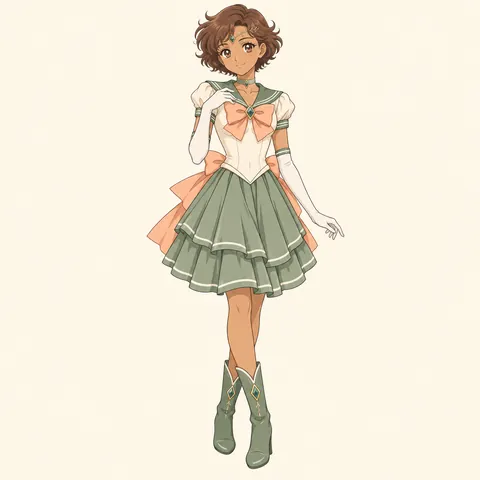
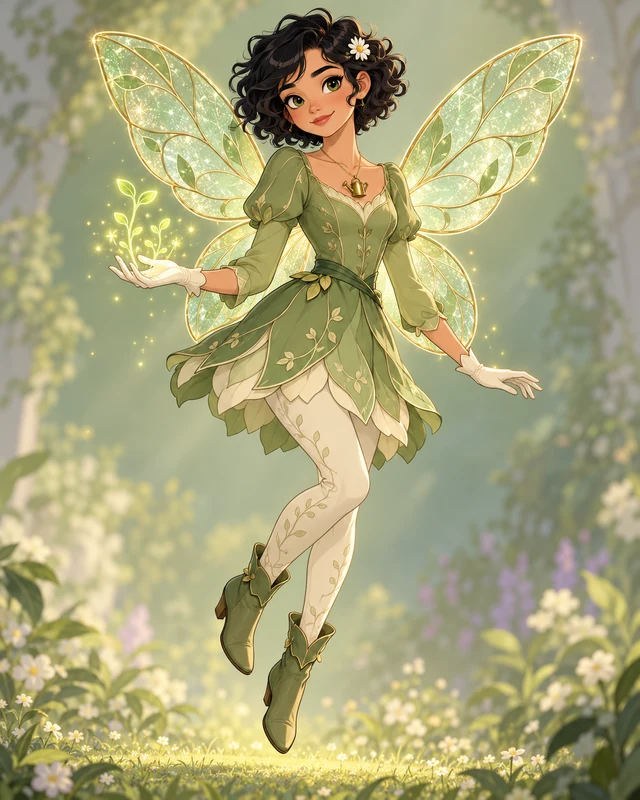
Layered is a fan-design option in this creator, not the name of a canon rank. Use an extra skirt layer to repeat the celestial motif without filling every surface with decoration. A terraced asteroid might suggest overlapping panels; a distant moon might suggest alternating fabrics. Keep the sailor collar and both bows visible so the outfit still reads as a fuku. Decide where the back bow attaches before requesting a reference sheet, since ambiguous layers often produce inconsistent rear views.
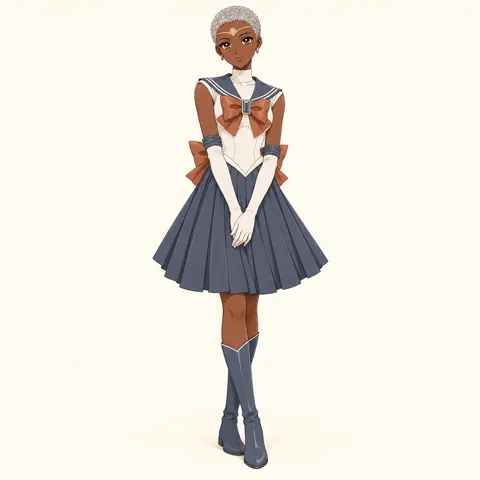
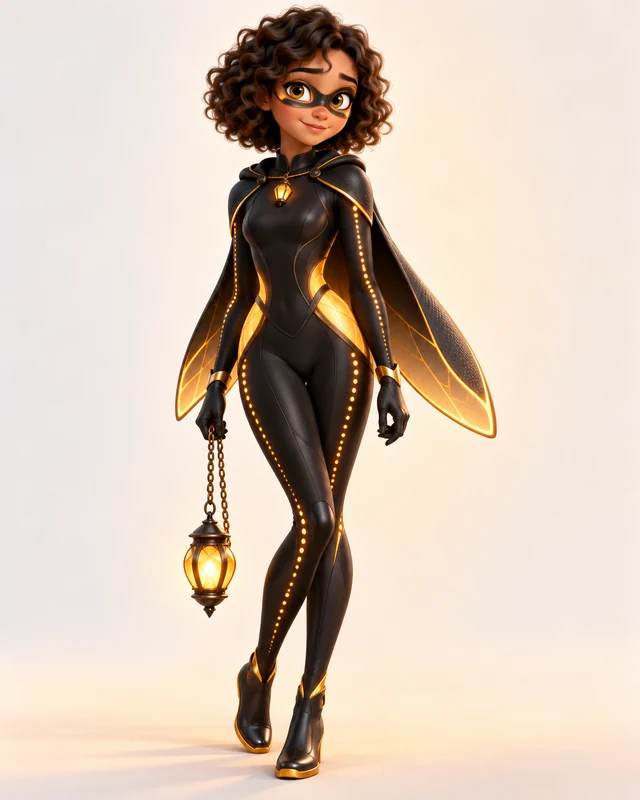
Longline extends the skirt to the knee or below and uses a restrained silhouette. It is an original design direction rather than a claim about an official transformation stage. Keep a distinct collar, front bow, gloves, boots, and tiara so the costume remains recognizable. A signal keeper might prefer squared ribbon ends and a simple brooch that reflect a careful personality. Do not assume that a longer skirt means the Guardian is older, stronger, or royal; those are separate story decisions.
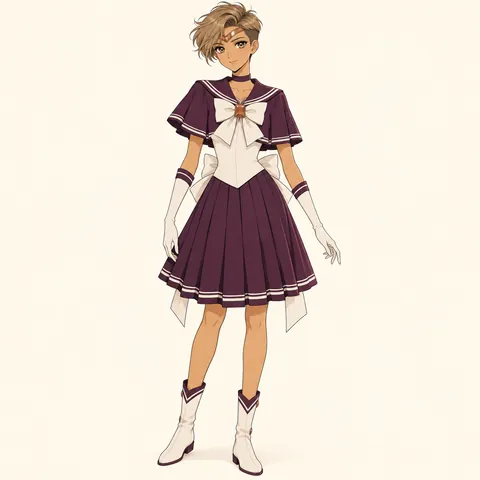
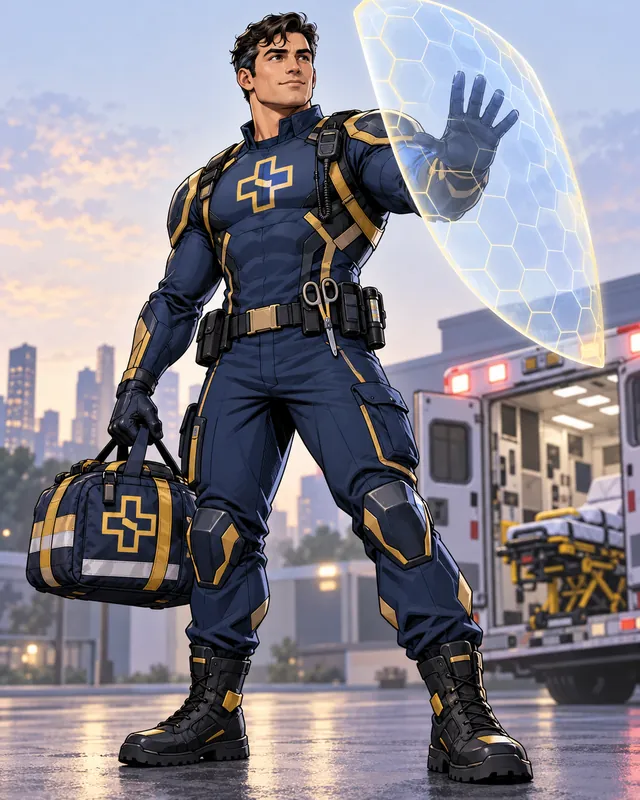
A short capelet can add an original silhouette, but it should not hide every feature that identifies the outfit. Leave the sailor collar visible and let the back bow extend below the capelet. Keep the extra fabric short enough to distinguish it from a long royal cloak. This option is a fan costume variation, not a canon uniform category. Show where the capelet fastens in your notes, and avoid copying the wings, crowns, armor, or accessories of a famous late-series Guardian.
Choose an invented body or research a real moon, asteroid, or star before using its name. The canon roster extends beyond the familiar Solar System team to the Quartet, Starlights, Animamates, and other Guardians. Ceres, Pallas, Juno, and Vesta are already occupied names, and distant worlds are not automatically unused. The examples here invent their bodies and label them as fan concepts. Their powers are design choices, not claims that the series assigns a fixed element to every object in the sky.
Canon attacks use several naming structures; there is no single mandatory grammar. A useful original pattern is celestial identity plus a sensory image plus an action, such as Virellune Lantern Refraction. Keep the phrase easy to call out and explain what it actually does. A route-revealing light should not also heal every injury or stop time. Avoid copying a famous move with only one word changed. Give another teammate the ability or practical skill needed when this attack cannot solve the problem.
Names and attacks
Sailor plus a celestial identity is a useful starting convention, but a name alone does not establish canon membership. This mixer proposes invented world names, prefixed with Sailor. Treat them as working titles and search a favorite before sharing it. Keep the civilian name separate, and do not invent Japanese meanings for a syllable combination. The attack prompts are original phrases with an effect and a limit; they are not quoted moves from the series.
Sailor + invented world syllables
An invented identity, a sensory motif, and an action.
Guide
A senshi maker is most useful when it helps you decide why the details belong together. Work from a celestial identity to the costume, then test the attack in an ordinary scene. Keep a separate note for canon facts and your own additions so another fan can understand the premise without mistaking invention for an official character profile.
Decide whether your story follows the manga, the classic anime, Crystal, or an explicitly alternate setting. Then research the body name against the wider Guardian roster, not just the main team. An invented distant world gives you room to create a local history without overwriting a canon identity. Record what you invented in a separate note. The examples on this page do not establish new official lore, and their team exists only as a fan-story starting point.
Choose one of the four design variations and specify the sailor collar, front bow, back bow, skirt length, tiara, gloves, boots, and brooch. Keep the uniform color and bow color distinct enough to read in a small image. Invent the tiara mark and brooch silhouette rather than borrowing a planet symbol or a famous compact. For a reference sheet, explain where the back bow and any capelet attach so the rear view has the same construction as the front.
Try a short phrase with a celestial identity, a motif, and an action. Read it aloud, then write a plain sentence explaining the effect. State a range, a condition, or a limit that another character can understand during a scene. The series uses varied attack naming conventions, so this is a practical writing pattern rather than a universal canon formula. An original attack should do more than rename a recognizable canon move or grant every useful ability at once.
Choose a hobby, a routine, and an unresolved relationship that exist before the transformation. An observatory volunteer can have trouble asking directions; a radio hobbyist can dislike public speaking. Let the civilian skill help in a magical scene without making the character an expert at everything. Keep the civilian name separate from the Guardian title. Write a short scene where no attack is useful, because the problem requires honesty, patience, or an apology instead.
Give the original team a shared purpose and assign a job that this Guardian does well. Add someone who can cover the limit of her attack, and someone whose priorities create a reasonable disagreement. Load an idea card, change the fields, and compare the draft before requesting an image. Check the result for collar, bows, hemline, hands, and original symbols. Save the design notes with the image so future art requests preserve identity instead of drifting toward a canon costume.
Other fandoms
Tools
FAQ

Sign up for 10 bonus credits and make your first OC free.