OC Creator logoOC Creator
A free character design desk

OC Appearance Generator

Build a character you can picture before you write the first scene. This free physical appearance generator combines facial details, clothing, color and movement into one editable look. Pick a part, lock what works, and watch the silhouette change as you reroll the rest. No sign-up, uploads or credits are needed for this local tool.

  • Lock any part and reroll the rest
  • Three writing modes, one consistent look
  • Save favorites and export a PNG card

Find their silhouette

FREE / LOCAL
Pronouns
Genre
Species
APPEARANCE STUDYhuman
5 ft6 ft
5 ft 8 in (172 cm)Modern sketch

Cobalt / Cream / Coral

Your OC catches the light in a cropped denim jacket, the colors running through cobalt, cream and coral. At 5 ft 8 in (172 cm), they have a slender frame and skin that is deep brown with warm undertones. Fine straight brows sit above almond-shaped brown eyes in their oval face with soft contours. They have short tightly curled black hair and round glasses; their outline also includes rounded human ears. They wear a cotton button-down paired with straight jeans, plus canvas sneakers and a canvas messenger bag. They pause before turning.

occreator.org / silhouette is a proportion and color guide, not a finished portrait

Your first appearance is ready. Keep a detail, then roll around it.

Drawing opens the separate image creator. Image generation uses credits. This description tool stays free.

The parts desk / lock, pick, reroll

Favorites 0/12

Save a look to compare it later. Favorites stay in this browser.

Six original appearance studies

Six looks, six different first impressions

These original illustrations show how a few deliberate choices can carry a design. Read the proportions first, then notice the largest color block, the framing of the face and the practical accessories. Each example gives you a different starting point without assigning a personality to someone because of their body. The illustrations are finished concepts; the live card above is a simplified guide for testing your own proportions and palette.

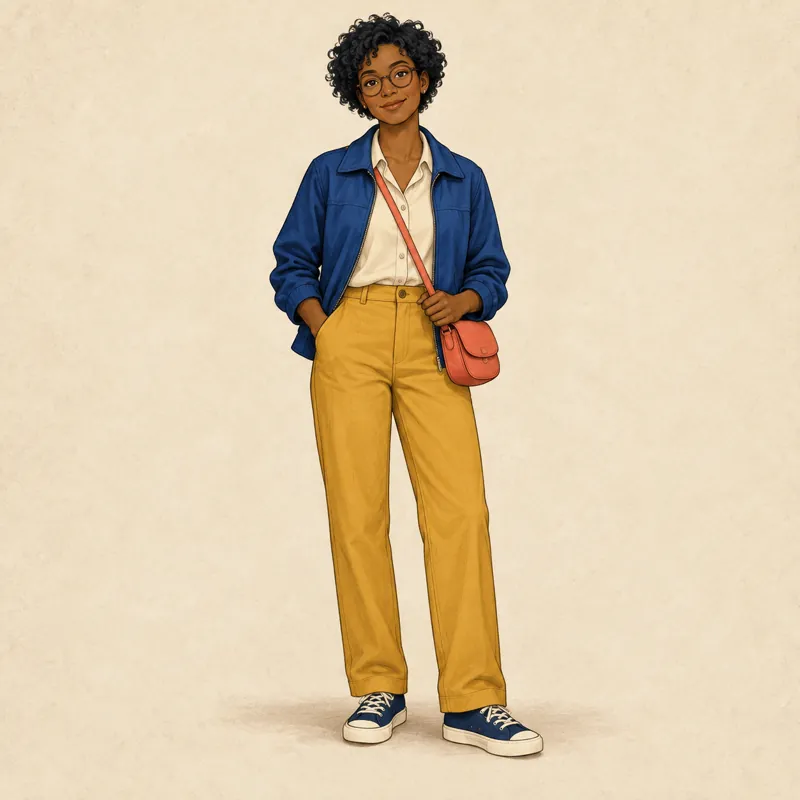
Modern courier: Deep brown skin, short black tight curls, round glasses, a cobalt jacket, cream shirt, mustard trousers, navy sneakers and a coral crossbody bag.

modern / human

The cobalt courier

Deep brown skin, short black tight curls, round glasses, a cobalt jacket, cream shirt, mustard trousers, navy sneakers and a coral crossbody bag.

The jacket gives this look its largest uninterrupted color block. The warm trousers keep that blue from making the whole design feel cold, while the small coral bag provides a second place for the eye to land. Glasses frame the face without standing in for intelligence or a job description. For a scene, describe the bag strap moving against the jacket when the courier turns toward a doorway. That is more useful than calling the outfit stylish. Keep the curls and glasses locked if you want to compare rainy-day and summer clothing around the same recognizable person.
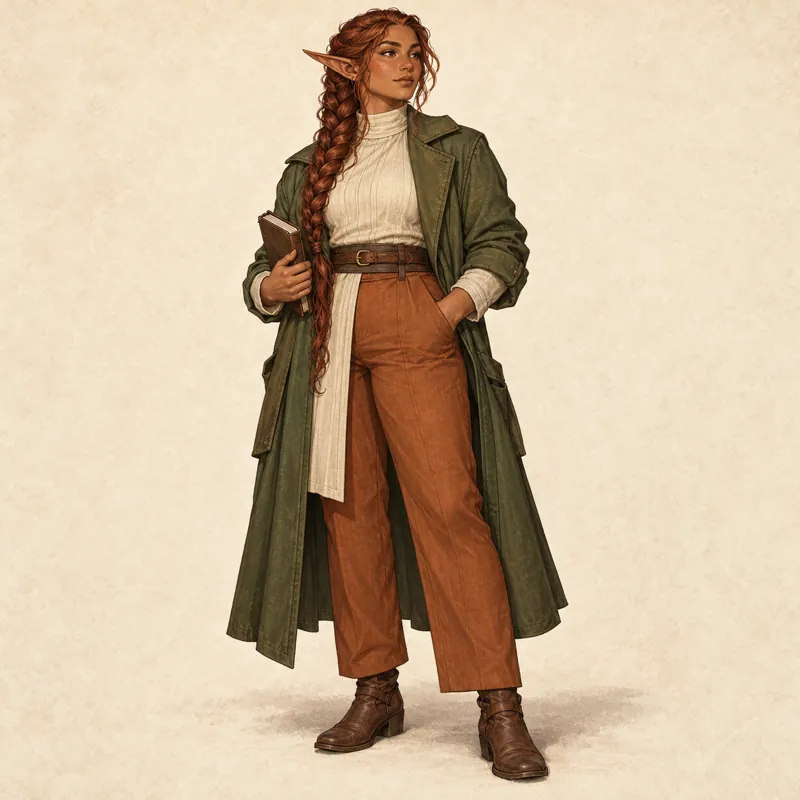
Fantasy archivist: Warm tan skin, long pointed ears, a long auburn braid, a moss green coat over a cream tunic, copper trousers, brown boots and a notebook.

fantasy / elf

The moss archivist

Warm tan skin, long pointed ears, a long auburn braid, a moss green coat over a cream tunic, copper trousers, brown boots and a notebook.

A long coat and a long braid create two vertical lines, so the broad, sturdy build still reads clearly underneath. The notebook is small enough to be an everyday object rather than a magical centerpiece. Pointed ears establish the species without requiring an elaborate crown or an inherited royal title. When writing this character entering a room, let the coat settle against a chair and the braid slide over one shoulder. You can keep those shapes while switching the colors to colder tones for another setting. The design remains recognizable because its outline survives the palette change.

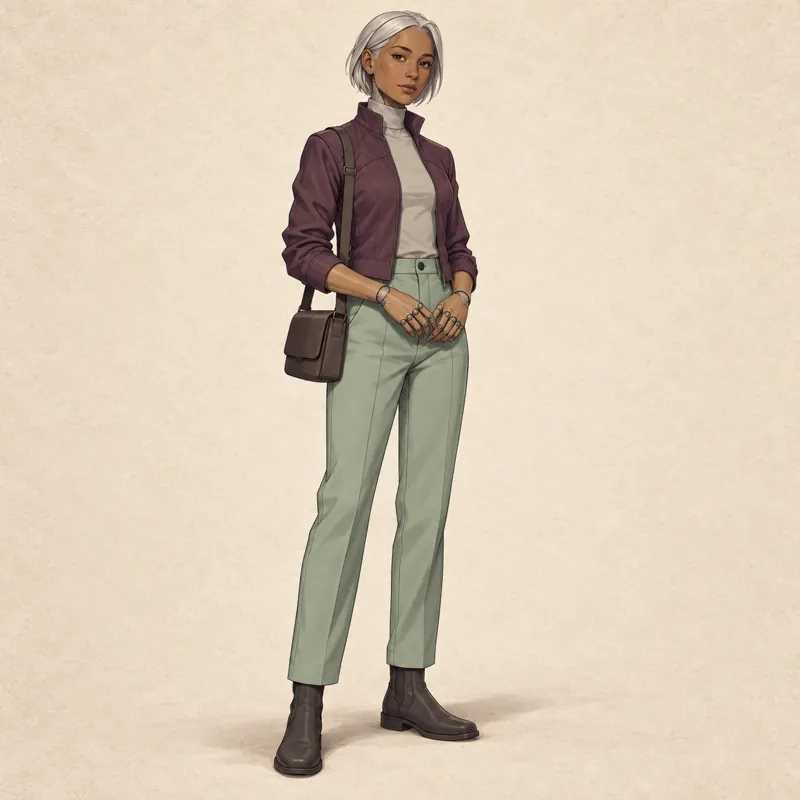
Science-fiction technician: Medium brown face, a subtle temple seam, short silver straight hair, a plum technical jacket, pale gray shirt, mint trousers, dark boots and a plain satchel.

sci-fi / android

The plum technician

Medium brown face, a subtle temple seam, short silver straight hair, a plum technical jacket, pale gray shirt, mint trousers, dark boots and a plain satchel.

This android uses small construction details instead of exposed machinery. A temple seam and articulated fingers are enough to suggest how the character is built; the clothing can still be ordinary and comfortable. The silver crop leaves the seam visible, while the mint trousers make a useful color contrast below the jacket. In prose, show a finger joint bending as they adjust the satchel strap. Avoid claiming that a synthetic face cannot show emotion. That would be a story decision, not an appearance detail. Try a rounded build or longer coat to see how the same materials can support a different outline.

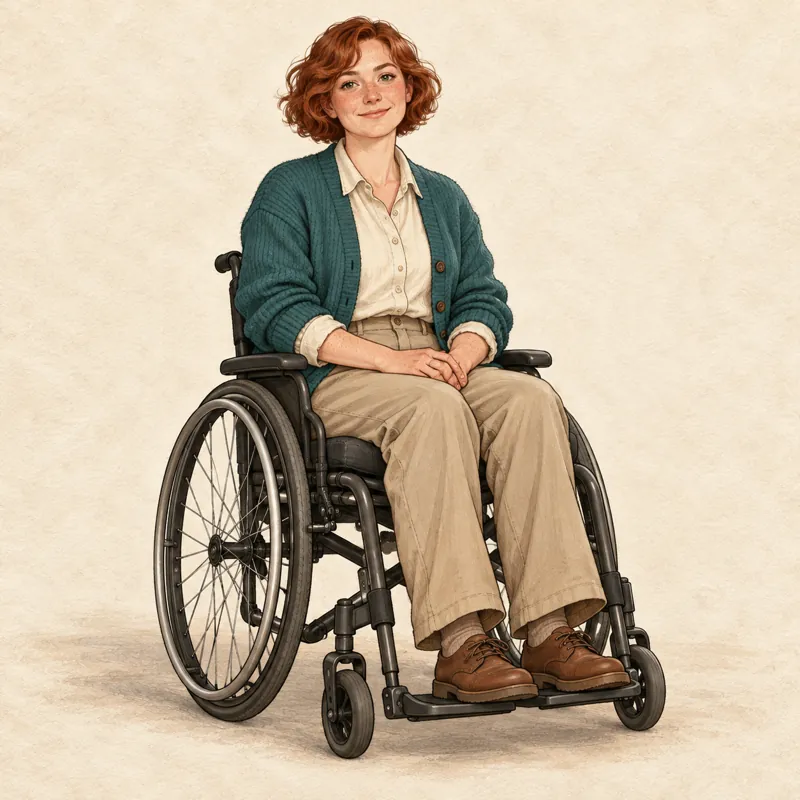
Cozy gardener: Fair skin with freckles, a short auburn wavy bob, a teal cardigan, a cream shirt, sand trousers, brown shoes and a manual wheelchair.

cozy / human

The linen gardener

Fair skin with freckles, a short auburn wavy bob, a teal cardigan, a cream shirt, sand trousers, brown shoes and a manual wheelchair.

The outfit uses soft everyday layers and leaves room for comfortable seated movement. The wheelchair belongs in the overall composition, with the same care given to its shape and color as to a coat or a bag. It is not a shorthand for helplessness, bravery or a tragic past. A useful sentence could describe the cardigan cuff resting near the wheel rim while the gardener considers the light. The live silhouette is a standing proportion reference and does not depict mobility equipment, so keep the written feature visible when making an art brief. A finished illustration should honor that detail explicitly.

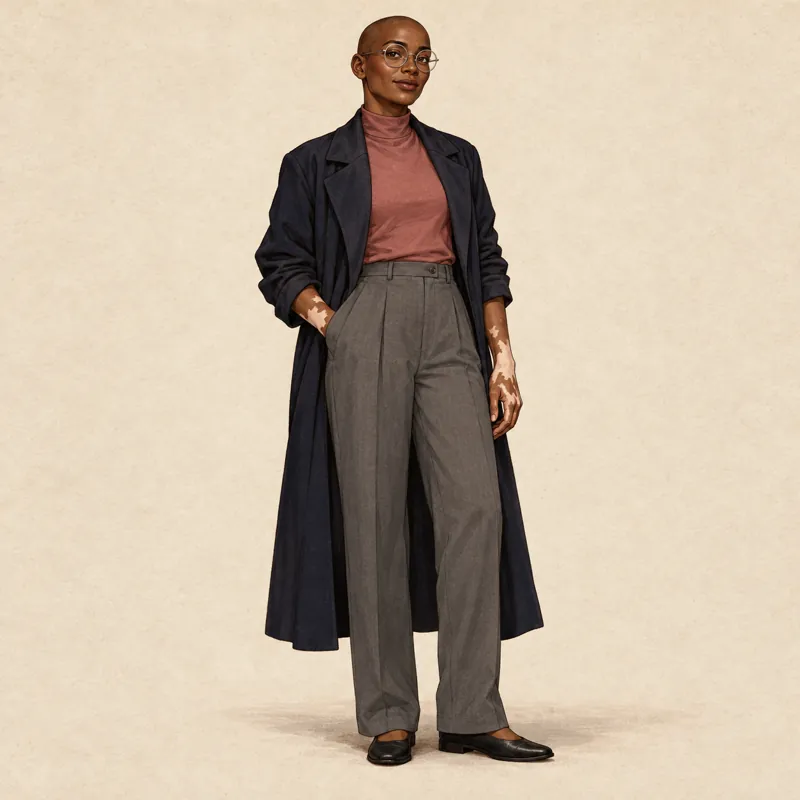
Gothic conservator: Deep brown skin with vitiligo on the hands, a bald head, an ink-colored long coat, a muted rose high-neck shirt, gray trousers and silver round glasses.

gothic / human

The rose conservator

Deep brown skin with vitiligo on the hands, a bald head, an ink-colored long coat, a muted rose high-neck shirt, gray trousers and silver round glasses.

A bald head gives this design a clear upper contour. The high collar and round glasses then carry the framing that hair might otherwise provide. Vitiligo is described as a visible skin feature, without turning it into a magical mark or a moral symbol. Ink, rose and silver make a restrained gothic palette that does not need a skull motif or a recognizable franchise costume. In a close scene, describe a light patch on a hand as it meets the dark coat cuff. This connects two visible details in one sentence and keeps the description grounded in what a viewpoint character can observe.

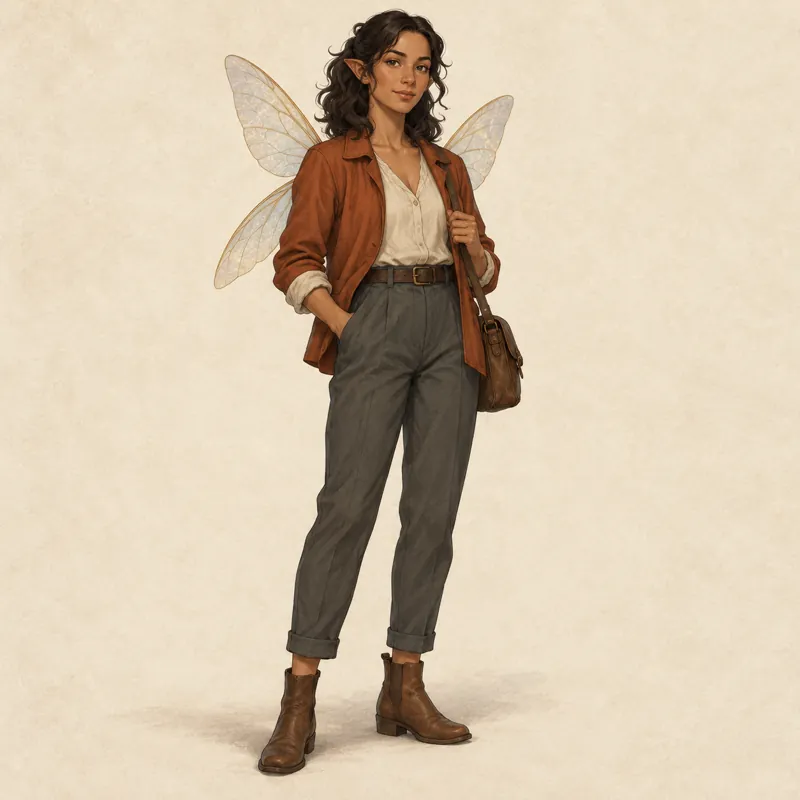
Fantasy wingkeeper: Light brown skin, shoulder-length black waves, small translucent wings, a rust jacket, an ivory shirt, slate trousers, brown boots and a small shoulder bag.

fantasy / fairy

The copper wingkeeper

Light brown skin, shoulder-length black waves, small translucent wings, a rust jacket, an ivory shirt, slate trousers, brown boots and a small shoulder bag.

The wings change the outline without taking over the entire image. Rust and slate keep the clothes distinct from the pale wing membranes, which matters when the design is reduced to a small thumbnail. A shoulder bag suggests an ordinary daily routine, allowing a fairy to feel like a person with belongings. You might describe the wings catching a thin line of light as the character turns, then return to the bag or cuff rather than listing every vein. If you adapt this look, keep either the compact wing shape or the warm jacket as the strongest identifying feature, and simplify the rest.

Design lenses

Choose a lens, then keep the person specific

A lens selects its own wardrobe: tops, bottoms, outerwear, shoes, accessories and palettes. Unlocked clothing changes immediately when you tap a genre chip; locked details stay yours. It does not decide the character's gender, occupation, values or history. Species adds a small set of anatomical cues, such as pointed ears or subtle android joints. The parts remain available to you, so a cozy elf and a modern fairy can share practical clothes while retaining different outlines. These seven lenses are starting points for an original setting, not presets copied from a franchise.

Modern

Start with clothing someone could choose for an ordinary day: a shirt, trousers, an outer layer and shoes that fit the activity. Let one item carry the strongest color and keep the others quieter. Contemporary does not have to mean a hoodie and jeans; a long coat, a woven bag or a carefully pressed collar can do just as much work. If the design feels generic, add a repeatable movement habit instead of adding five more accessories. A person who straightens one cuff before answering is easier to remember than an inventory of fashionable objects.

  • Everyday fabrics
  • Practical layers
  • Contemporary details

Fantasy

Choose construction details that suggest the setting without copying a recognizable costume. A cord closure, a broad hem and a small notebook can tell you more about everyday life than an unexplained crown. The elf and fairy options add anatomical cues, but they do not force every character into a slim build or a particular skin tone. Keep the largest shapes clear before adding ornament. If the character travels often, consider how their coat, bag and hair would move together. Your final description should make the outfit possible to draw from more than one angle.

  • Woven textures
  • Hand-finished seams
  • Species cues

Sci-fi

A future setting can be communicated through a few material choices. Smooth technical fabric and a magnetic fastening do not require a suit of armor or a glowing symbol on every surface. Android anatomy is kept subtle so the character can still wear comfortable everyday layers. If you need more machinery in a finished design, add a clear practical reason for each visible component. First test the palette in the silhouette: the largest blocks should remain readable even when the small technical details disappear. That gives an illustrator a useful foundation before they begin the detailed work.

  • Technical fabric
  • Clean fastenings
  • Subtle construction

Cozy

Use familiar textures and a palette that leaves room for small warm accents. Cozy describes a visual mood, not a requirement for a small body, a young face or a cheerful personality. A broad-shouldered character in a soft cardigan can fit just as well as a slender one. Worn seams and a carefully repaired bag can suggest use without inventing an entire backstory. Describe where the fabric folds as the character sits or turns. Those ordinary observations make the scene feel inhabited and help the clothing appear comfortable rather than decorative.

  • Soft layers
  • Worn edges
  • Gentle contrasts

Gothic

Build the outline with a collar, coat or strong vertical seam before reaching for extra ornament. Dark clothes still need differences in value so sleeves do not vanish into the torso. A muted rose lining or a silver fastening can separate forms without making the palette loud. Gothic does not require pale skin, an unhappy expression or a threatening personality. Keep those decisions independent. The lens supplies lace trim and antique fastening language; you decide which details matter to the scene. A brief description of glasses catching light can be more effective than a stack of mood adjectives.

  • Dark layers
  • Antique fastenings
  • Restrained contrast

Anime school

Use neat, fully covering uniform layers and ordinary school accessories. The lens keeps the design free of recognizable school emblems or a famous character's signature costume. A different cardigan length, collar shape or bag strap can make an original student stand out without an impractical outfit. Keep the description age-appropriate and focused on visible details. A hand smoothing a cuff or a glance toward the doorway can give a writer something to stage. For a group scene, vary silhouettes and dominant colors first so the students can be distinguished before their names are introduced.

  • Modest uniform layers
  • Plain school bag
  • No school crest

Superhero

Think about the shape a reader would recognize across a comic panel. A clear shoulder line, a cropped jacket and one strong accent can do more than an elaborate chest emblem. This lens suggests reinforced fabric and bold color blocking without assigning a power or copying a known hero. Keep the outfit practical and fully covering. If the story later introduces a power, adapt the costume around the movement it requires. For now, compare a broad outline with a narrow one using the same palette, then choose the version that gives your original hero the strongest visual identity.

  • Bold color blocking
  • Reinforced materials
  • Original silhouette

Guide

From a roll to a usable character description

A strong appearance brief is selective. Use the generator to find possibilities, then choose which details deserve space in the reader's attention. You do not need to describe every field in the first paragraph of a story. Keep the complete card as a reference and introduce smaller observations when the character moves, speaks or handles an object.

  1. 1

    1. Start with the outline

    Choose a genre and species, then look at height, build and hair before concentrating on the face. The height chart compares the silhouette with five-foot and six-foot markers. It is a visual reference, not a medical measurement or a model of every possible body. A long coat and a broad build produce a different shape from a short jacket and a narrow frame. Pick the outline that serves your scene and lock those parts. This prevents a useful starting point from disappearing while you explore less important details.

  2. 2

    2. Give the face two clear anchors

    Pick a face shape and an eye description, then look for one additional detail that helps you remember the person. Brows, glasses or freckles can provide that anchor. Avoid treating a nose shape, skin tone or visible disability as evidence of personality. The tool leaves those associations out on purpose. If you already have a specific character in mind, choose parts from the menus rather than waiting for a random roll to match them. A locked part survives both the main reroll and attempts to reroll that individual part.

  3. 3

    3. Make the clothing work as layers

    Read the top, bottom, outerwear and shoes together. A jacket should have a clear relationship to the shirt underneath, and the shoes should suit the activity you intend to write. The palette gives you three color roles that can be rearranged in a finished illustration. On the simple card, the first color controls the outer layer, the second controls the lower body, and the third becomes a small accent. The preview does not render every cut or fabric. Use the written description as the complete record of your choices.

  4. 4

    4. Add a detail that appears in motion

    Choose a distinguishing feature and a movement habit separately. A hearing aid, cane or wheelchair is an ordinary part of a character's appearance; it does not need to explain the whole plot. The movement bank focuses on upper-body gestures so its sentences remain usable with different mobility details. You can introduce a feature through a natural action instead of stopping the scene for a list. A cuff shifts, a hand rests on a strap, or a head turns toward a voice. Keep observations concrete and avoid claiming what another character must be feeling.

  5. 5

    5. Change the writing mode

    Use the tag list for a reference sheet or drawing brief. Use the short paragraph when you need a compact introduction that leaves room for your own scene. Add an optional name and choose she, he or they. Describe this character writes six varied third-person sentences, starting with a first impression and moving between face, hair, clothing and a concrete gesture. The short paragraph uses three sentences; the tag list keeps every selected detail. This is a local composition tool, so it builds from the fields you see instead of analyzing an image or inventing hidden facts. Read the result aloud and keep the sentences that match your narrator's voice. You can copy the current mode with one button.

  6. 6

    6. Save, compare and draw

    Favorite a promising look before making a major change. The tool keeps up to twelve favorites in this browser and lets you restore or remove each one. Export a PNG card for a portable record of the silhouette, palette and current text mode. Favorites are not an account backup, so keep an exported copy if the design matters to you. Draw this OC sends the composed description to the full-body creator. Review the description there before generating an image, especially any assistive device or anatomical detail that the simplified silhouette does not display.

FAQ

Appearance generator questions

Juniper Vale, an original original anime characterKaito Arashi, an original anime characterSorrel the Fennec, an original Sonic the Hedgehog characterStarlit Quill, an original My Little Pony: Friendship is Magic characterRei Kagami, an original My Hero Academia characterFlarepaw, an original Warrior Cats characterTinsel the Raccoon, an original Five Nights at Freddy's character

Your next OC is one sentence away

Sign up for 10 bonus credits and make your first OC free.