OC Creator logoOC Creator
Free writing desk · no sign-up

OC Questions Generator

Your character has a name. Now give them a voice. Deal ten questions, answer as your OC, and watch an interview take shape. Keep the questions that reveal something, swap the ones that do not fit, and save a card you can return to while writing or drawing.

  • 368 original prompts in ten sets
  • Answers saved in your browser
  • Free text and PNG exports

The interview desk

Pull up a chair. Meet your OC.

368 prompts
2/10 answered · 0 lockedSaved in this browser
Basics1 / 10

A swap stays in the same set. Locks keep their positions when you deal. Answers are saved per question, including questions outside this deck.

Two answers are filled in. Make this interview your own.

Saved interviews (0/12)

Save a favorite to keep a separate version of your answers.

Local questions and exports are free, with no sign-up. Draw this OC opens an image prompt for review; it does not generate or spend credits. Want new story details? Copy your answers into the headcanon generator.

Print-card preview

Original character interview

Orla Fenwick

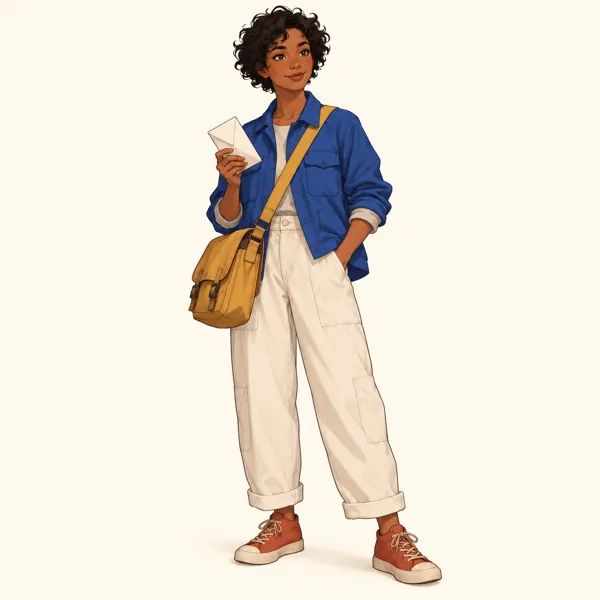
Rooftop courier with short dark curls, a cobalt work jacket and a mustard mail satchel.

1. What work occupies most of their time?

I deliver letters across the rooftop bridges. The route is slower when someone needs a conversation.

2. How do they react to a last-minute change of plan?

I draw a new route in pencil, then pretend the detour was my idea.

3. What surprising things fall out when they empty their bag?

Answer: ____________________

4. Who gets their first message after good news?

Answer: ____________________

5. What would be their theme song, and which moment deserves it?

Answer: ____________________

6. What inexpensive gift would delight them?

Answer: ____________________

7. What is worth doing without recognition?

Answer: ____________________

8. Would they rather lead an expedition or make its maps?

Answer: ____________________

9. In a cozy monster game, what gift raises their friendship level?

Answer: ____________________

10. What does a stranger notice first about their appearance?

Answer: ____________________

Made with the OC Questions Generator · occreator.org

Six voices, six starting points

One question can open a whole scene

These six original characters show how a specific answer can suggest a habit, relationship or visual detail. Load an example to keep its answered question and deal nine more around it. Treat the sample voice as a starting point, then change the details until the character belongs to your story.

Orla Fenwick, Brown skin, short dark curls, cobalt work jacket, mustard mail satchel, ivory trousers and terracotta sneakers.

Rooftop courier

Orla Fenwick

Orla wants to seem unflappable, but her answer admits that she improvises. The pencil is useful twice: it gives her a concrete action in a scene and a small prop for a portrait. Her second sentence keeps confidence from turning into carelessness. Try asking who taught her to consult the person doing the hardest work. That follow-up can reveal a former mentor without demanding a dramatic origin story. The illustration uses everyday work clothes because her character lives in decisions, rather than a complicated costume.

How do they react to a last-minute change of plan?

I draw a new route in pencil, then pretend the detour was my idea. If someone else is carrying the heavy parcel, I ask first.
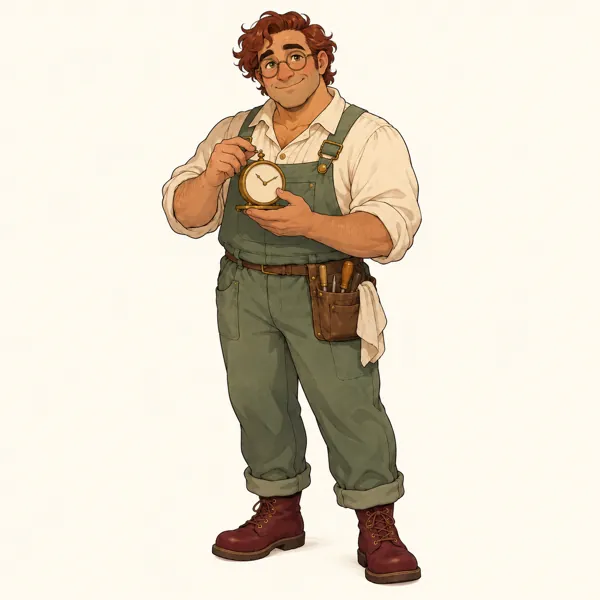
Bram Tallowby, Olive skin, wavy auburn hair, round spectacles, sage overalls, cream shirt and burgundy boots; carries a brass clock.

Village clock repairer

Bram Tallowby

Bram answers a practical question with a social detail. He is patient with objects and tactful with people, which gives a writer two ways to show the same quality. A scene in his shop could begin with a broken clock and become a conversation about asking for help. Keep the ordinary task believable: he does not need a special power to be good at it. If you interview him further, ask what kind of interruption finally tests that patience. A useful flaw should put pressure on a strength you have already established.

What ordinary task are they unusually good at?

Untangling string. People bring me clocks, but half the village visits with a knot they have given up on. I never ask which problem they actually came about.
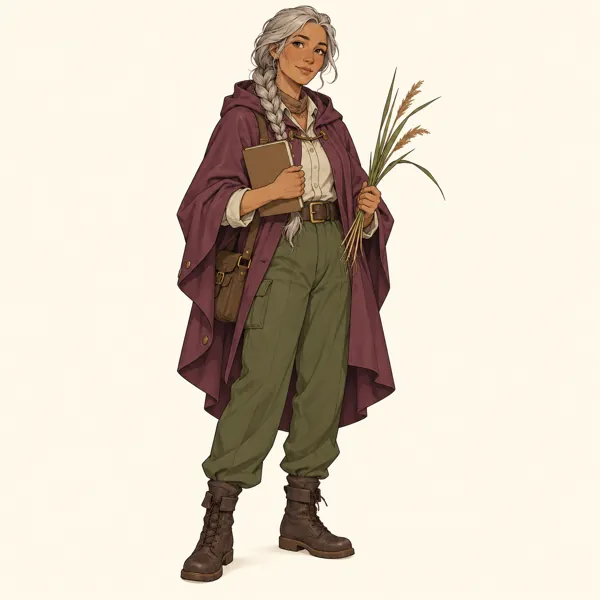
Cressa Nib, Warm tan skin, long silver-gray braid, plum rain cape, moss green trousers and dark boots; carries a specimen notebook and reeds.

Marsh botanist

Cressa Nib

Cressa values access as much as the plants she studies. Her answer names a place, a group of people and a reason to care, so it can support a small community conflict. You could put her in a meeting about rebuilding the waterfront and already know what she would defend. The question does not require a tragic memory to feel thoughtful. Continue by asking how she would compromise if the boardwalk needed repairs. That separates a firm value from a fixed solution, giving her room to change while remaining recognizable.

What would they preserve in a changing town?

The boardwalk across the reeds. Everyone calls it an old shortcut, but it is the only route where a child can watch the marsh without stepping into it.
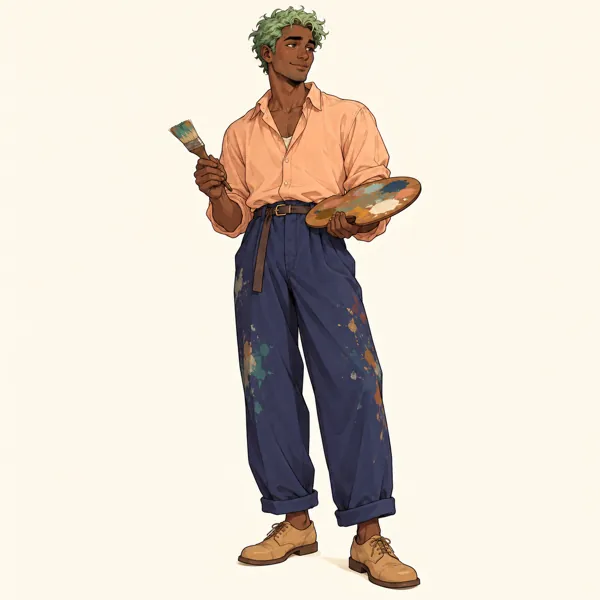
Tivren Moss, Deep brown skin, short mint-green textured hair, peach work shirt, indigo wide trousers and tan shoes; carries a wooden palette and brush.

Traveling set painter

Tivren Moss

Tivren distinguishes recognition from attention. That difference helps avoid a flat shy-versus-confident label: he wants a response to his work but dislikes being the center of the room. A would-you-rather answer becomes useful when the character explains the condition attached to their choice. Let him answer a second time after a successful show, then after a rushed one. You may discover that his preference is stable while his confidence changes. His palette and work clothes echo the answer without adding an unrelated costume or an official theater emblem.

Would they rather perform onstage or build the scenery?

Build the scenery, provided I can stand where I hear the audience gasp. I do not want the spotlight. I want to know the painted door looked real for one second.
Pellin Voss, Friendly small brass-and-cream ceramic robot with teal oval eyes, a lavender vest, sturdy short legs and a stack of blank books.

Robot librarian

Pellin Voss

Pellin gives a setting-specific answer that still concerns a familiar boundary. The extra sentence matters: good intentions do not automatically make every action welcome. In a scene, another library visitor could ask him to stop guessing and let them choose. That creates gentle conflict without turning him into a villain. The fandom-flavor set offers adaptable situations rather than assigning a canon role or a famous character relationship. You can keep the emotional question and change the technology, magic or community to fit your own world.

As a robot, what task goes beyond their original purpose?

I was built to return books to shelves. Now I leave the right book on a chair before someone realizes they need it. I am still learning when that is helpful and when it is nosy.
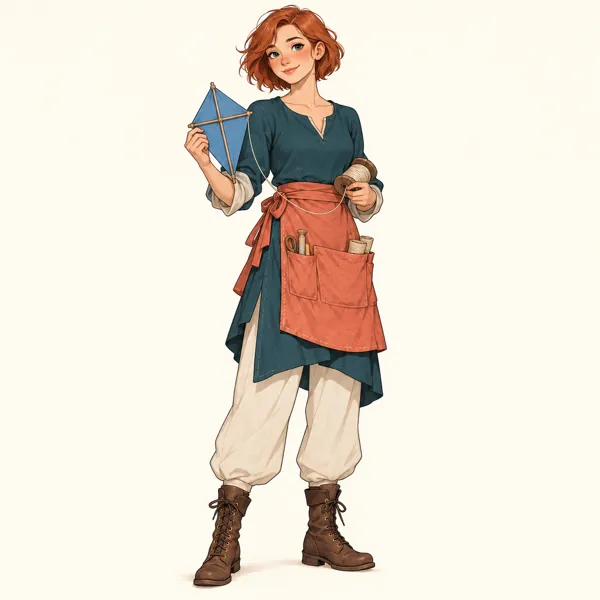
Nessa Wrenfold, Fair freckled skin, short copper bob, deep teal tunic, ivory trousers, coral apron and brown boots; carries a blue kite and string spool.

Coastal kite maker

Nessa Wrenfold

Nessa responds to attention rather than price. Her answer suggests a relationship test: a thoughtful friend saves a small useful thing, while an acquaintance buys something decorative that misses the point. Neither person needs to be cruel for the difference to matter. Ask whether Nessa is equally observant when choosing gifts herself. Characters become more interesting when they cannot always live up to the care they want from others. Her folded kite provides a clear visual cue, while the spool connects the picture directly to the answer.

What inexpensive gift would delight them?

A spool with the last three feet of good string still on it. That says someone noticed what I use, rather than what they thought a kite maker ought to like.

Types

Choose the conversation your character needs

Classic ask meme contains 44 playful prompts; the other nine sets contain 36 each. Mixed decks include at least three questions from Classic ask meme and Would-you-rather whenever your locks leave enough room. With eight or more other questions locked, every available slot goes to a lively prompt. A focused deck stays with one topic. The set selector controls the next deal, while an individual swap always uses the question’s current set. Locked questions stay put even when you switch topics, so you can build a deliberate interview rather than starting over.

Classic ask meme

Start with the familiar fun of a character ask game: favorite food, a comfort item, a theme song, the contents of a bag or a spectacularly specific pet peeve. These 44 prompts invite quick answers you can share with friends. Give your OC a silly trophy, imagine their karaoke performance or design their personal sticker sheet. Zodiac signs and MBTI guesses are optional fictional character games, not reliable descriptions of real people. Add a reason or a tiny scene when an answer makes you laugh. You may find a useful detail without turning the interview into homework.

  • 44 playful prompts
  • Community favorites
  • Quick answers

Basics

Begin with facts a reader could observe or ask about in an ordinary introduction. A voice, a work tool and a way of getting home often do more for a first scene than a long list of measurements. You do not need every detail before writing. Choose the answers that affect what the character can do today, then leave room for discovery. If a question does not fit a nonhuman character, interpret the function behind it: schooling could mean an apprenticeship, and a home could be a moving caravan.

  • Identity
  • Work
  • Visual anchors

Personality

Replace abstract labels with behavior under small pressures. Instead of deciding only that an OC is stubborn, ask how they respond when a plan changes or a friend corrects them. The answer should contain an action someone else could notice. Contradictions are welcome when they have a reason: a character may enjoy public performances but dislike personal praise. Try answering the same prompt in a comfortable setting and an unfamiliar one. The difference reveals context, rather than forcing the character into a single fixed personality category.

  • Reactions
  • Contradictions
  • Choices

Backstory

A useful past explains a present habit without explaining every part of the character. These prompts focus on first jobs, old belongings, family routines and changes of direction. Small experiences can leave strong traces. Someone who learned to mend a coat might still carry a needle because repairing things feels more natural than replacing them. Pick one memory and connect it to something visible now. You can keep other parts of the timeline undecided until a scene actually needs them; the interview is a notebook, not a contract.

  • Turning points
  • Mentors
  • Everyday history

Relationships

Relationships become specific through the things people do for each other. Who gets the first message after good news? Who may borrow the favorite tool? These answers establish closeness without needing a full family tree. Give different people different kinds of access to the OC. A colleague may understand their work better than a sibling, while the sibling recognizes when they need a break. Include boundaries alongside affection. Knowing how a character says no can make a friendship feel more believable than a list of people they like.

  • Trust
  • Boundaries
  • Shared rituals

Daily life

Daily questions give your character something to do between major plot events. A commute, a lunch break or a badly organized kitchen can introduce setting through action. Choose details you could actually place on the page. A forgotten shopping item might lead to a meeting; a repaired shoe might show resourcefulness. These prompts are especially useful when an OC has a detailed power or costume but no ordinary life yet. Routine also gives you a baseline, making a disrupted day feel different without requiring an explanation from the narrator.

  • Routines
  • Chores
  • Between adventures

Likes and dislikes

Preferences work best when they affect a choice. A favorite color can shape a room, while a disliked texture can explain why a costume changes before a formal event. Avoid treating every taste as a symbol with a hidden meaning. Sometimes a character likes a snack because it tastes good. Mix meaningful preferences with casual ones, then notice which recur naturally while writing. For a drawing brief, pick two or three details that can be seen: a fabric, a useful object or a familiar place is easier to illustrate than a long list of opinions.

  • Sensory details
  • Taste
  • Small comforts

Deep questions

Thoughtful does not have to mean distressing. This set asks about fairness, belonging, recognition, loyalty and changing goals. Let the character hesitate or offer an incomplete answer. A gap between what they believe and what they manage to do can become a story arc. Keep the focus on their choices rather than diagnosing them or assigning a painful event to make them interesting. If the answer feels too broad, add a concrete situation: what would fairness look like when two neighbors need the same tool at the same time?

  • Values
  • Growth
  • Thoughtful reflection

Would-you-rather

The choice is only the beginning. Ask why the character picks one option and what condition might change their mind. A preference for building scenery over performing could reveal a love of craft, a wish for privacy or a practical concern about memorizing lines. These prompts are gentle enough for a group game but still useful for a private writing session. Do not count one answer as a permanent rule. A character can prefer quiet celebrations most years and want the whole street present for one particular achievement.

  • Tradeoffs
  • Reasons
  • Conversation starters

Fandom flavors

These prompts add familiar genre situations without declaring new canon. You might consider a school club, an adventure party, a pirate crew or a robot’s original purpose. Translate the situation into the rules of your chosen setting before using the answer in a fan story. The questions do not assign a famous mentor, family connection or official rank. That leaves room for your OC to have an independent role. When a setting does not fit, swap within the set until you find a useful angle, or return to a general category.

  • Adaptable settings
  • Worldbuilding
  • Original roles

Guide

Turn ten answers into a character you can write

A short interview is useful when it leads to a decision, a scene or a visual detail. You do not need to finish every answer in one sitting. Start with the question that catches your attention, then follow the connections it creates.

  1. 1

    1. Choose a topic and deal a small deck

    Use a mixed deck when you are meeting the OC for the first time. Choose a single set when you already know what feels missing, such as friendships or ordinary routines. Deal ten questions and skim them before answering. The limit gives you a manageable session rather than a huge questionnaire to complete. Lock any question you want to keep, then deal again to replace the rest. A locked position stays where it is, even if the next deal uses a different category. You can build your own sequence one useful prompt at a time.

  2. 2

    2. Answer in a voice you can hear

    Try the first person for a few answers. Notice whether the character gives a direct reply, adds a joke, offers an example or avoids part of the question. You may also write as the author when that is easier. Neither approach is a test. The useful part is specificity: instead of saying they are generous, describe what they bring when visiting a tired friend. Keep a rough answer if it contains one good detail. You can revise the wording later without losing the observation that made it worth keeping.

  3. 3

    3. Use locks and swaps deliberately

    Lock a question when you want it to remain in the next deal. The lock protects its position, while the answer stays editable. A single swap draws another question from the same set and avoids the other nine already on the sheet. Your previous answer remains attached to its original question in this browser, so it can return if that question appears again. This lets you explore alternatives without turning one answer into a response to the wrong prompt. Save a favorite before a major rewrite if you want a separate version you can restore.

  4. 4

    4. Look for a connection between two answers

    Choose one answer about a habit and another about a value or relationship. Ask whether they support each other or create a useful tension. A character who values independence but always calls a friend before making a decision has something to explore. Do not remove every inconsistency immediately. Decide whether it reflects a change over time, a difference between public and private behavior, or simply an answer you want to revise. Then sketch one ordinary scene where both details could become visible through actions rather than explanation.

  5. 5

    5. Share an interview or a blank ask sheet

    Interview mode keeps attention on one question, while the ask-meme sheet lets you edit all ten answers together. Copy answers creates plain text with the questions included. Copy blank sheet keeps the same prompts but leaves lines for someone else to answer. Export PNG makes a readable card from the current deck, character name and appearance notes. Review the print-card preview before sharing. Only the current ten questions appear in that export; answers saved to questions outside the deck stay in your local notebook. Favorites also stay on this device rather than becoming public posts.

  6. 6

    6. Carry the useful details into the next tool

    Send answers to bio groups the current responses into the bio template’s sections. It asks before replacing that browser’s existing bio draft, and long answers may be shortened to fit the template. For a headcanon session, copy the interview and paste the relevant notes into the linked tool. To make a picture, add visible appearance details and choose Draw this OC. The homepage opens with a short prompt built from those notes and your answered questions. Review it before generating: an interview can describe values that need a prop, posture or setting to become visible.

FAQ

Questions about the character interview

Juniper Vale, an original original anime characterKaito Arashi, an original anime characterSorrel the Fennec, an original Sonic the Hedgehog characterStarlit Quill, an original My Little Pony: Friendship is Magic characterRei Kagami, an original My Hero Academia characterFlarepaw, an original Warrior Cats characterTinsel the Raccoon, an original Five Nights at Freddy's character

Your next OC is one sentence away

Sign up for 10 bonus credits and make your first OC free.