
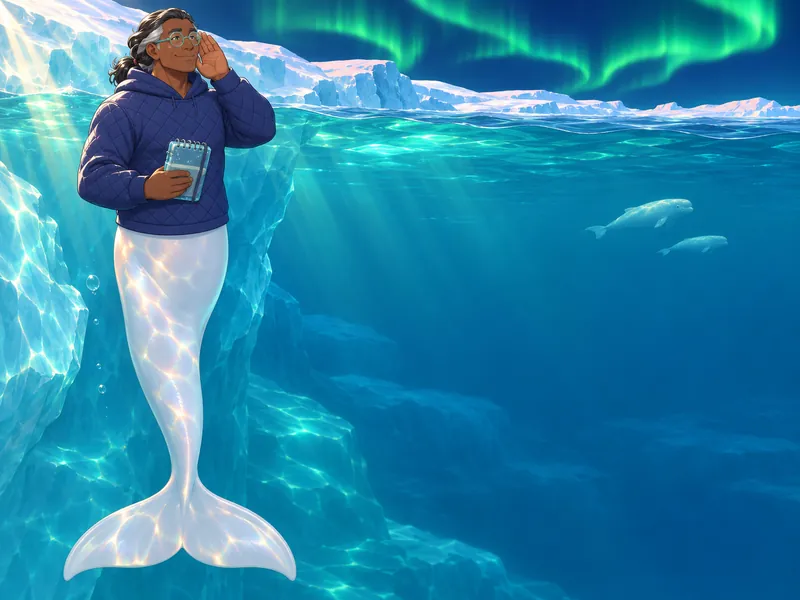
Murdo of the Floe Edge
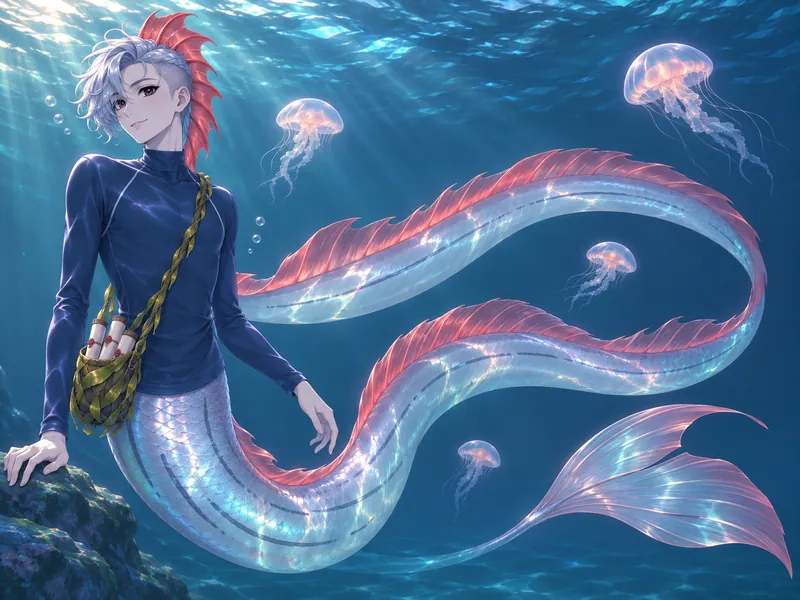
Polar merman- Translates whale song for the ice towns
- Pearl-white beluga tail, round glasses
- Turns his head when a pod calls
This free mermaid OC creator builds sea folk from real ocean life and old folklore. Make a siren OC whose song guides ships home, a mermaid or merman with a koi, orca, manta or octopus tail, a selkie in a sealskin cloak, or river, deep-sea and polar merfolk. Choose an ocean zone, a modest top, fins and a job under the waves, then show your character in tail form, human form or both side by side.
Ideas
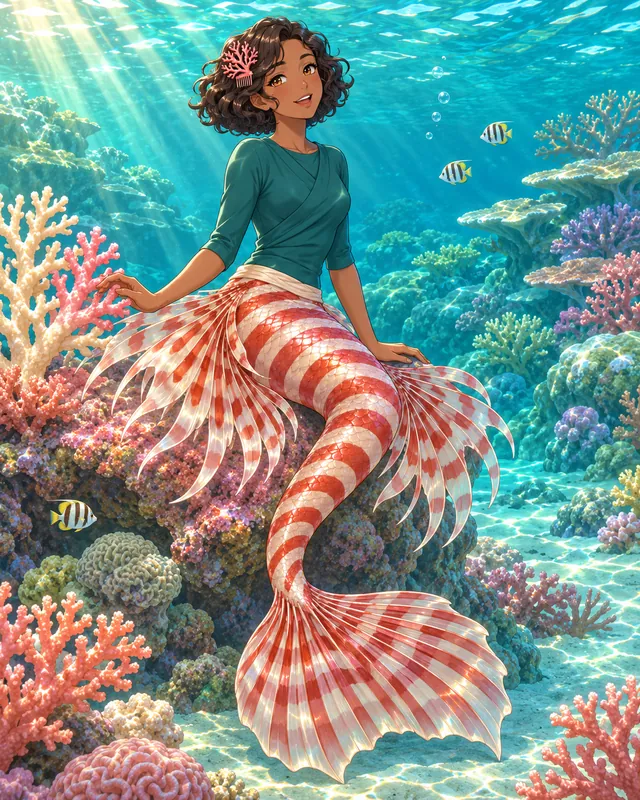
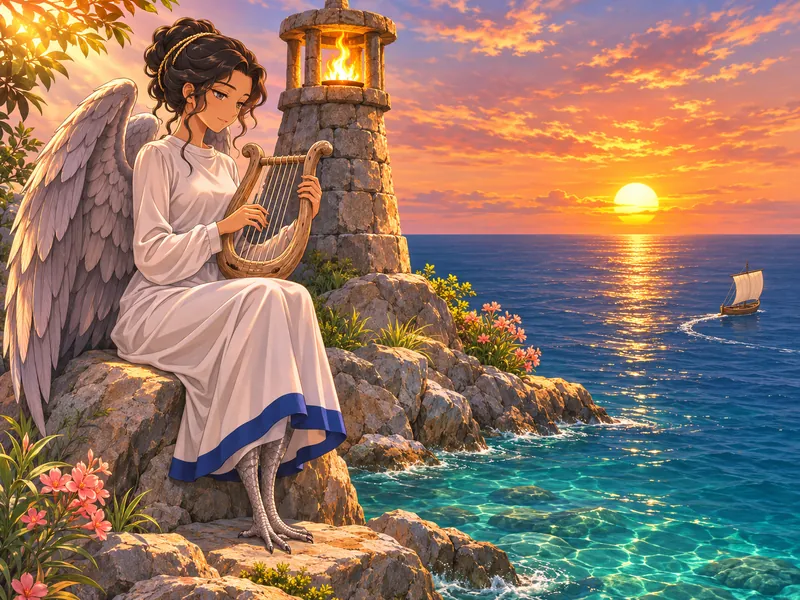
Each card is a different kind of sea folk with a different real animal behind the tail, from a beluga merman who translates whale song to a Greek bird-winged siren with a driftwood lyre. Press Use this idea to load the type, tail, zone, top and colors, then change the name or the song until the character is yours. Surprise me draws from twenty more presets, including a selkie storm watcher, a merrow trader and a siren who runs a music shop in human form.

Know the rules
Sea folk come from many traditions, and the details change from coast to coast. These notes cover the types in the generator, the folklore behind them and the real animals that can shape a tail. They are design starting points, not rules about any living tradition: if your character comes from a specific culture’s stories, read that culture’s own sources. Every Make one button loads the type into the generator.
Sources: Wikipedia: Siren (mythology); Wikipedia: Selkie; NOAA: Layers of the ocean
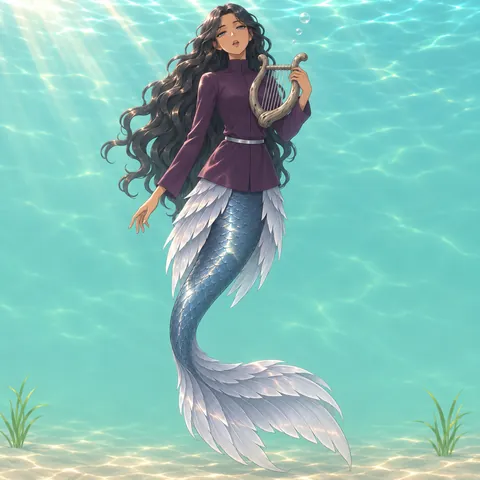
The sirens of Greek myth were not fish at all. In Book 12 of Homer’s Odyssey, two sirens sing from a meadow by the sea, and Odysseus has his crew plug their ears with beeswax and tie him to the mast so he can hear the song and still sail on. Early Greek artists drew sirens as large birds with women’s heads, often holding a lyre, kithara or aulos; later art gave them human upper bodies and bird legs. The Liber Monstrorum, written in the early 700s, is the first known text to describe sirens as sea maidens with fish tails, and French still calls a mermaid a sirène. On this page the Siren option draws that later sea singer with feather-shaped fins as a nod to the old wings, and Bird-winged siren draws the Greek form. Either way, a siren OC works best when the song is the center of the design: give her an instrument, a stage of rocks and a reason to sing.
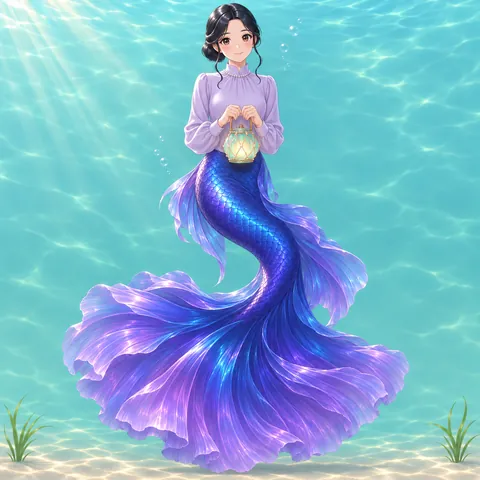
Half-fish figures are old: Greek and Roman writers describe a mermaid-like goddess, Derceto or Atargatis, worshipped at Ashkelon. Medieval bestiaries gave the mermaid her comb and mirror, and Hans Christian Andersen’s The Little Mermaid (1837) gave her the famous bargain of a voice traded for legs. For your own mermaid OC, let a real animal design the tail: a betta for silky drama, a koi for river calm, a clownfish for reef cheer. Then dress the upper body properly. Every mermaid on this page wears a real top, such as a wrap top, tunic, sweater or armor; long hair or scales on their own do not count as clothing. One prop, like a coral comb or a jellyfish lantern, finishes the silhouette.
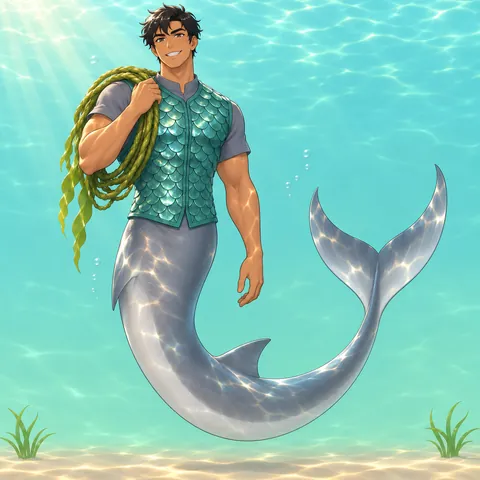
The merman is as old as the mermaid in folklore and heraldry, and Greek art showed Triton, son of Poseidon, with a fish tail. Mermen follow the same design rules as mermaids, including the top: a scale-armor vest, a sailcloth shirt or a knit sweater all read well. The easiest way to make a merman OC stand apart is to skip the bearded king with a crown and a three-pronged spear, which belongs to several famous characters, and give him a working job instead: a seahorse stable keeper, a palace herald or a ferry guide. Choose Merfolk of any gender for a character who is neither a mermaid nor a merman, and describe them in your own words.
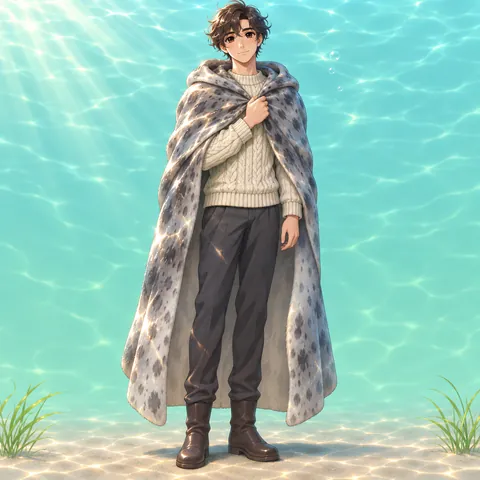
Selkies come mainly from the Northern Isles of Scotland, Orkney and Shetland, with related tales in Ireland and the Faroe Islands, where the story of Kópakonan, the seal woman, is famous. The name comes from the Scots word for a seal. Selkies live as seals at sea and take human form on land by setting aside their sealskin, and the classic story turns on that skin being hidden and found again. In Orkney lore only the larger seals could take human shape. On this page the sealskin becomes a hooded spotted cloak worn over everyday clothes, so a selkie OC always reads as both seal and person. Seal-dark eyes, a gray-silver palette and a rocky shore do the rest. The ballad The Great Silkie of Sule Skerry is a good place to start reading.
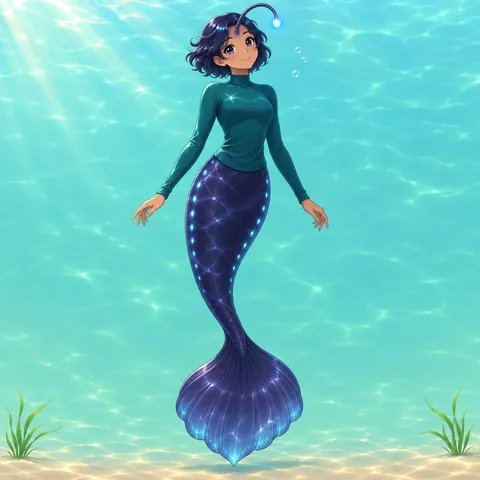
NOAA divides the open ocean into layers. Sunlight reaches down to about 660 feet (200 m); the twilight zone runs to about 3,300 feet (1,000 m), and the midnight zone below it is lit only by animals that make their own light. A deep-sea merfolk OC can borrow from them: large eyes, dark velvety skin and small glowing spots. In deep-sea anglerfish, only the females carry the glowing lure, which makes a lovely detail for a deep-sea mermaid. Polar merfolk borrow from belugas and narwhals: pale or mottled skin, horizontal whale flukes and a sturdy build. Belugas are nicknamed sea canaries for their many sounds, and a narwhal’s tusk is really a long tooth. Give polar characters a quilted top, because a cold ocean is a good reason to dress warmly.
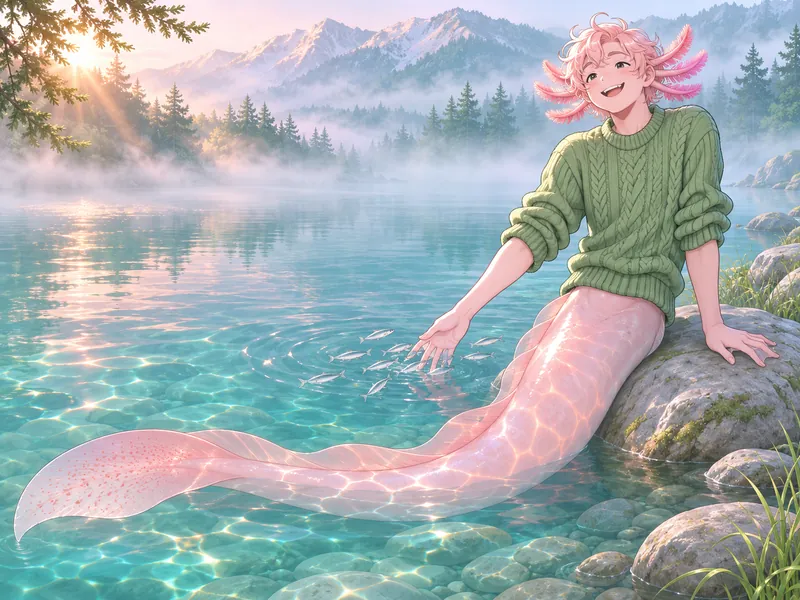
Not all merfolk live in the sea. Slavic folklore has the rusalka, a water spirit of rivers and lakes; Germanic stories have the nix or nixie; Brazilian tales tell of the iara, the lady of the water; Japanese tradition has the ningyo, literally a human-fish; and Irish folklore has the merrow, who needs a small magic cap, the cohuleen druith, to dive beneath the waves (the poet W. B. Yeats described it as red). Freshwater characters suit freshwater animals: trout, koi, goldfish, angelfish and the axolotl, a salamander from the lakes near Mexico City that can regrow lost limbs and is critically endangered in the wild. Some water spirits, such as Mami Wata in West, Central and southern Africa, are still honored in living religions, so treat them with respect rather than as costume ideas.
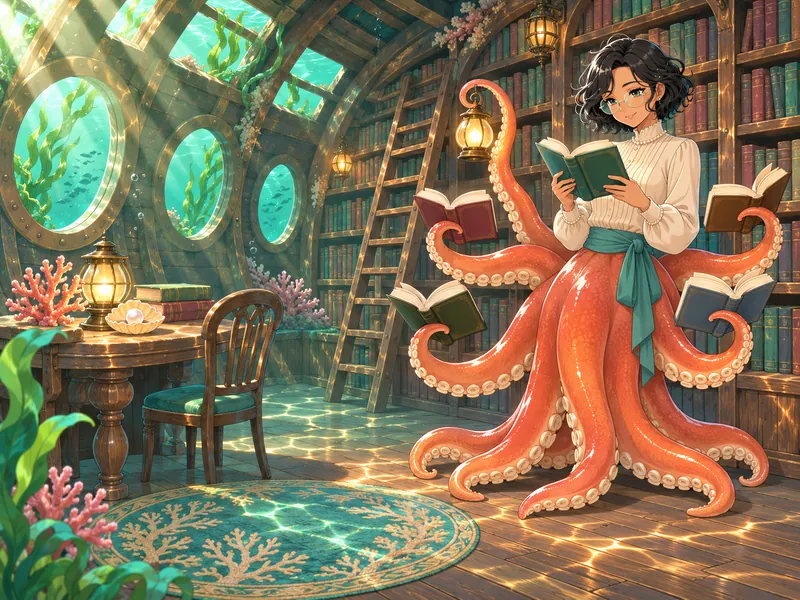
A fish tail fin stands upright and sweeps from side to side, while whales and dolphins have horizontal flukes that beat up and down. That one detail makes a koi tail and an orca tail move very differently, so pick the animal before you pose the character. The orca is the largest member of the dolphin family. An octopus lower body needs eight arms, and real octopuses have three hearts and blue blood. Manta rays are the biggest rays, with a wingspan of up to 26 feet, so a manta tail spreads wide at the hips. Male seahorses carry the eggs until they hatch, and lionfish spines are venomous, which suits a careful, look-but-do-not-touch character. Choose a tail with a story, then let its colors pick the palette.
Many merfolk stories turn on a change: Andersen’s mermaid gains legs, a selkie sets aside her sealskin, a merrow takes off her cap. If your OC has two forms, decide what stays the same. The face, hair, eye color and the color of the top should match in both forms, so viewers know at a glance it is one person. Then keep one sea trait in the human form, such as fin-shaped ears, gill lines on the neck or seal-dark eyes. Choose Both forms side by side to draw the character twice in one picture, or Mid-change at the shore to show the moment the tail appears. A reference sheet of each form is the clearest record for later drawings.
Names and traits
The free mixer below runs in your browser with three naming patterns. Sea-word names pair a sea word used as a given name with a sea-craft surname. Folklore names pair a given name that carries a sea meaning in its own language, such as Murdo (Scottish Gaelic, sea warrior), Ronan (Irish, little seal) or Nalu (Hawaiian, wave), with “of the” a place, the way the Orkney and Shetland ballad names the Great Silkie of Sule Skerry. Siren names copy the way the Greek sirens were named, by joining a root to a name ending, as in Thelxiope or Aglaope; every pairing was checked against the sirens, Nereids and Muses so none rebuilds a myth name. The trait cards fill the Sea-animal trait field with a true behavior from a real animal.
A sea word as a given name + a sea-craft surname
Pick a true behavior from a real animal; it fills the Sea-animal trait field.
Guide
Start with the story your character comes from, then let a real sea animal shape the body. A strong merfolk design reads as its type from the silhouette alone, wears clothes that make sense under water, and has one sound or song that belongs only to them. These five steps keep the design clear from a small icon up to a full reference sheet.
Decide what kind of sea folk you are making before you touch the colors. A siren is defined by her song, a selkie by the sealskin and the pull between land and sea, a merrow by the cap that lets her dive, a polar merman by the cold. Each type suggests a different story: a siren might guard a dangerous strait by warning ships away, while a selkie might keep a quiet second life in a fishing village. Write one sentence about where the character lives and what they want. That sentence will guide every choice that follows, including which details you leave out.
Pick a tail from a real animal and keep its anatomy. Fish tails stand upright and sweep side to side; whale and dolphin flukes lie flat and beat up and down; an octopus lower body has eight arms with suckers; a seahorse tail curls and grips. Look at photos of the exact animal and choose two or three features to keep, such as the betta’s long silky fins or the clownfish’s three white bands. Those features carry the design when the art style changes. If you want an animal that is not on the list, pick the closest one and name the real species in the description box.
Every character on this page wears a real top, and choosing it is part of the design. A wrap top with sleeves suits a reef gardener, scale armor suits a palace guard, a quilted hooded top suits polar water, and a sealskin cloak over a tunic suits a selkie. Match the material to the home: woven kelp, sailcloth, silk or knitted wool all tell a story. Then add one fin detail, such as fin-shaped ears or long wrist fins, and one accessory, such as a pearl circlet or a driftwood lyre. Two small, clear details read better than ten tiny ones.
Merfolk need something to do under the waves. Pick a role, such as a shipwreck librarian, a current courier or a coral healer, and let it decide the props. Then pick a voice or song power with a clear use and a limit: a lullaby that calms storms but tires the singer, an echolocation song that maps the dark but cannot find someone who stays silent. For siren OCs, keep the song mysterious rather than menacing: the oldest stories are about a song too lovely to ignore, and your siren can use that gift to warn, guide or remember instead of to trap.
Choose whether you will show the tail form, the human form or both. For two forms, keep the face, hair and top color identical, and carry one sea trait onto land. Roll a name in the mixer, read it aloud and check that it fits the type: a folklore name for a selkie, a Greek-style name for a siren, a sea-word name for a reef mermaid. Generate a portrait, look at it at thumbnail size and ask whether the tail animal still reads. Then switch the output to a reference sheet and save your notes with the image, including the tail animal, the top and the song.
Other fandoms
 FantasyOC Creator
 One PieceOC Creator
 SpongeBobOC Creator
 Wings of FireOC Creator
 WinxOC Creator
 AnimalOC Creator
Tools
FAQ



Sign up and your first pack comes with 100 bonus credits.